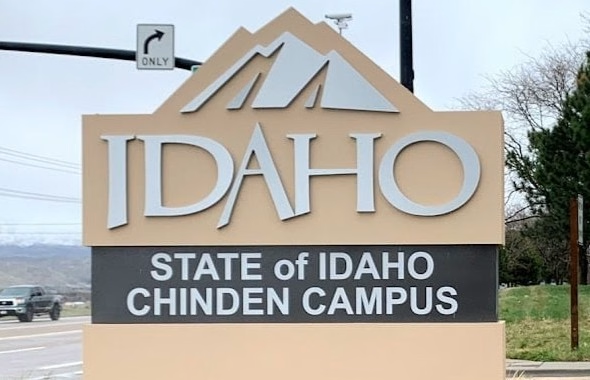
The Idaho State Capitol is a visible reminder of the existence of our state government. It houses the office of the governor, as well as the lieutenant governor, attorney general, secretary of state, and state treasurer. It is home to the State Senate and State House of Representatives. It is one of the most recognizable buildings in the state. Yet there are quite a few other buildings that house our state government. In fact, there are so many scattered throughout not only Boise, but the entire state, that it would be impossible to house them in a single structure.
Over the past week or so, I have been building the State Agencies section of Idaho Insider, collecting as much information about the offices and personnel that run the day-to-day operations of our government. Depending on your definitions, there are anywhere from 20 to 200 state agencies. These agencies were not all created at the same time by the same lawmakers; rather, they were created, modified, consolidated, and reorganized over the course of Idaho’s 163-year history. There is bound to be a little chaos in such a system, which is why every few years governors, legislators, and activists attempt to reform it. The last major reformation of Idaho government was in the 1970s, but last year’s legislative DOGE Task Force examined numerous ideas.
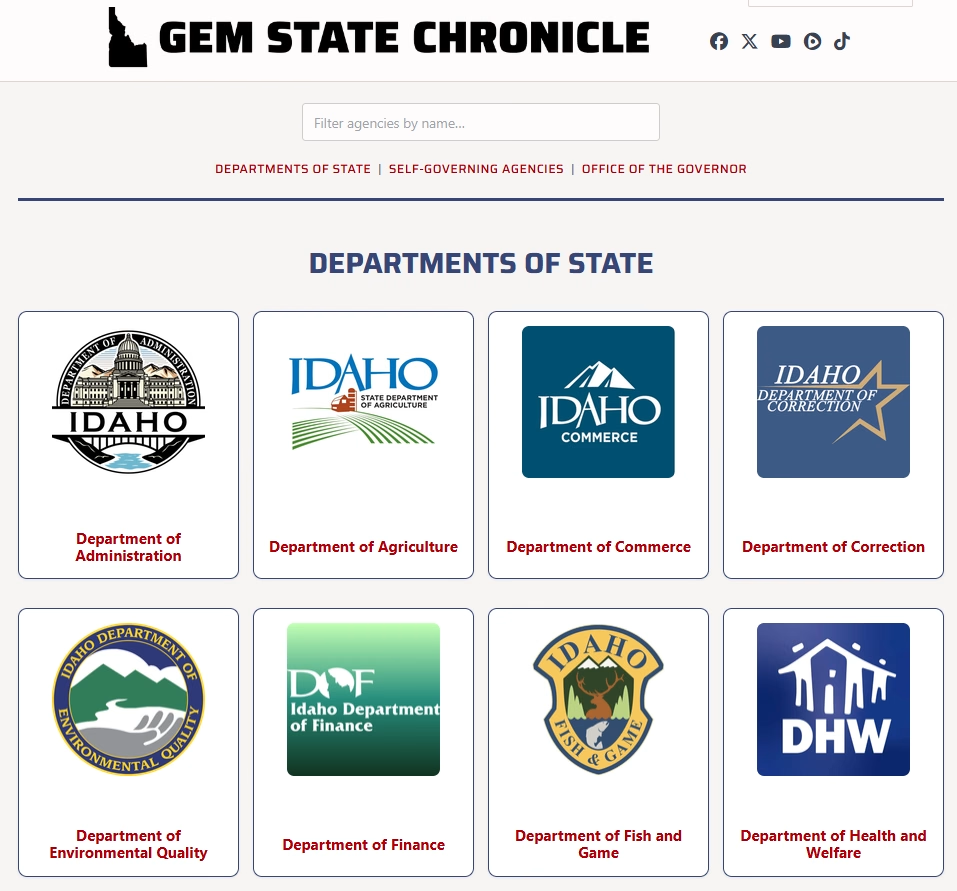
First, recall that there are three branches of government: executive, legislative, and judicial. What I colloquially call the “bureaucracy” exists within the executive branch. Idaho has seven elected executive officers: governor, lieutenant governor, secretary of state, state controller, state treasurer, attorney general, and superintendent of public instruction. Nearly all of the agencies that I refer to as the bureaucracy report to the governor. This government website has a pretty good interactive organizational chart.
There are currently 19 cabinet-level departments in the executive branch of Idaho’s government. (We’ll get to why that number is special in a moment.) These departments are each headed by a director who is either appointed by the governor, and requires Senate confirmation, or hired by a board that is appointed by the governor. In 2026, the Legislature passed a law transferring appointment authority for the directors of the Idaho Transportation Department, Department of Parks and Recreation, and the Department of Fish and Game from each agency’s respective board to the governor. I wrote about that debate earlier this year.
The cabinet-level departments are:
- Department of Administration (DOA)
- Department of Agriculture (ISDA)
- Department of Commerce (IDC)
- Department of Correction (IDOC)
- Department of Environmental Quality (DEQ)
- Department of Finance (DOF)
- Department of Fish and Game (IDFG)
- Department of Health and Welfare (DHW)
- Department of Insurance (DOI)
- Department of Juvenile Corrections (IDJC)
- Department of Labor (IDOL)
- Department of Lands (IDL)
- Idaho State Tax Commission (ISTC, nominally housed within the Department of Revenue and Taxation)
- Department of Parks and Recreation (IDPR)
- Idaho Transportation Department (ITD)
- Department of Water Resources (DWR)
- Idaho State Police (ISP)
- Industrial Commission (IIC)
- State Board of Education (OSBE)
You might wonder why Corrections and Juvenile Corrections are two entirely separate departments. Juvenile Corrections was made its own department in 1995 by splitting it not from IDOC, but from DHW, based on the idea that it should be focused more on rehabilitation than punishment.
There are a few other unique things to point out, for example, the director of the Military Division has the title adjutant general, and also serves as the commanding general of the Idaho National Guard. Major General Timothy Donnellan currently holds that position.
The State Board of Education (eight members appointed by the governor, plus the current superintendent of public instruction) oversees policies for both K-12 and higher education; however, the Department of Education exists in the Office of the State Superintendent, so there’s surely a bit of overlap there.
So why is 19 such an important number? Back in the 1970s, Idaho amended our state constitution to cap the number of executive departments at 20. This was presumably meant to limit the growth of government, but government—like life, as Jeff Goldblum said in Jurassic Park—finds a way. Around the same time that the Legislature approved the amendment, it also passed legislation creating a Department of Self-Governing Agencies, essentially a placeholder for more than a dozen additional offices. Current Idaho Code recognizes 20 such self-governing agencies:
- Idaho Apple Commission
- Idaho Bean Commission
- Idaho Beef Council
- Idaho Cherry Commission
- Idaho Dairy Products Commission
- Idaho Pea and Lentil Commission
- Idaho Potato Commission
- Idaho Wheat Commission
- Idaho Alfalfa and Clover Seed Commission
- Idaho State Bar Commission
- Board of Examiners
- Division of Veterans Services
- Idaho Commission for Libraries
- Idaho State Historical Society
- Office of the State Appellate Public Defender
- Office of the State Public Defender
- Division of Occupational and Professional Licenses
- Office of Administrative Hearings
- Office of Health and Social Services Ombudsman
- Idaho Commission of Pardons and Parole
There are some things that jump out from this list as well. The Board of Examiners is not really a separate office, but the governor, secretary of state, and attorney general—with the state controller serving as ex officio secretary—acting in a special capacity to examine claims against the state. Its website is nested under the Office of the State Controller.
The Idaho State Bar operates under the Idaho Supreme Court, so it’s more of a judicial branch agency than executive.
The Division of Occupational and Professional Licenses (DOPL) is an umbrella office for between 44 and 51 separate boards that oversee occupational licensing in fields as varied as medicine, HVAC maintenance, and aesthetics. Why don’t I have a precise number? DOPL itself was only created about six years ago to bring all of those separate boards under one roof. Since then, the Legislature has been consolidating some of them, such as integrating the Board of Midwifery into the Board of Nursing in 2024 and combining the Board of Dentistry and the Board of Denturity earlier this year.
There are other commodities commissions, including those related to barley, hops, and mint, that do not appear to fall under the purview of Self-Governing Agencies. These appear to exist somewhere in the orbit of the Department of Agriculture instead, but the precise structure is not clear to me.
Finally, there are numerous agencies and offices that are organized under the Office of the Governor. For example, the Commission on the Arts, the Division of Financial Management, the Office of Information Technology Services, the Military Division, the Liquor Division, and the Office of Drug Policy all fall under this umbrella.
Agencies can sometimes share personnel, even directors. Dean Cameron has long served as director of the Department of Insurance, but he also took over as interim director of the Department of Health and Welfare after Dave Jeppeson resigned in 2023. Andrew Arulanandam serves as director for both the Liquor Division and the Lottery, which makes me think he deserves some special title like Minister of Vice.
The first step in figuring out how to account for all of these departments, divisions, agencies, offices, boards, and commissions is deciding how to categorize them. As I mentioned earlier, Idaho.gov has a great organizational chart, but it doesn’t include everything, such as the commodities commissions, and it’s slightly behind, as it does not reflect the merger of the Office of Species Conservation, Office of Energy and Mineral Resources, and the State Historic Preservation Office (SHPO) into one new agency—the Office of Species, Minerals and Energy Coordination (OSMEC)—during the last legislative session.
The Idaho Blue Book is a great source of authority for categorizing government agencies. Published every few years since the 1930s by the Secretary of State’s office, the Blue Book presents a snapshot of all three branches of Idaho’s government, as well as trivia such as the state flower, how elections work, and more. It shows 19 “Departments of State” and 17 “Self-Governing Agencies”. Of those, nine are commodities commissions, such as the Beef Council and the Potato Commission. However, the Blue Book does not go into detail about the agencies directly under the Office of the Governor.
The final authoritative source for the structure of state government is the budget. The FY2027 Legislative Fiscal Report details how all of these state agencies are funded, often nesting sub-agencies and subdivisions beneath larger offices. However, agencies like the commodities commissions that aren’t funded via legislative appropriations won’t show up here.
The genesis of this idea to add state agencies to Idaho Insider came a year ago when I sat in a Capitol hearing room watching the DOGE Task Force proceedings. Not only were legislators—some of them longtime veterans—not fully aware of the breadth of our state government, even the experts who testified had to defer questions about it for further research. Our state bureaucracy has developed over the course of more than a century as lawmakers add, move, change, and consolidate offices and agencies every session. Sometimes the Legislature isn’t even involved—the original Office of Energy Resources was created by an executive order from Gov. Cecil Andrus in 1975 in the wake of the OPEC oil embargo. It was occasionally renewed (and renamed) by governors over the years until finally codified by the Legislature in 2026 as part of OSMEC.
Why am I spending so much time on this? If I—someone who has been intensely following Idaho politics for nearly half a decade now—find the structure of state government confusing, then what about those who are busy with life but still want to make a difference in state and local politics? It’s one thing for conservatives to demand change, demand reform, demand smaller government. But until we come up with concrete steps to actually accomplish those goals, we’re just shouting into the wind. The purpose of Idaho Insider is to give you tools to make a difference. Use these new pages to become more familiar with the offices that run the day-to-day operations of state government, so that you can come to your legislators prepared with concrete ideas for reforming them.
The State Agencies hub is nearly complete; I just have to finish up the self-governing commodities commissions, then decide what to do with some of the stray agencies and subagencies. Check it out and let me know what you think!
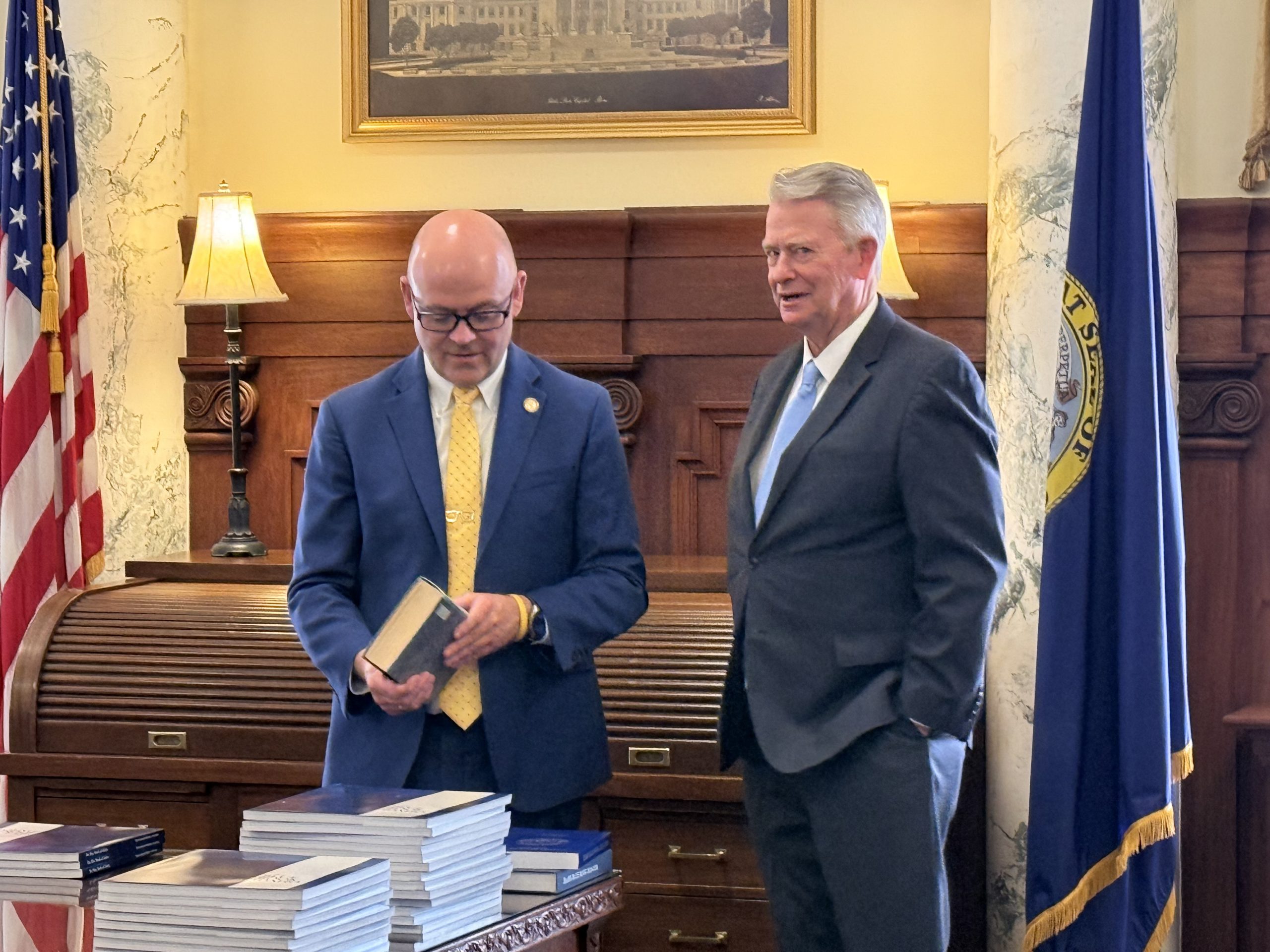
Feature image from the Department of Administration.
The Gem State Chronicle delivers daily analysis, op-eds, press releases, and Idaho Insider updates — free to your inbox.
Free newsletter · Unsubscribe anytime · View on Substack

About Brian Almon
Brian Almon is the Editor of the Gem State Chronicle. He also serves as Chairman of the District 14 Republican Party and is a trustee of the Eagle Public Library Board. He lives with his wife and six children in Eagle.