By Tim Oren
In the last two installments of this column, I began analyzing Idaho campaign contributions in terms of groups of donors, and defined eight such groups. I showed the correlation of donations from the ‘Big Ag + Extractive’ group with legislative votes on illegal immigration related bills, and with support for the ‘RINO’ clusters of legislators in the Idaho Senate and House.
It’s time to look at the other seven donor groups (see afterword) and ask – first – are they really acting in coordination and – second – if so, to what effect?
If a group is acting in coordination they ought to display what the military calls ‘unity of effort’, that is, they should be moving towards a common objective. It turns out there’s a simple way to measure it in this case: Looking at contributions from all members of each of my donor groups, what percentage are in opposition to one another, that is, end up on two or more sides of a single primary race? If there is unity of effort, that number should be very low. I’ll set a cutoff of 10% to a call a donor group ‘real’ and worth analyzing as a collective effort.
Let’s start with the failed groups (granfalloons for you Bokononists):
For the ‘Individuals / Insiders’ group the opposition percentage is 64%. Which makes sense. It’s a bag of true individual donors, party insiders, and ideologically driven PACs. If they weren’t in conflict, we wouldn’t be having this discussion.
Three generic business groups also fall above 10%: Developers and related at 30%, Financial at 22% and the assorted ‘Special Interest’ at 16%. They may share business interests in a ‘Chamber of Commerce’ sense, but there are enough conflicting interests to keep them from acting cohesively – they must be looked at race by race, donor by donor.
Leaving four groups that are apparently behaving with unity: the aforementioned ‘Big Ag + Extractive’ group (8% oppositions), Medical (3%) and Chemical (0%) and Utility (0%). Members in these groups seldom step on each others’ toes – they display unity of effort.
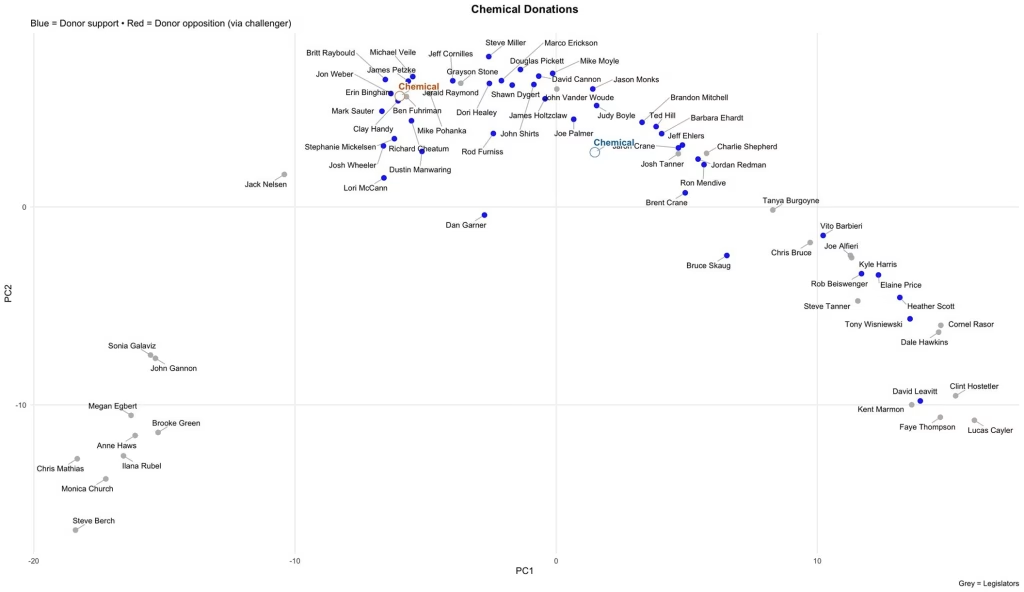
Of those groups, two of them – Chemical and Medical – are Friends to All (Incumbents). That is, they barely support any challengers or even open seat candidates – 2 of 64 contributions for the Chemical group, and 1 out of 64 for Medical. Here are House primary contributions for those two groups, laid out on the 2026 session map. Chemical:
Medical:
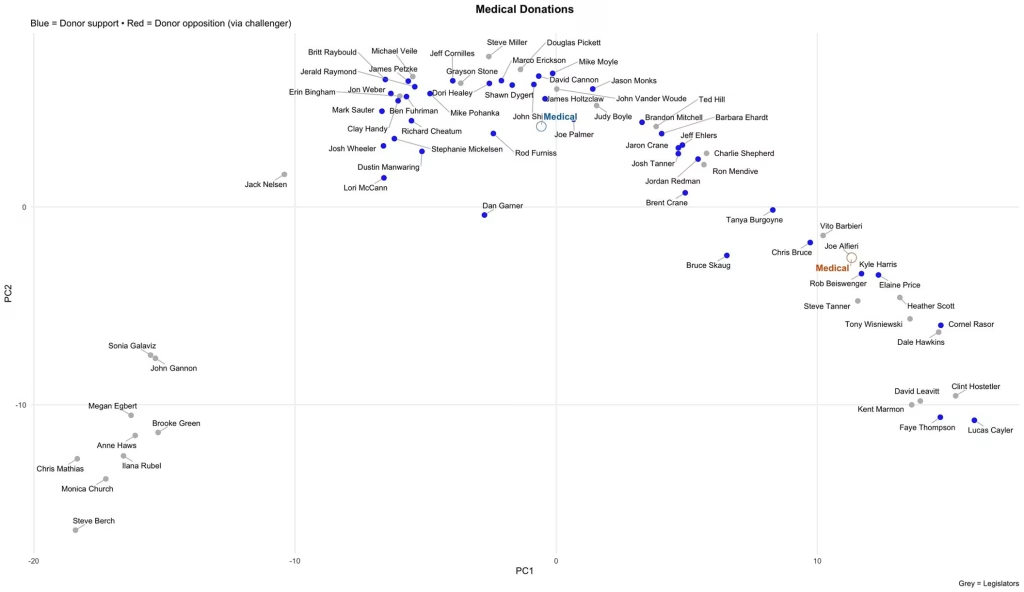
For both, the supported candidates (blue) are an ideological spread and the center of gravity (large blue spot) is close to the average of the House. (The opposing – red – spots are not significant in these cases.)
This is access buying. Being able to say ‘we were donors’ when questions of regulation, liability, or spending come up. They want their calls answered and meetings taken and don’t want to be remembered as having backed a defeated challenger when the roll call comes.
Leaving two groups that do play favorites and back challengers in a unified manner. The Utility group has backed 7 legislative challengers without a single conflicting donation. Here’s their House primary donation map:
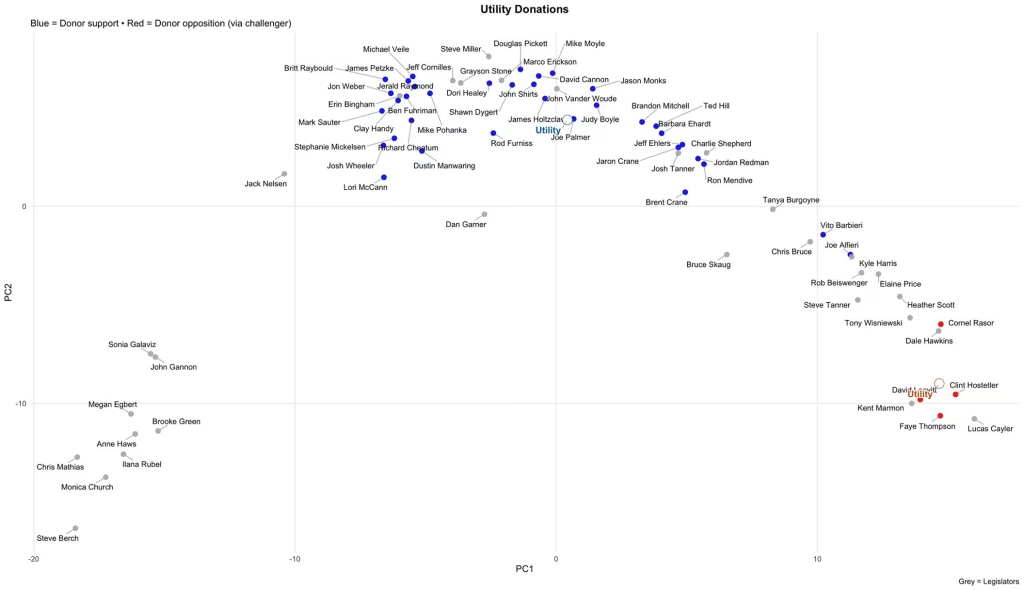
While there’s a fairly wide ideological spread of support, there’s clearly a bias when it comes to opposition. What interests do members of this group share? This group combines energy and communications providers and a railroad. They all have at least quasi-monopoly aspects to their business and depend on government in whole or part to authorize and maintain it, and to permit rate increases for regulated utilities.
Leaving our Big Ag & Extractive friends. They made 22% of their contributions to a challenger candidate. Here’s their House donation map:
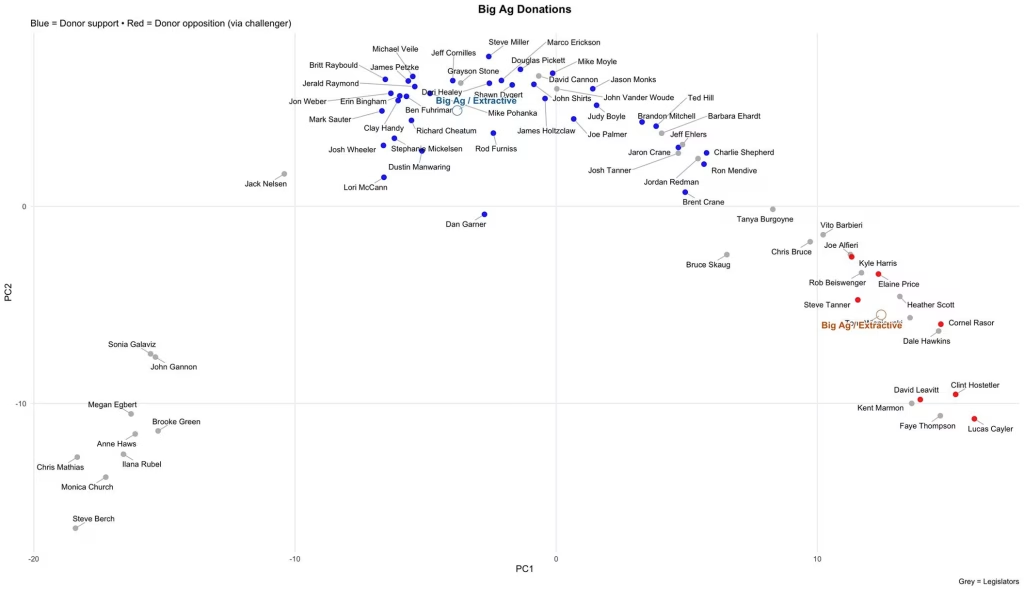
There is a clear ideological bias in both support and opposing donations. All members of this group share an interest in securing cheap labor, and transferring as much of the associated costs as possible to the commons. To that the extractive (mining, timber) interests add shelter from environmental regulations and often access to public lands.
I’ll return to some of these groups in future posts, but for now, I’ll move on my second question from above: To what effect?
Here it helps to zoom in on individual races. I’ll jump to the Senate and look at a hot race, Jim Guthrie versus challenger David Worley in District 28. Here’s a Sankey diagram of primary donations to date:
Note that all four of the ‘unified’ groups from above donated 100% to incumbent RINO Guthrie. The remaining four split to one degree or another in this race. While this looks like a true David v. Goliath matchup, there is a twist. By stonewalling this year’s illegal immigration bills in his Senate committee, Guthrie has stirred up the grassroots. When I go from my groups that are composed of ‘big dog’ donors only, and instead use overall contributions from the Sunshine site, I get this:
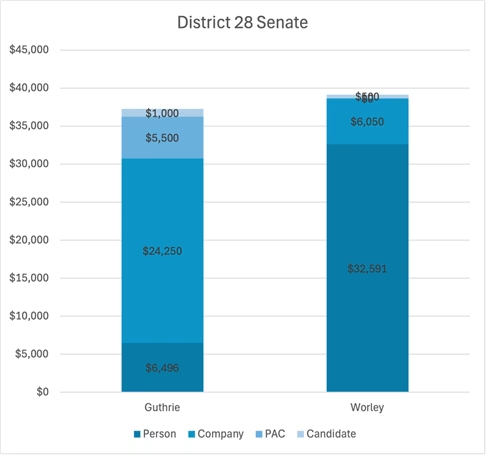
Worley is actually ahead in direct contributions, due to outraising Guthrie nearly 7 to 1 among smaller donors. What I’m showing here is not the whole story; in part it’s meant to show where those who don’t like the current situation can try to make a difference. I’ll be digging into more individual races going forward.
Afterword
You can find the donor group listings on my Google Drive (I think I fixed the permissions). There have been a few recent additions.
The Gem State Chronicle delivers daily analysis, op-eds, press releases, and Idaho Insider updates — free to your inbox.
Free newsletter · Unsubscribe anytime · View on Substack

About Tim Oren
Tim Oren retired to Idaho after a 30 year career in Silicon Valley. Here he gardens, home-brews, teaches kids to shoot, and has applied his well-aged statistics degree to subjects such as educational funding and results, Idaho legislative race targeting, and now legislators' voting patterns. He is a contributor to the Idaho Freedom Foundation and a number of Idaho candidates.