Under the budgeting process that the Joint Finance-Appropriations Committee (JFAC) implemented in 2024,the previous fiscal year’s budgets are divided into ten maintenance budget bills, while agency requests are placed in separate enhancement budgets. This allows legislators to vote for or against enhancements on their merits without having them tied to the larger agency budget.
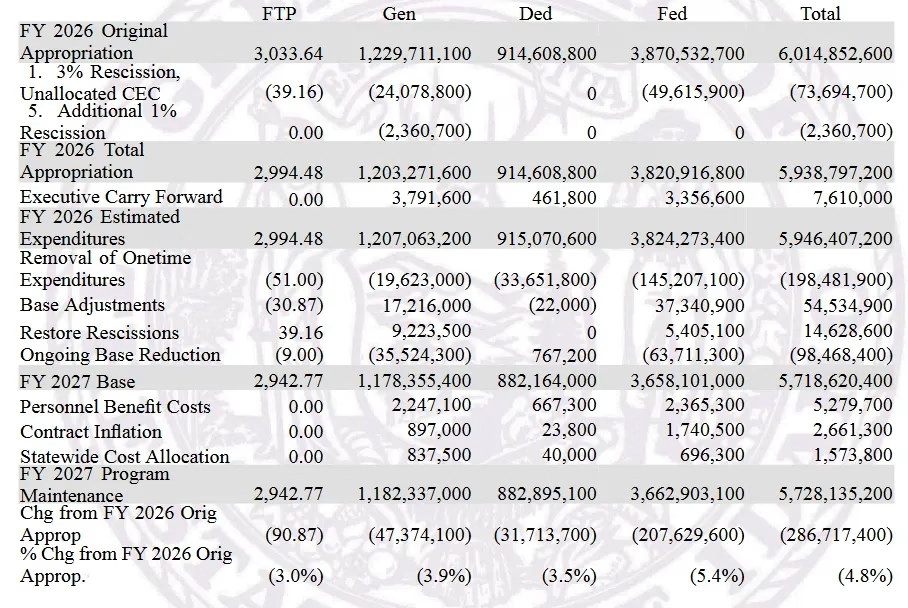
This year, JFAC voted to cut 4% across the board for the Fiscal Year 2027 maintenance budgets—Gov. Brad Little’s 3% holdback for FY2026, plus an additional 1%. Several maintenance budget bills have passed one chamber thus far, but on Thursday morning the Senate rejected Senate Bill 1375, a $5.7 billion appropriation for health and human services.
This is the largest single portion of the state budget, making up more than one-third of total appropriations. Much of the 4.8% reduction from the FY2026 original appropriation comes from removing one-time expenditures, while several ongoing line items actually increased.
Watch the full debate here:
Sen. Kevin Cook was clearly unhappy with having to carry this maintenance budget bill on the floor. He has been vocal about his opposition to the process and was one of the Republicans who joined with Democrats on Groundhog Day 2024 to try to break the process before it had even begun. During his debate, he all but invited senators to vote against the bill.
Sen. Glenneda Zuiderveld was the first to speak against S1375, calling it a continuation of reliance on federal funds that threatens to keep Idaho taxpayers on the hook for future spending increases. Sen. Melissa Wintrow spoke next, opposing the bill because she believed it cut too much. She blamed existing cuts for several deaths and warned that maintaining reduced reimbursement rates for Medicaid providers could drive many of them out of business.
Sen. Jim Guthrie then rose to oppose the budget, calling it a “massive” cut to services that would hurt Idahoans and damage the economy. He contrasted the current moment with the legislative sessions during the Great Recession, when he and his colleagues cut $600 million from the budget due to declining tax revenue and also drew from the state’s rainy day funds. Guthrie even boasted about voting against income tax cuts during the 2025 session, characterizing them as irresponsible.
Both Republican Sen. Treg Bernt and Democratic Sen. James Ruchti lauded Guthrie’s remarks, calling them a model of statesmanship. More than two-thirds of the Senate ultimately voted against S1375, with conservatives opposing it for not cutting enough, while Democrats and big-spending Republicans voted against it for cutting too much.

This puts JFAC in a bind. How can it possibly craft a bill that satisfies those who believe a 4.8% reduction in spending (built mostly on ending one-time expenditures) is a massive, draconian cut that will literally cause people to die, as well as those who believe the reduction is insufficient and further deepens our fiscal hole and dependence on federal money?
There is a divide in the Idaho Legislature that goes beyond party identification. Democratic Sens. Wintrow and Ruchti stood alongside Republican Sens. Guthrie and Bernt in the belief that government programs are the foundation of society and that cutting spending threatens that stability.
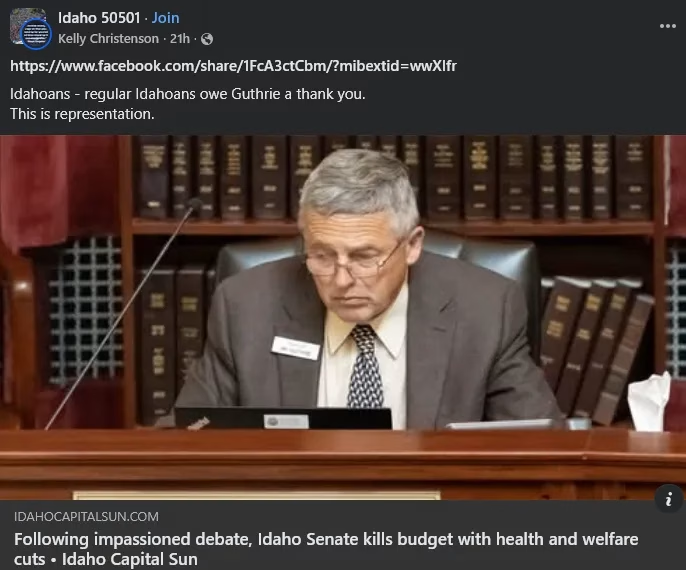
Indeed, while scrolling the Idaho 50501 group on Facebook, I found—tucked in between numerous deranged posts about President Trump—several posts lauding Sen. Guthrie for what these radical leftists consider his brave stance in support of government spending. It makes one wonder who Guthrie believes is his base—Republican voters in District 28, or Boise-area Democrats?
Budget writers in JFAC must now decide which direction to go. S1375 fell eight votes short of passage. Would it be easier to pick up eight fiscal conservatives by trimming more spending? Or eight big spenders by reducing the cuts?
There is no doubt where I stand. I fundamentally disagree with Sen. Guthrie and his Democratic allies that the world will end if this budget is cut by 4.8%. Government is not the foundation of society. Dependence breeds more dependence, and we should be creating off-ramps for citizens who currently rely on taxpayer subsidies, not simply increasing the dose. We have created an unsustainable system in which not only individuals rely on government welfare, but entire business ecosystems depend on it as well.
If the Legislature cannot make even the smallest cuts this year, what will it be able to do if—and when—we face another recession in the future?
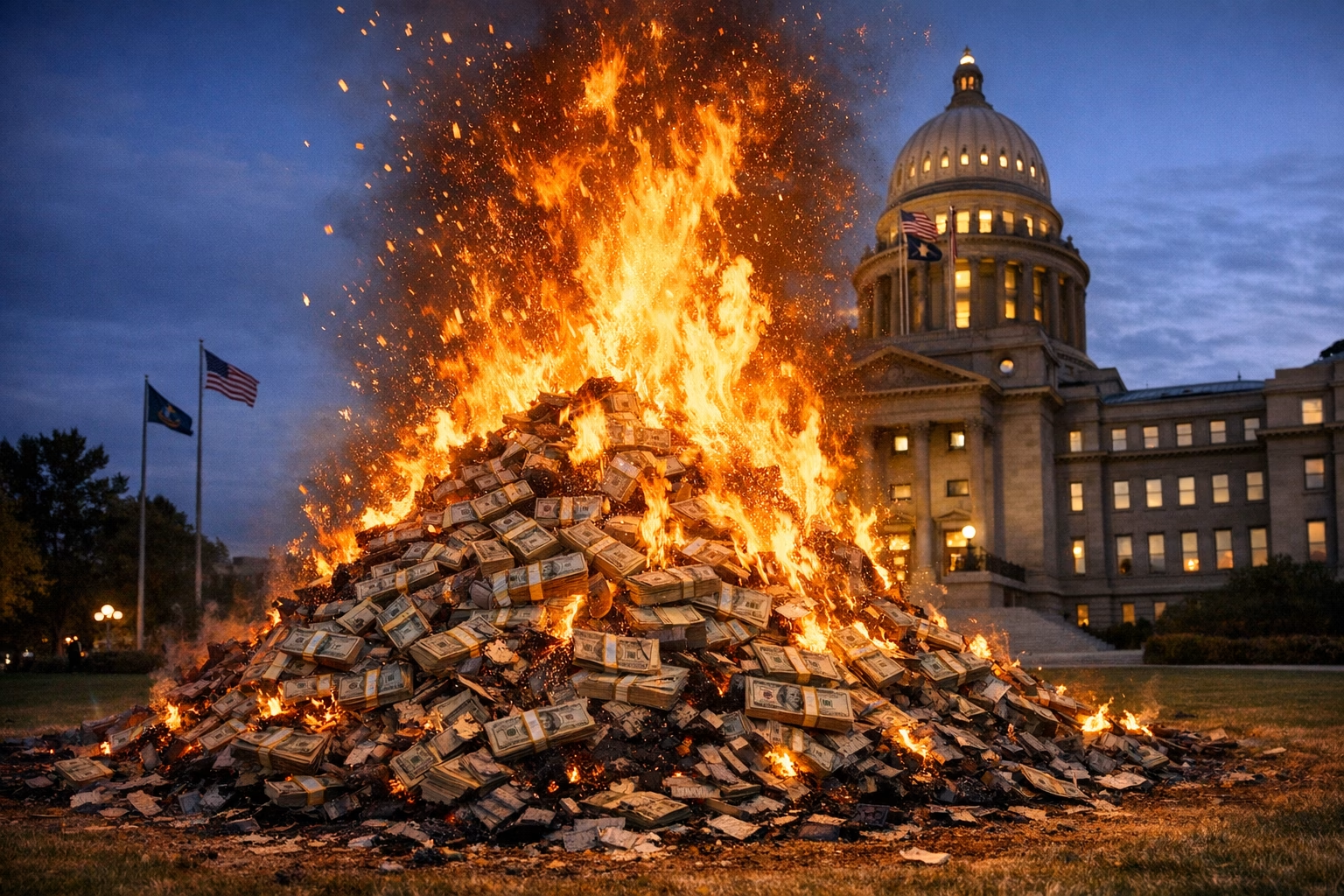
Feature image created with Microsoft Copilot. (No dollar bills were actually burned in production of this article.)
Gem State Chronicle is a reader-supported publication. To receive new posts and support my work, consider becoming a free or paid subscriber.
The Gem State Chronicle delivers daily analysis, op-eds, press releases, and Idaho Insider updates — free to your inbox.
Free newsletter · Unsubscribe anytime · View on Substack

About Brian Almon
Brian Almon is the Editor of the Gem State Chronicle. He also serves as Chairman of the District 14 Republican Party and is a trustee of the Eagle Public Library Board. He lives with his wife and six children in Eagle.