Politics is the adjudication of power, simple as that. A former Idaho GOP state chairman vehemently disagreed when I said that once, framing it as the antithesis of conservative ideology. Yet that same figure spent six figures of his own money in 2024 in an attempt to regain power within the Idaho Republican Party. Actions speak louder than words.
Even anarcho-libertarians who want to abolish 99% of government so they can simply be left alone must first amass political power to make their dreams a reality. That is the nature of our republican form of government. It’s simple math: creating law in Idaho requires the assent of 36 members of the House, 18 members of the Senate, and one governor. That is why, as I wrote a few weeks ago, despite the fact that legislators are elected by and meant to serve their own constituents, we have seen the growth of factions and coalitions seeking a majority in the Legislature so they have the power to implement their shared goals.
We are watching this play out in real time at the national level with the battles over congressional districts. Democrats have long enjoyed disproportionate political power in the South due to the way courts interpreted the Voting Rights Act of 1965 to guarantee majority-minority districts. With the Supreme Court striking down this interpretation in Louisiana v. Callais last month, southern states are free to redraw their maps to better reflect the population in general, which will likely shift the House of Representatives toward the GOP.
Southern states might not have been quite so aggressive in redistricting had Democrats in Virginia not attempted to impose a map intended to eliminate four Republican congressmen. That map, which created numerous districts with slivers extending into the DC metro area to ensure Democratic dominance, was struck down by the Virginia Supreme Court because Democrats blatantly ignored state law in their rush to place it on the ballot.
Politics is increasingly becoming a zero-sum game in America, as the consequences for the party out of power become increasingly existential. Idaho does not have the same two-party dynamic, but the same principle is nevertheless playing out within the Idaho GOP. For many years, a political machine centered around Gov. Brad Little has dominated Idaho politics, moving large sums of money and influence to ensure the Legislature is structured to achieve its desired outcomes. The last few years have seen a decentralized conservative insurgency gain significant political power within the Legislature, though it still lacks the cohesion and resources attached to the governor.
Those surrounding the governor’s machine cried foul when Rep. Jordan Redman put six figures toward conservative challengers, but they themselves have long benefited from constant contributions and independent expenditures from that same machine. Indeed, Gov. Little himself visited Twin Falls and Idaho Falls last week, campaigning for challengers to Magic Valley conservatives as well as moderate eastern Idaho incumbents. While he has signed nearly every conservative bill passed by the Legislature in the past two years, he is actively working to reshape the Legislature into something more aligned with his agenda.
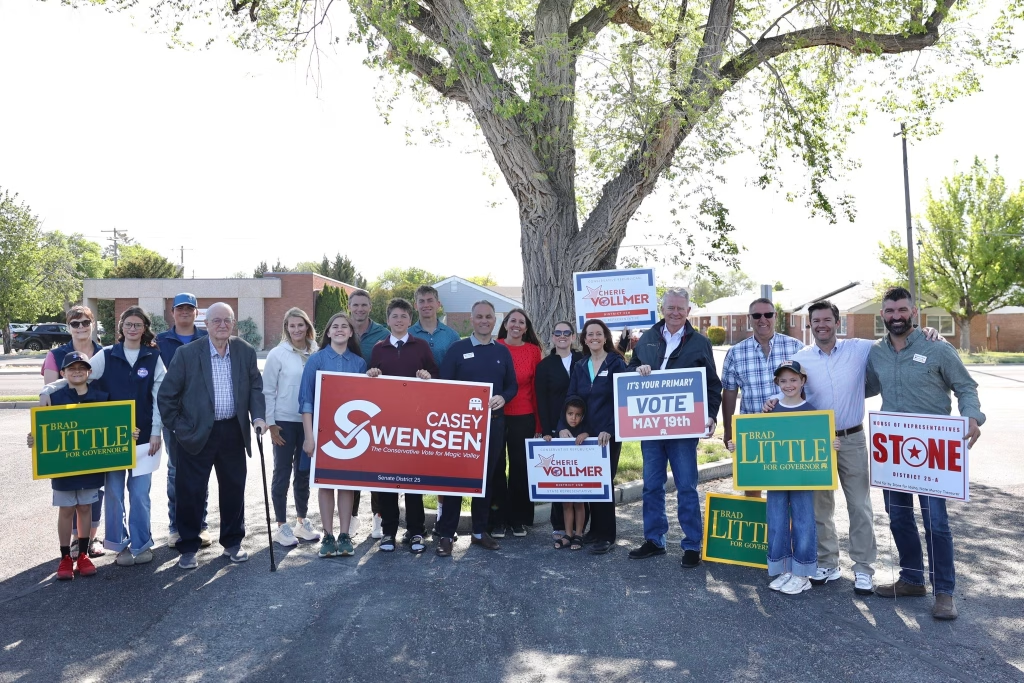
What is the governor’s agenda? In short, more of the status quo. I’ve written before that Gov. Little seems to see himself as the manager of a system rather than the iconoclast many conservatives wish for. Many Idaho conservatives remain outraged over the way the governor handled the COVID-19 pandemic and have expressed frustration that he has not been more active in fighting culture war issues or rooting out waste, fraud, and abuse in Idaho government. Nevertheless, the economy continues to perform well, unemployment remains low, and Little’s approval rating is still north of 60%.
That dichotomy was on display in a hot mic recording released last week in which Little characterized supporters of gubernatorial challenger and Old State Saloon owner Mark Fitzpatrick as Californians who moved here within the last three years, some of whom, he said, were openly racist against Mexicans.
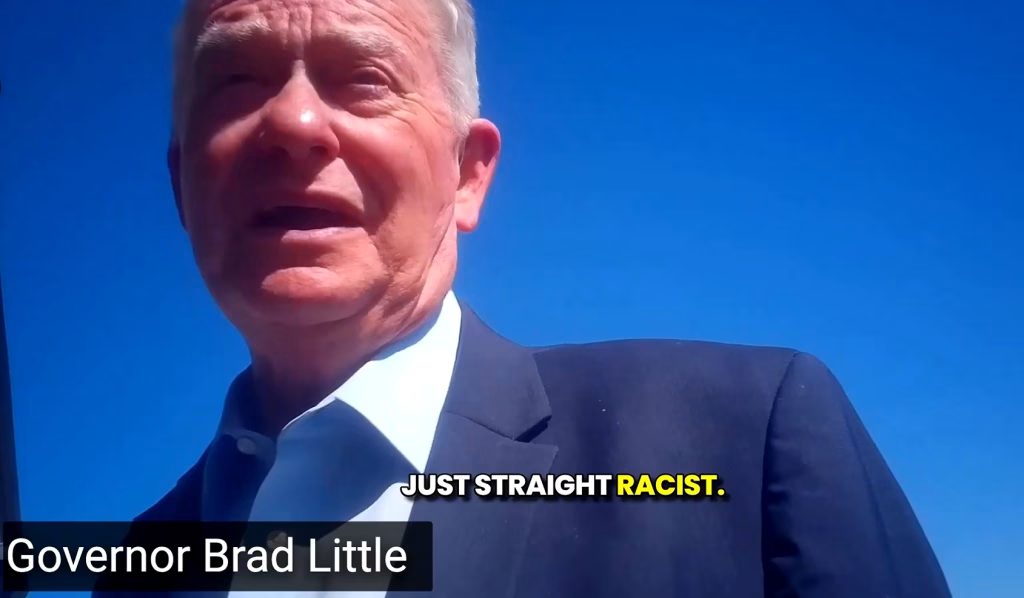
Other figures in the recording included farm and dairy lobbyists who defended the industry’s use of illegal migrant labor and denounced legislative attempts to hold employers accountable for hiring illegal immigrants. Austin Smith, a field director for the governor’s reelection campaign, indicated that he did not believe Little would have signed bills to combat illegal immigration had they reached his desk.
The video has energized opponents of the governor on social media, but it remains an open question whether or not it will impact the election. As of this writing, Gov. Little has raised just under $2 million for the 2026 campaign, while Fitzpatrick is nearing $200,000.
Both major factions in Idaho politics believe they are representing the people. The governor and his machine are connected to large industries, many of which claim to employ a substantial portion of Idaho’s working citizens and pay a significant amount of taxes. On the other side are what one could call the grassroots: ordinary people who have taken an interest in politics, especially after the COVID-19 lockdowns demonstrated how oppressive government could become. Fitzpatrick boasts endorsements from ten Idaho GOP county central committees, compared to none for Gov. Little. That reflects the zeal of the grassroots, who have become involved in party politics precisely because they believe the political system is controlled by big businesses and special interests.
There is also a regional component at work. The large rural counties in southeastern Idaho, which are economically dependent upon Big Ag and government subsidies, generally support the governor and his agenda, while those who make their living in other industries, or who have a more libertarian streak, tend to oppose him. Little was correct that many Fitzpatrick supporters are California transplants, but that reflects the fact that many people who have recently moved from blue states are more conservative than those who have lived here longer.
It’s ironic that, in a single audio clip, Gov. Little and his allies both denounced Idahoans who recently moved from California while defending the use of migrant labor from foreign nations. The same people who will call you racist for objecting to mass foreign migration will ridicule anyone who is not at least a fifth-generation Idahoan when it comes to local politics.
While the results of next Tuesday’s primary will be insightful, they will not end this factional battle. The contest between big government and small government, active government and passive government, corporatism and individualism, and progressivism and libertarianism will never end. Politics is a team sport, so teams will always coalesce and attempt to capture a majority capable of implementing their agenda. No matter what happens on May 19, conservatives must continue developing a positive vision for the future and do the work necessary to make that vision possible.
The two factions have competing visions for the future, in fact. The machine views stability and management as the most important functions of government, while the grassroots seek disruption and reform in order to preserve liberty. Conservatives must accept that the question is not whether politics is about power, but rather what we choose to do with the power that already exists. The liberty and prosperity of our grandchildren depend upon what we accomplish today, so let’s get to work.
Feature image created with Microsoft Copilot.
The Gem State Chronicle delivers daily analysis, op-eds, press releases, and Idaho Insider updates — free to your inbox.
Free newsletter · Unsubscribe anytime · View on Substack

About Brian Almon
Brian Almon is the Editor of the Gem State Chronicle. He also serves as Chairman of the District 14 Republican Party and is a trustee of the Eagle Public Library Board. He lives with his wife and six children in Eagle.