By Savanna DeHay

Intro
In the name of health, sometimes we bite off more than we can chew. We hyperfocus on “perfection” or try so many different things at once, only to get discouraged and burnt out. But true health isn’t about the false idol of perfection; it’s about daily habits that support longevity. Sometimes, the healthiest thing we can do is the opposite of what we think is right.
Resting from Exercise
Lift heavy. Push to failure. Hit 70% maximum heart rate.
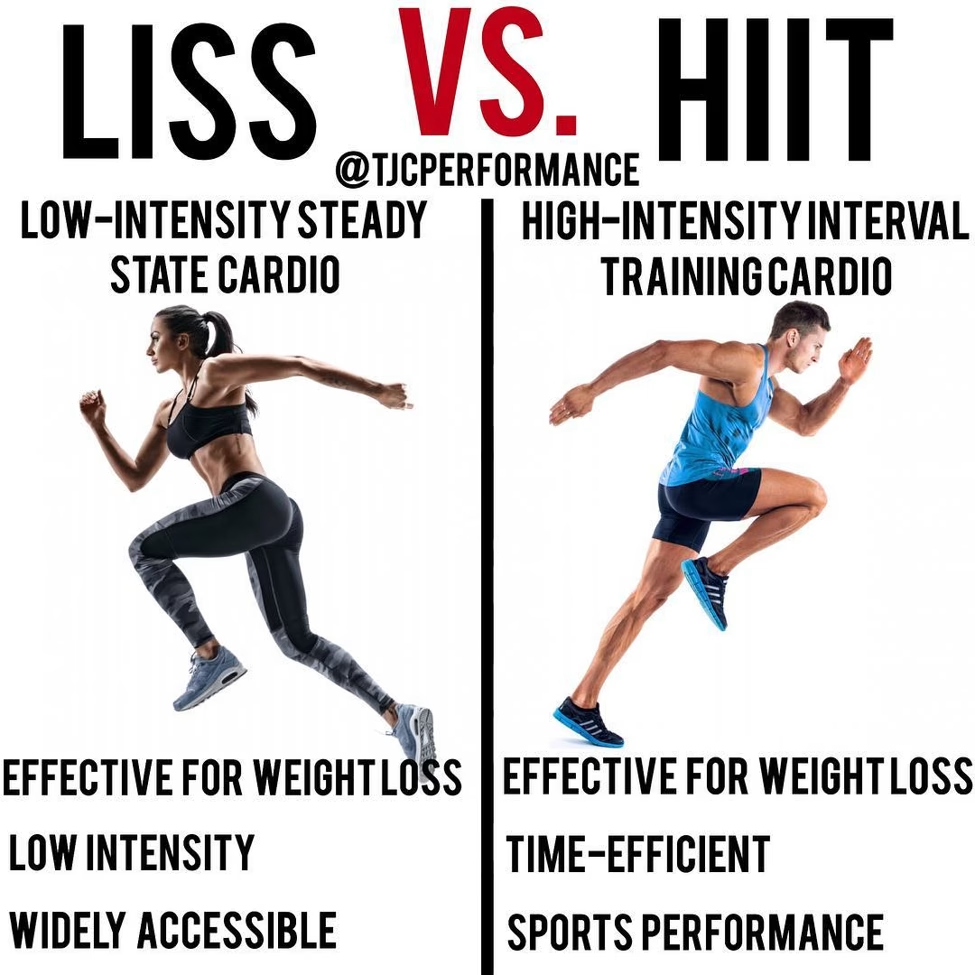
These are great goals, but overdoing them creates stress. Excessive intensity spikes cortisol, causes hormonal imbalances, adrenal fatigue, and can even lead to weight gain. Your body needs two to four rest days to repair and grow. Muscles can’t build if they are constantly strained. The body won’t burn fat if it feels stressed.
High-intensity exercise capped at 30 – 45 minutes maximizes benefits without spiking cortisol. Low-intensity exercise rarely increases cortisol and may even lower it! It may take longer to see results, but it’s sustainable.
Refeed Days & Reverse Dieting
“Wait, I have to eat more to meet my goals?”
It seems counterintuitive, but yes. Your body needs adequate nutrients and calories to function. Severe restriction might yield quick weight loss, but it stresses the body and is hard to maintain. One study found most people who lose weight “regain 50% of that weight within two years and 80% within five years,” (Huddy, MS, RD, LD).
Why? Because even if overweight, the body perceives weight loss as starvation. It sacrifices muscle for fat, slowing your metabolism and leading to rebound weight gain. We were meant to thrive on plenty of healthy, ancestrally appropriate foods. For most Americans over 5’4’’, that means at least 2000 calories a day. God did not create us to starve on just 1200 calories a day.
Refeed Days and Diet Breaks to Protect Metabolism
Chronic calorie deficits (over 3 months) slow metabolism and spike cortisol. Eating maintenance calories for 1-2 days per week, or taking a 1–2-week break, reduces cortisol and keeps metabolism firing. Focus on healthy fats and ancestral carbohydrates.
Reverse Dieting
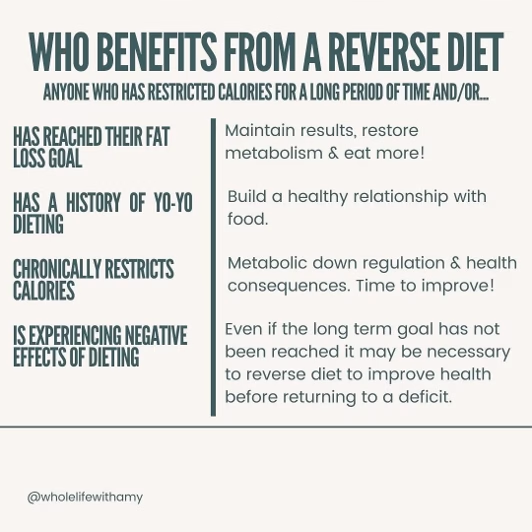
Reverse dieting is simply structured, gradual increase in calories to prime metabolism.
- Before a diet: Add 50 – 100 calories weekly. (e.g. 1800 → 1850 calories). This mild increase allows your body to adjust its metabolic rate upward without gaining weight. The result? A higher baseline that makes your future calorie deficit deeper and more effective.
- After a diet: Use it to slowly boost metabolism, preserve muscle, and mitigate rebound weight gain.
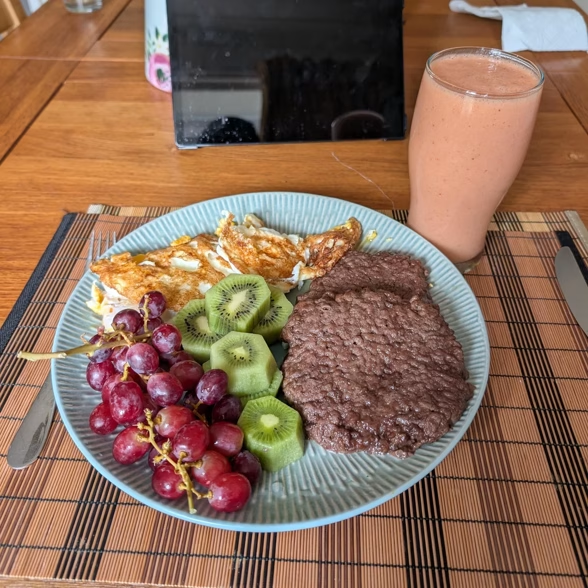
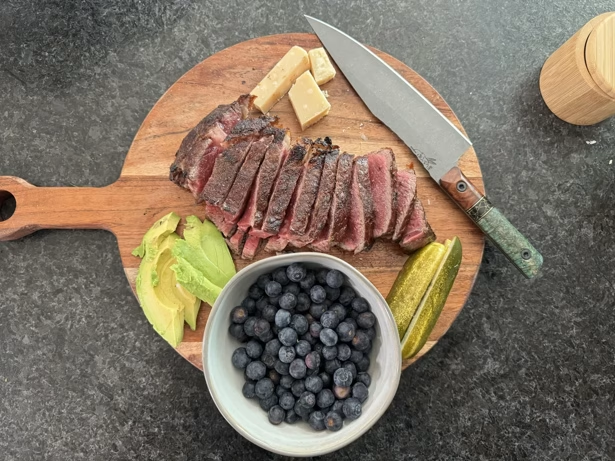
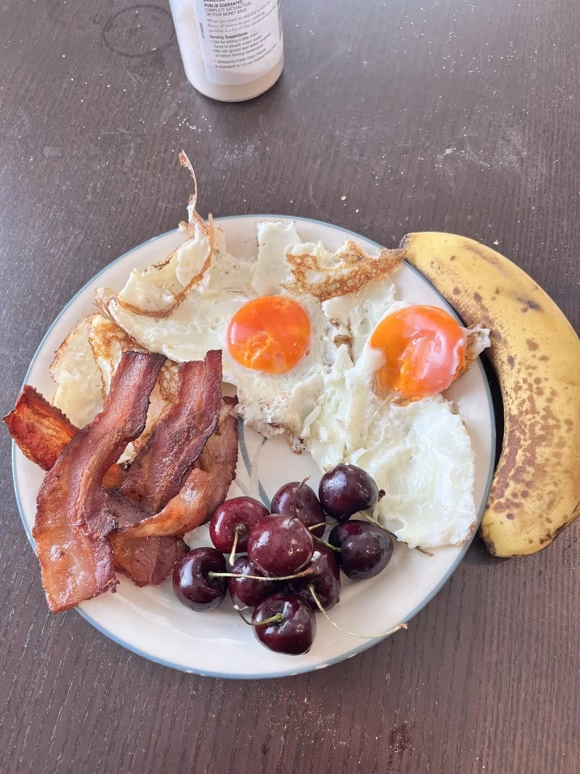
Reevaluating Macros
The mainstream media screams “cut carbs.” While processed grains and refined sugars drive chronic disease, insulin resistance, and metabolic dysfunction, the reality is more nuanced.
- Who needs to cut carbs? Those with high body fat, pre-existing conditions, or digestive issues can benefit from removing plant toxins from their diet.
- Who needs carbs? Athletes, growing children, those with thyroid issues, and anyone with healed digestion can benefit from natural carbohydrates (fruit, honey, maple syrup, and potatoes and squash). These are loaded with vitamins, minerals, and antioxidants. They can help lower cortisol, preserve muscle mass, balance electrolytes, and fuel performance
Skip the bread and rice. Instead, pair a piece of fruit with healthy protein and fats. Simple, delicious, and effective!
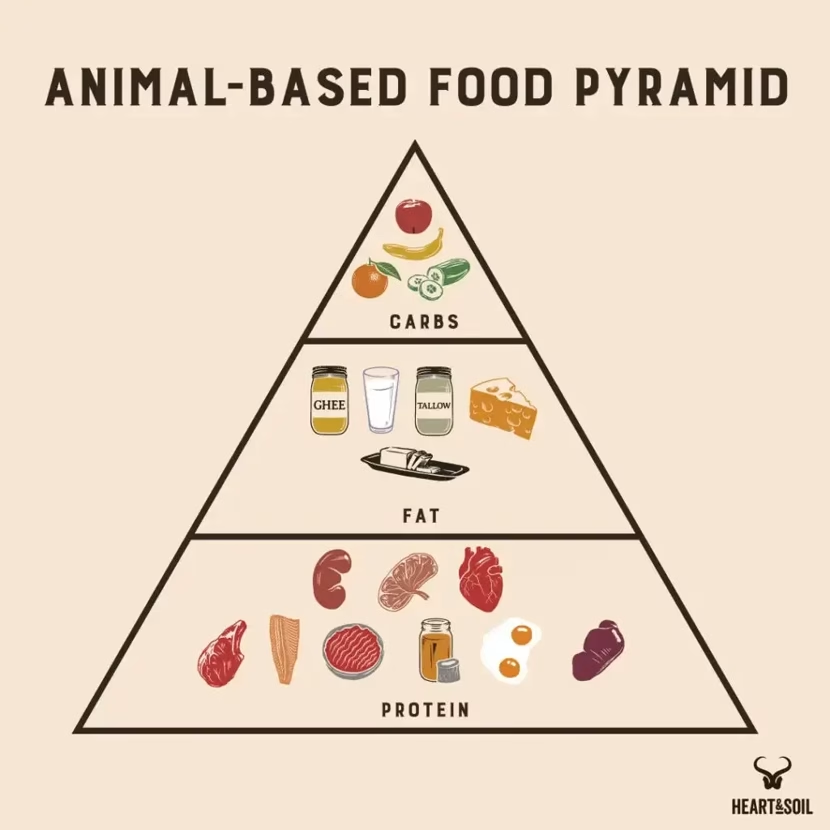
Keep it Simple
A healthy lifestyle doesn’t need to be complicated. Stick to the basics:
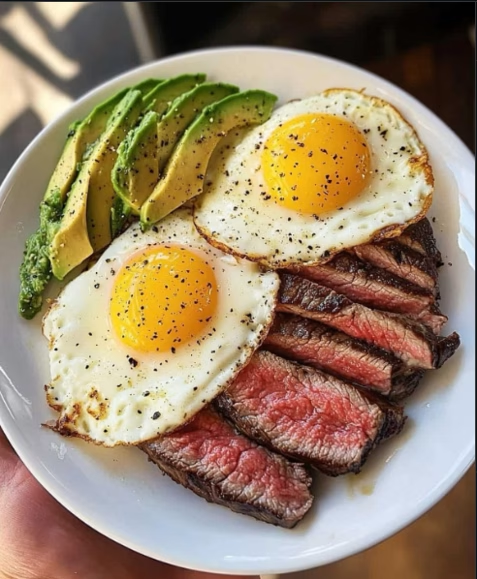
- Protein: At least 1g of animal-based protein per pound of desired body weight.
- Fats: Healthy fats like butter, beef tallow, and olive oil.
- Carbs: Easy-to-digest sources (like fruit, honey, and maple syrup).
- Gut Health: Probiotics.
- Movement: Strength training and walking
- Lifestyle: Sunshine, lymphatic drainage, and gratitude
- Foundation: Keeping Christ as #1!

Conclusion
Don’t try to do everything at once, burn out, and quit. Daily healthy basics form good habits that improve your quality of life and longevity. Animal based protein, weight-lifting, and rest. Even if you stuck to just those three things, you’d be setting yourself up for ultimate metabolic health. It’s about unlearning the bad habits that mainstream health forces on you. We’ve been taught that “healthy” means starving, over-training, and stressing our bodies into submission. To actually get well, you have to do the exact opposite: eat more, rest more, and stress less.
By deliberately doing what feels “wrong” to your broken metabolism, you prime your body to finally burn fat, build muscle, and thrive. You aren’t falling off the wagon; you’re fixing the wheel so you can drive further than ever.
- Click HERE for 20% off your order of keto-friendly Matt-Hat Jerky!
- Upgrade your skincare with Purely Tallow. Click HERE for hypoallergenic skincare!
- Craving chocolate? The Good Chocolate offers sugar-free, keto chocolate with one 1g net carbs per serving. Great taste minus the crash! Click HERE for chocolatey goodness.
- Tired of chemically laden products and want to upgrade your haircare? Vita Prima offers ancestral hair products formulated with natural ingredients. Learn more HERE!
Sources
- Figure 1. Steak & Eggs with Sliced Avocado. Steak World, https://www.instagram.com/p/DNneMg6oV-i/. Accessed 29 March 2026.
- Figure 2. https://www.reddit.com/media?url=https%3A%2F%2Fpreview.redd.it%2Ftime-to-be-strict-v0-jc7zbrmb9c2f1.jpeg%3Fwidth%3D1080%26crop%3Dsmart%26auto%3Dwebp%26s%3D34d7bc277013f2d2712b66a6c894dbbca25ee533. Accessed 31 March 2026.
- Figure 3. https://www.reddit.com/media?url=https%3A%2F%2Fpreview.redd.it%2Flunch-v0-szvkij1gmowc1.jpeg%3Fwidth%3D1080%26crop%3Dsmart%26auto%3Dwebp%26s%3D4111bc03ad8a39d744874c953cb1a1a97ff44cb6. Accessed 31 March 2026.
- Figure 4. https://www.reddit.com/media?url=https%3A%2F%2Fpreview.redd.it%2Fold-meal-picture-v0-wpan07587occ1.jpeg%3Fwidth%3D1080%26crop%3Dsmart%26auto%3Dwebp%26s%3Dcbcfb0ca31bc0f0f5e5e7c4d7760218e3f408699. Accessed 31 March 2026.
- Hall, Kevin D., Kahan, Scott. Maintenance of lost weight and long-term management of obesity. NIH, 1 January 2019, https://pmc.ncbi.nlm.nih.gov/articles/PMC5764193/. Accessed 27 March 2026.
- Heart & Soil, https://heartandsoil.co/. Accessed 4 April 2026.
- Huddy, Jennifer, MS, RD, LD. Why Am I Gaining Weight Back After Losing It? Is It Normal? Use Nourish, 12 December 2023, https://www.usenourish.com/blog/gaining-weight-back-after-losing-it. Accessed 27 March 2027.
- Joshu, Amy, Pn1 & Pn2. What is a Reverse Diet? 23 June 2022, https://www.facebook.com/amyjoshunutrition/posts/reverse-dieting-you-may-have-heard-of-it-but-what-is-it-who-is-it-for-why-would-/555170192900573/. Accessed 31 March 2026.
- Kovalev, Artem. Unsplash, https://unsplash.com/@artemkovalev?utm_source=unsplash&utm_medium=referral&utm_content=creditCopyText. Accessed 23 March 2026.
- TJC Performance LLC. LISS vs. HIIT. 12 February 2019, https://www.facebook.com/photo.php?fbid=2036728166626882&set=a.773089057371473&id=100040111585239. Accessed 23 March 2026.
- Vecteezy, https://www.vecteezy.com/free-photos/walk-barefoot?page=2. Accessed 4 April 2026.
The Gem State Chronicle delivers daily analysis, op-eds, press releases, and Idaho Insider updates — free to your inbox.
Free newsletter · Unsubscribe anytime · View on Substack

About Savanna DeHay
Savanna DeHay graduated from North Idaho College in 2022, and currently lives in North Idaho. She writes about health, current events, and other important issues.