It is taken as an article of faith amongst Idaho conservatives that public schools are failing our students. According to the Idaho Report Card, Idaho students are not meeting state goals in English and literacy, math, or science. We on the right have several proposed solutions, first and foremost being school choice, where money follows the student. This both gives current students better opportunities to succeed and introduces competitive pressure on the system.
But what about the students in the public school system today? Despite the temptation for conservatives to cloister ourselves via private schools or homeschooling, the future of our state remains in the hands of the hundreds of thousands of future voters who will graduate from the public school system. That means we need solutions now, even while we look ahead to big ideas that would change the system.
Late last year, I examined the debate over reintroducing phonics in Idaho’s K–12 public schools. Nearly everyone agreed that we needed to return to phonics-based literacy instruction. The question was how, and at what cost. Superintendent Debbie Critchfield asked for an additional $5 million to implement a program to train teachers in phonics using the so-called “science of reading,” because it has become increasingly clear that the “whole word” method has failed to teach many students how to read, write, and understand the world around them. Was an additional appropriation necessary to correct this problem? And how do we, as taxpayers and citizens of Idaho, measure success?
I have argued in the past that government work should not necessarily be low-paying. If you bid too low for public employees, you will get what you pay for. But that must be combined with accountability as well. We have all heard horror stories of incompetent government workers making far too much while doing far too little. The question is how we measure competency and success.
That question is not merely academic. Earlier this month, the Board of Trustees of the West Ada School District approved a new contract for Superintendent Derek Bub that will increase his salary by $20,000 each of the next three years, reaching nearly $291,000 for the 2028–29 school year. While this seems high to me—and perhaps to you as well—I have been looking for the right way to evaluate it.
With nearly 40,000 students and close to 5,000 staff across 58 schools, the West Ada School District has no true peer within the state of Idaho. Boise School District, the second-largest in the state, has just over 20,000 students and around 3,000 personnel across 52 facilities.
A more apt comparison for West Ada might be a large corporation rather than another school district. CEOs of private-sector organizations of similar size and complexity often receive compensation packages well into the seven figures, depending on industry and revenue scale, which would make Bub’s salary comparatively modest.
West Ada trustees issued a memo to district patrons explaining their decision. Sean Dolan of Idaho Ed News obtained a copy:
West Ada School District is one of the most complex public organizations in Idaho and among the leading employers in the Treasure Valley. The organization operates Idaho’s most extensive food service and transportation networks while managing a physical and operational footprint that exceeds Boise State University. At the same time, West Ada is in one of the strongest financial positions in its history. Most importantly, our core mission of preparing today’s students for tomorrow’s challenges is being fulfilled every day, as West Ada ranks first in large Idaho districts in ISAT proficiency in English Language Arts, Mathematics, and Science. Guiding an organization of this scale requires proven performance, continuity, and a clear long-term vision.
The best way to serve our students, employees, and community is to ensure West Ada remains Idaho’s premier school district. Aligning the Superintendent’s contract more closely with national norms reflects our commitment to sustaining that excellence.
Dolan also acquired a copy of the contract itself.
According to the Idaho Report Card, West Ada exceeds the statewide average on nearly all fronts. Whereas only 53.2% of students statewide meet state literacy goals, 69% of West Ada students do. Only 42.3% of Idaho students meet state math standards, compared to 56.8% in West Ada. In science, Idaho students score 41.7%, compared to 55.4% in West Ada. These numbers still are not ideal, but I suppose we have to grade on a curve.
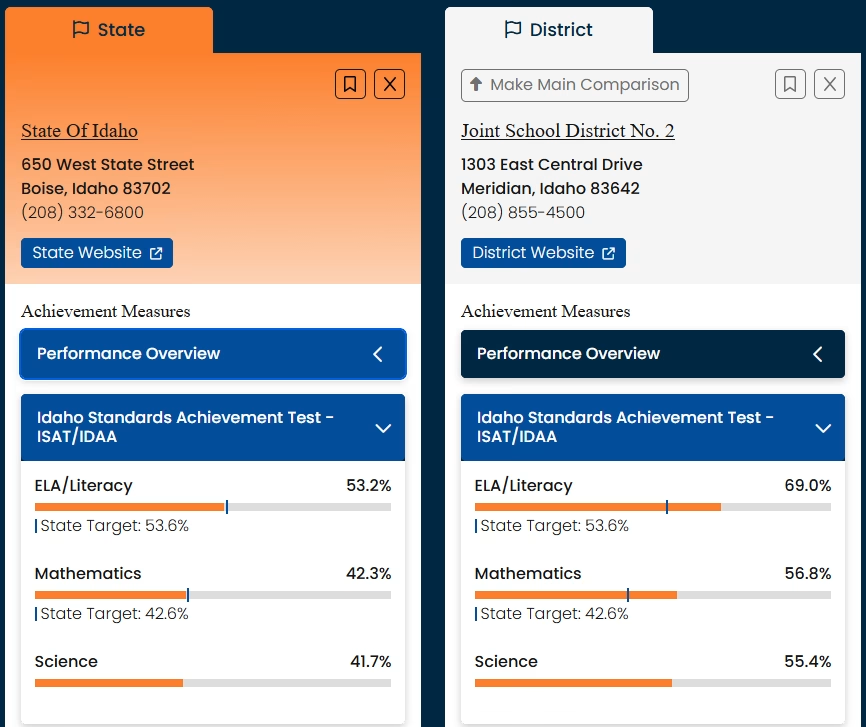
The Idaho Report Card also notes reading indicator proficiency in both fall and spring, showing how much students grow during the school year. West Ada students score 75.8% in the fall, compared to the statewide average of 70.9% in the spring. That means that the average student in West Ada is more literate at the beginning of the school year than students in other districts are at the end.
Public school students are clearly much better off in West Ada than in any other district in the state. How much of that can be credited to the superintendent? And if we demand that leaders take responsibility for failure, should they also receive credit for success?
In setting Dr. Bub’s salary, the West Ada Board of Trustees utilized a salary and benefits study produced by the School Superintendents Association. I reached out to the district office and obtained a scanned copy. The document contains extensive survey data and demographic breakdowns, but some of the most relevant figures are the median salary for superintendents of districts with 25,000 to 49,999 students at $295,000, and the median salary for suburban districts at $220,000.
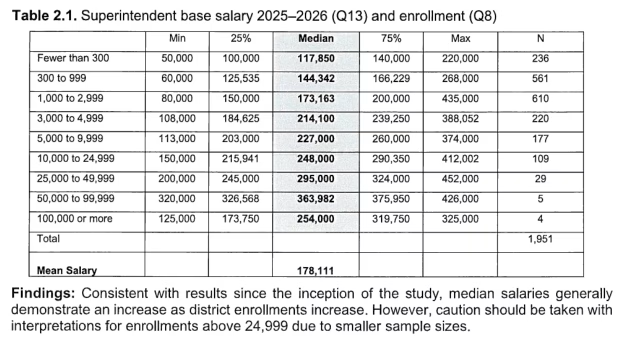
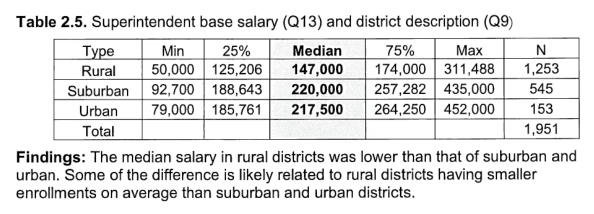
Dr. Bub’s current salary of $230,822 places him just above the median for suburban districts, but on the lower end for similarly sized districts by enrollment. His ultimate salary under the new contract of $290,822 will place him just under the median for large districts in that enrollment category.
I am not here to argue whether the new contract is right or wrong, but to attempt to properly frame the question. The trustees argue this adjustment is necessary to attract and retain top-tier leadership, beginning with the superintendent. As stewards of public funds, they are accountable to taxpayers and district patrons for that judgment. The real test will come over time: whether West Ada’s academic outcomes and overall performance continue to improve under Dr. Bub’s leadership. As with the new appropriation for reading instruction, the results—not the rationale—will ultimately be the measure that matters.
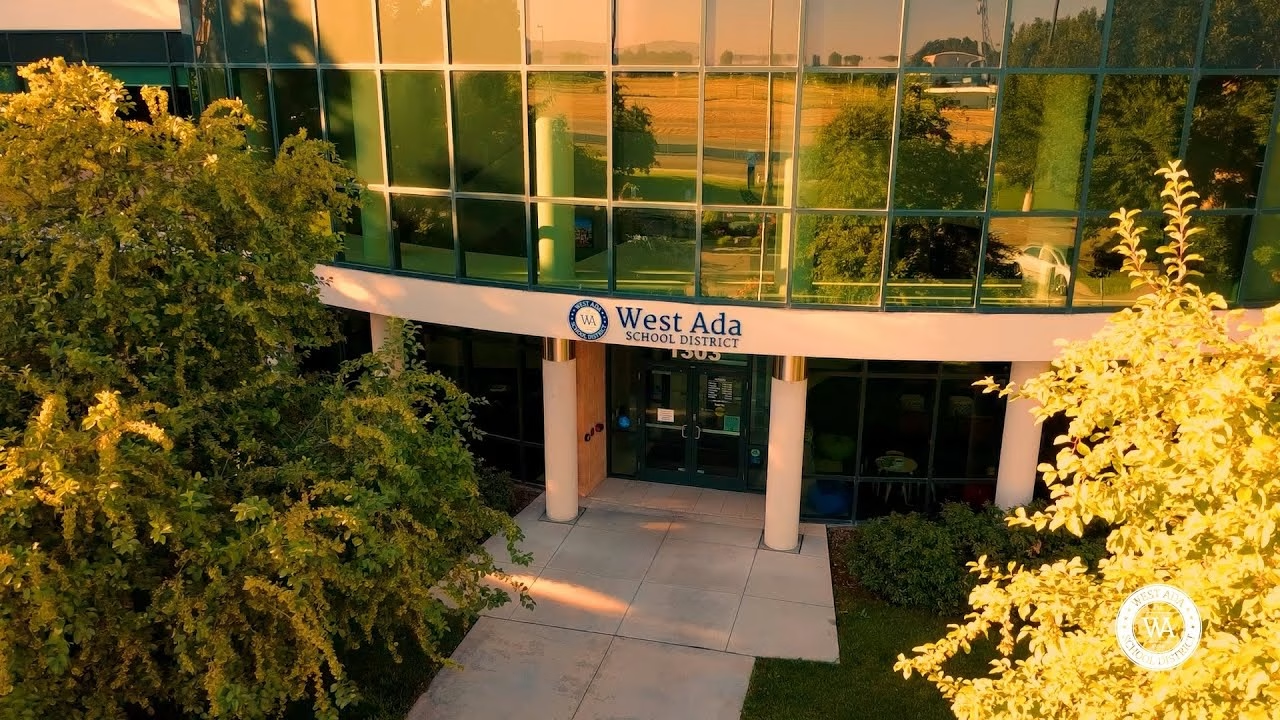
Feature image courtesy of West Ada School District.
The Gem State Chronicle delivers daily analysis, op-eds, press releases, and Idaho Insider updates — free to your inbox.
Free newsletter · Unsubscribe anytime · View on Substack

About Brian Almon
Brian Almon is the Editor of the Gem State Chronicle. He also serves as Chairman of the District 14 Republican Party and is a trustee of the Eagle Public Library Board. He lives with his wife and six children in Eagle.