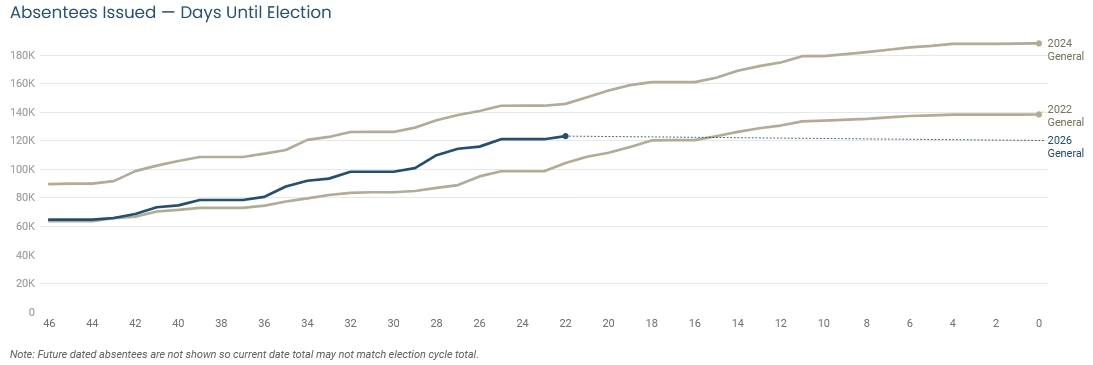
Early voting started this morning in several Idaho counties. Yet some voters cast their ballots days or even weeks ago. According to the Secretary of State’s absentee ballot dashboard, approximately 127,500 absentee ballots have been issued to Idaho voters, with 35,797 returned thus far, a 28% return rate. The total number of absentee ballots issued is lagging behind 2024 numbers but is ahead of 2022, the previous midterm election.
Breaking those numbers down by party, registered Republicans have been issued 74,311 absentee ballots and returned 20,179, for a return rate of 27.2%, just below the overall average. Democrats have been issued 24,804 and returned 8,538, a 34.4% return rate, while unaffiliated voters have been issued 25,016 and returned 6,724, or 26.9%.
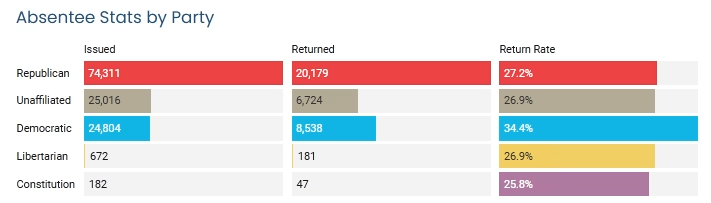
As of this month, Republicans make up 62.5% of all registered voters in Idaho, with unaffiliated voters accounting for 24% and Democrats just under 12%. However, the breakdown of absentee ballots issued is 59.5% Republican, 20% Democrat, and 20% unaffiliated. The share of absentee ballots thus far returned is 56.5% Republican, 24% Democrat, and 19% unaffiliated.
Note that these numbers are a snapshot in time. Check the Secretary of State’s dashboard for the latest data.
My sense is that conservative Republicans have long eschewed voting by mail, especially after so many questions arose from the 2020 presidential election, but followed President Trump’s lead in 2024 when he encouraged his supporters to vote early or by mail. Cliff Maloney, CEO of Citizens Alliance, predicted that if Republicans could reach a 33% absentee vote threshold in Pennsylvania, President Trump would win the state. They just barely hit that number, and Trump went on to win Pennsylvania and the presidency.
Yet many conservatives remain skeptical of mail-in voting, and rightly so, in my opinion. Unlike in-person voting, whether early or on Election Day, mailed ballots pass through more hands, creating additional potential points of failure. When the American Postal Workers Union and National Association of Letter Carriers both endorsed Joe Biden for president in 2020, it created even more concern among Republicans about whether their ballots would be properly handled.
Earlier this month, the Idaho GOP sent absentee ballot request forms to Republican voters throughout the state. I noticed some outrage from conservatives on social media, characterizing the move as using the enemy’s tools and giving up on election integrity. I saw things differently, however, posting on X that it was a “brilliant play” by the state party.
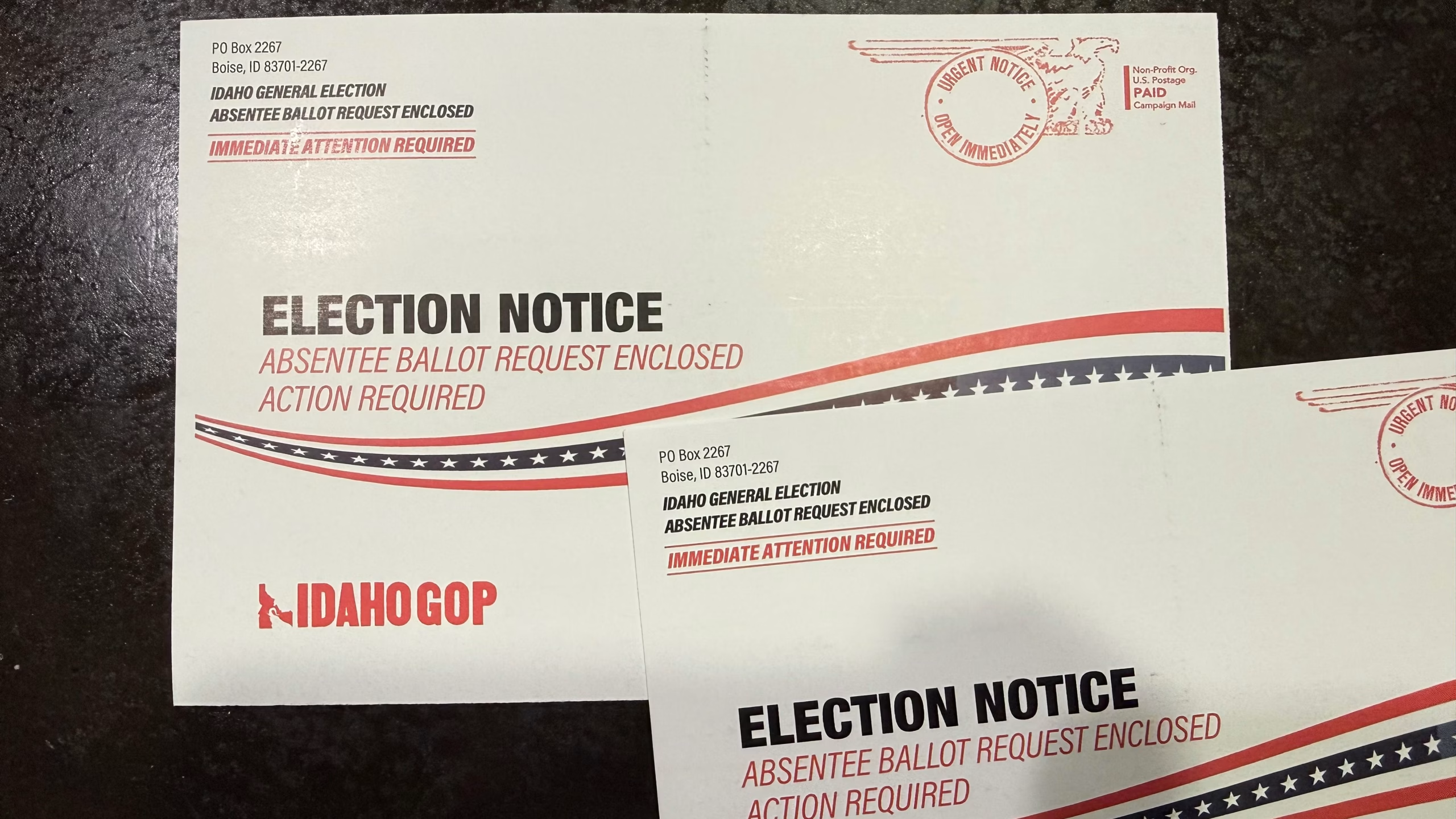
Anyone who refuses to use legal and legitimate tools to win, whether we’re talking football, politics, or war, deserves to lose. How many Republican voters who support our candidates and oppose Prop 1 might otherwise not bother voting, but could be persuaded to request an absentee ballot this way? While I currently handle communications and social media for the Idaho GOP, I was not involved in the absentee ballot request campaign.
Even if election integrity is your number one issue, we cannot change current policy without first gaining a critical mass in the Legislature. Several attempts to curtail no-excuse absentee voting have failed over the past few years. There simply aren’t enough lawmakers who want to make a change. There are also many citizens who appreciate the convenience of voting by mail, and vehemently oppose efforts to make it more difficult.
It turns out that mail-in voting has been part of our election system for a long time. In 1970, the Idaho Legislature passed House Bill 555, which authorized no-excuse absentee voting. Idaho Code §34-1001 says:
Any registered elector of the state of Idaho may vote at any election by absentee ballot as herein provided.
The rest of the chapter explains how the absentee voting process is regulated, but for all intents and purposes, Idaho has had a no-excuse absentee voting option for more than half a century. Absentee voting was historically associated with special circumstances, such as military service, travel, old age, or disability, but its use has expanded over the years. Some states, such as Oregon and Washington, conduct their elections almost entirely by mail, requiring a great deal of public trust in the process, especially in two states that haven’t voted Republican at any level of consequence in more than a generation.
The COVID-19 lockdowns in 2020 accelerated the move toward mail-in balloting. Here in Idaho, the 2020 primary was conducted entirely by mail. However, conservatives began pushing back around this time, while many progressives embraced mail-in voting. It became a tribal shibboleth, with some Democrats describing 2020 as the most secure election in history, while some Republicans began to look askance at election systems in general.
While I have pushed back on some of the more extreme claims regarding election security, I am troubled by the way in which mail-in voting separates the voter from the ballot. The bedrock of a republican system of government is the idea that popular will is determined by a vote, and each ballot represents the will of a single eligible voter. That connection is easy to see with in-person voting: a citizen goes to a polling place, checks in, receives a ballot, makes his marks, then casts it in the ballot box.
Mail-in voting makes this much more abstract. States with absentee-only voting create situations where paid partisan actors can go to an apartment complex or nursing home and carry away dozens or even hundreds of ballots, and there’s no way to be sure that they actually represent the will of eligible voters. 2020 put this concept on steroids when many states mailed absentee ballots to every name on their list, while at the same time reducing signature verification measures to almost nil.
Idaho has generally banned ballot harvesting and requires signature verification for returned absentee ballots. Idaho also requires all absentee ballots to be received by election officials by 8 p.m. on Election Day, while states such as California continue counting ballots that arrive days later. Yet these safeguards do little to reassure skeptical voters who have lost trust in the system.
Still, so long as no-excuse absentee voting is the law of the land in Idaho, it makes sense for conservative Republicans to use it to its full extent. We can lament the state of the system all day long, but when it comes down to it, we have to play by the rules on the field.
Three years ago, Mike Lindell debated Matt Braynard regarding early and absentee voting on Tim Pool’s show. I noted at the time how Lindell came across as naive, complaining about the way things were but having no plan to change them. Just over a year after that debate, Donald Trump took back the White House, partly on the strength of Republican get-out-the-vote efforts that emphasized early and absentee voting.
We can and should continue deliberating the best ways to secure our elections. But right now, today, the system is what it is, and if we want our side to win elections, we must play the hand we’ve been dealt. As Idaho GOP Chairwoman Dorothy Moon put it last week:
I don’t care whether you vote early, absentee, or on Election Day, so long as you vote. Our future depends on you!
Absentee voting is already underway, and completed ballots must reach election officials by 8 p.m. on November 3. Early voting starts today in 16 Idaho counties, with many more opening up next week. Check the Secretary of State’s website for information about your county. Then make a plan to vote, in whatever way seems best to you. Our future depends on it.
Feature image created with ChatGPT.
The Gem State Chronicle delivers daily analysis, op-eds, press releases, and Idaho Insider updates — free to your inbox.
Free newsletter · Unsubscribe anytime · View on Substack

About Brian Almon
Brian Almon is the Editor of the Gem State Chronicle. He also serves as Chairman of the District 14 Republican Party and is a trustee of the Eagle Public Library Board. He lives with his wife and six children in Eagle.