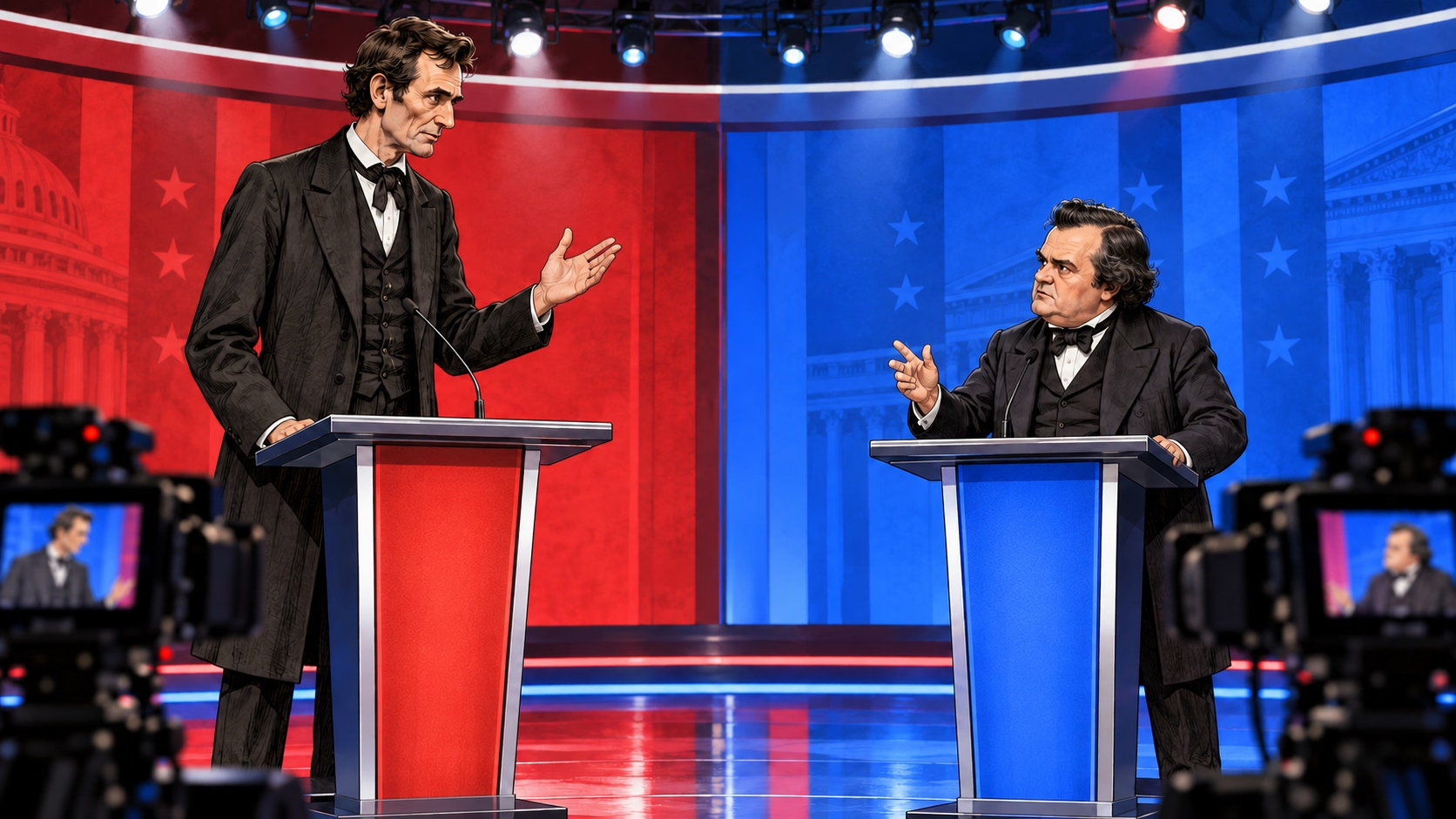
Everyone loves the idea of a political debate. We learned about Lincoln and Douglas in grade school, and most Americans know something of the legends surrounding Kennedy and Nixon’s televised encounters. For political junkies, the attraction is obvious. It’s the wordcel version of a boxing match: instead of pummeling your opponent with your fists, you pummel him with words, zingers, facts, and logic.
But how much do debates actually matter in the 21st-century political landscape?
Once upon a time, debates were a primary way for voters to learn about their candidates. In 1858, incumbent senator Stephen Douglas and challenger Abraham Lincoln staged a series of seven debates throughout Illinois, giving voters a chance to hear from both candidates in person. Each lasted three hours: an hour for the first speaker, ninety minutes for his opponent, then a thirty-minute rejoinder. Both candidates had a total of ninety minutes to make their case.
This was before the Seventeenth Amendment, when state legislatures still elected U.S. senators. Lincoln and Douglas were therefore campaigning for their parties’ legislative candidates as well as themselves. Voters who couldn’t attend depended on newspaper accounts and campaign surrogates to learn what the candidates had said.
The 21st century is a very different environment from the 19th. Voters can watch hours of interviews, speeches, and candidate forums without leaving the couch, or even the commode. A formal debate no longer holds the same value for a campaign. Today, debates are less about having a reasoned and articulate discussion of the issues than about landing that one perfectly prepared zinger that will go viral on social media. Modern debates are about confrontation, not conversation.
It began with television. John F. Kennedy and Richard Nixon were each given eight minutes for opening statements in their first televised debate in 1960, but only two and a half minutes to answer individual questions. By 2024, presidential candidates were getting two minutes per question, with no opening speeches.
Once debates shifted from in-person encounters to made-for-TV events, the candidates’ goals changed as well. Modern television audiences simply didn’t have the attention spans of their pre-mass-media ancestors, so the system adapted. As Neil Postman wrote, the purpose of the media shifted from information to entertainment over the second half of the 20th century.
What do we remember from more recent national candidate debates? Ronald Reagan’s “There you go again.” Lloyd Bentsen’s “You’re no Jack Kennedy.” Donald Trump’s “They’re eating the dogs.” Sometimes memorable and viral moments don’t require words at all, as when George W. Bush responded to Al Gore walking toward him onstage with just a nod.
While moments like these are fun and can reveal something about a candidate, they don’t substantively help voters understand which candidate is stronger on the issues that matter to them, or how each will govern. While political junkies like me might enjoy a modern Lincoln–Douglas debate, it just doesn’t make good content. The value campaigns can extract from debates lies in the viral ten-second clip for social media, rather than in a reasoned exchange that will change the minds of undecided voters.
The argument over whether to participate in a debate follows a predictable script. Underdogs demand an encounter, declaring that voters deserve to see candidates answer tough questions. Frontrunners point to their public appearances and existing coverage, dismissing demands for debates as political stunts.
These positions are tactical, rather than ideological. Challengers need attention, and frontrunners have little reason to supply it.
Long-shot candidates like Todd Achilles, running an independent campaign against Sen. Jim Risch, or Mark Fitzpatrick, who challenged Gov. Brad Little in the Republican primary, are always desperately seeking opportunities to break into the public consciousness. “Debate me, bro!” is one way to get attention. If the incumbent agrees, challengers can try to parlay the encounter into a viral moment. If the incumbent refuses or simply ignores the demand, that itself becomes the story: he’s afraid, he’s hiding from voters, he can’t defend his record, etc.
Yet it’s just noise in the end. Little refused to debate Janice McGeachin or Ed Humphreys in 2022, yet still won comfortably. Nor did he debate Democrat Stephen Heidt or independent candidate Ammon Bundy in that year’s general election, yet he defeated them all the same.
From the perspective of a comfortably-positions incumbent, why bother with the risk?
State Superintendent of Public Instruction Debbie Critchfield bucked the trend among Republican incumbents in Idaho and has participated in two events this year. In August, the Idaho Association of School Administrators hosted a candidate forum featuring Critchfield, Democratic challenger Becky Sundin Mitchell, and Constitution Party candidate Teresa Roundy. In September, Idaho Ed News and the College of Idaho hosted a debate, inviting only Critchfield and Sundin Mitchell.
Critchfield said she knew about two weeks before the College of Idaho debate that it would include only her and Sundin Mitchell. She told me that as the debate went on, she concluded that it was unfair to exclude Roundy, the third candidate in the race. She subsequently withdrew from a planned KTVB debate, saying she would participate only if Roundy was invited.
KTVB’s past practice indicates a fundraising threshold of $10,000 to qualify for its debates, along with other potential qualifiers such as previous vote share or current polling. As of this writing, Debbie Critchfield has raised $156,000, Becky Sundin Mitchell $21,000, and Teresa Roundy has not raised a penny. If that’s the threshold, then that’s the threshold, but it seems arbitrary, no? Sundin Mitchell’s $21,000 is much closer to Roundy’s level than Critchfield’s. If the threshold was $25,000 instead, would KTVB invite Critchfield alone, or would they change the level to at least cover two candidates?
In our conversation, Critchfield maintained that excluding one candidate was inherently unfair:
After two debates, I decided this was wrong. Obviously the media can decide who can participate in their debates, and I can decide not to participate.
One can argue that Roundy has no chance of winning and therefore isn’t worth inviting, but one could make the same claim about Becky Sundin Mitchell. If that’s the standard, how competitive must a challenger be before voters are allowed to see that person on the same stage?
The partisan response was also predictable. Idaho Democratic Party chairwoman Lauren Necochea took to Facebook to accuse Critchfield of “shunning debates,” perhaps assuming her own voters would have already forgotten about the first two events. You can see how the debate question becomes more important than the debate itself: parties and candidates use the question of whether to debate as a cudgel against the other side. Any campaign that participates in a debate already has its press releases and social media posts lined up beforehand. The actual substance of the debate is less important than how campaigns can frame it after the fact. How many voters’ minds are actually changed by the debate itself?
In the superintendent’s race, most Republican voters will likely support the incumbent, while most Democrats will support the challenger. The teachers’ union and its acolytes will always support the most left-wing candidate possible; no debate will change that fact. How many voters in the Year of Our Lord 2026 are genuinely undecided at this point, waiting with bated breath for a debate between the top two candidates before making up their minds?
Personally, I would enjoy a modern Lincoln–Douglas debate between candidates, and I lament the decline in literacy and attention spans that has led us to this point. After a while, the rehearsed lines and competing attempts to win the social media battle grow tiresome. But it is what it is, and campaigns must meet voters where they are.
For you, as an engaged citizen, the task remains the same: learn about the candidates, vote, and encourage your neighbors to do likewise. Find the signal amidst the noise. Building a political system that truly represents your values takes more work than just liking the latest viral moment on social media.
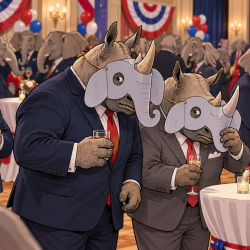
Feature image created with ChatGPT.
Correction, 10/5/26: I originally reported that Critchfield learned of Roundy’s exclusion the day before the College of Idaho debate. In a follow-up conversation, she clarified that she knew about two weeks in advance that it would be a two-person debate. I have corrected the paragraph.
The Gem State Chronicle delivers daily analysis, op-eds, press releases, and Idaho Insider updates — free to your inbox.
Free newsletter · Unsubscribe anytime · View on Substack

About Brian Almon
Brian Almon is the Editor of the Gem State Chronicle. He also serves as Chairman of the District 14 Republican Party and is a trustee of the Eagle Public Library Board. He lives with his wife and six children in Eagle.