By Todd Hoffman
When laws, investigations and indictments still fail to produce accountability.
Government accountability is easy to promise and considerably harder to practice. Idaho has no shortage of laws, audits, ethics rules, prosecutors and oversight procedures ostensibly designed to restrain government power and punish its abuse. But accountability cannot be measured by how many rules are written or investigations are opened. It has to be measured by what happens when those rules are actually violated. Several recent Idaho cases expose different points at which that system can break down: laws that prohibit government conduct but carry no meaningful consequence, enforcement decisions buried within largely unreviewable discretion, and standards for public office that seem to demand remarkably little from the people entrusted with public authority.
Idaho’s restrictions on automated license-plate readers provide perhaps the simplest example. State law specifically limits law enforcement’s use of ALPR data to a narrow set of authorized purposes. Yet former Jerome County Sheriff George Oppedyk reportedly queried his wife’s license plate more than 700 times, describing the searches as “tests”—a purpose not included among those authorized by the statute. When those searches came to light, the Attorney General declined prosecution because the Legislature had prohibited the conduct without making a violation a standalone crime. The statute speaks of discipline and administrative penalties but provides no clear independent mechanism for imposing them, an especially glaring defect when the person accused of violating the law is the elected sheriff who runs the agency. Idaho thus managed to enact a law telling government exactly what it could not do with a powerful surveillance system without establishing a meaningful consequence when an elected official did it anyway. A government that loudly prohibits its own abuse of power but attaches no effective enforcement mechanism when that prohibition is violated has not created accountability. It has created political theater.
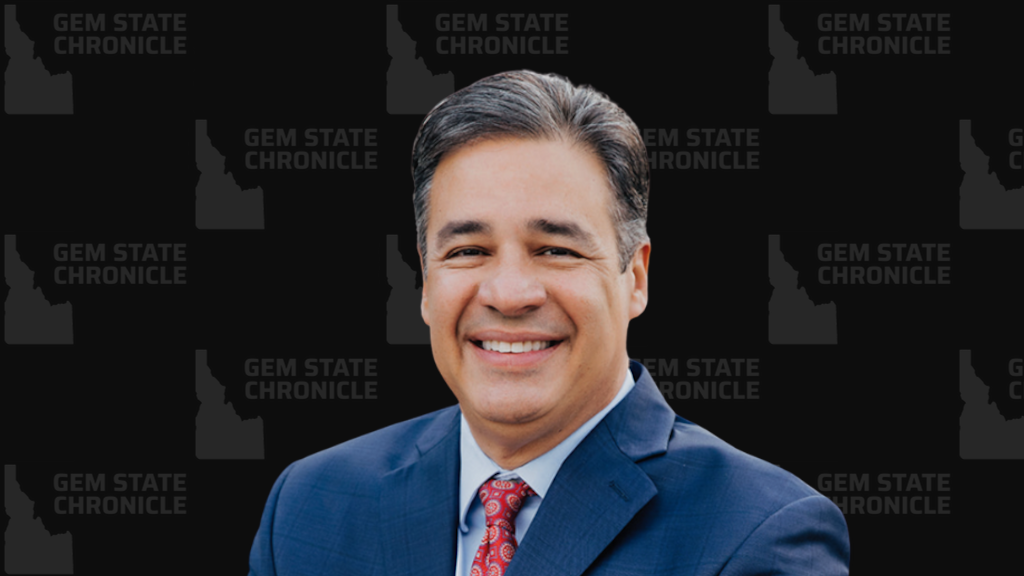
The handling of the Idaho Department of Health and Welfare Community Partner Grant investigation exposes a different and arguably more troubling weakness. Attorney General Raúl Labrador aggressively pursued the program, issuing sweeping investigative demands, publicly challenging Health and Welfare’s conduct and defending his investigative authority all the way to the Idaho Supreme Court. When a judge disqualified Labrador’s office because of a conflict of interest, his office selected Canyon County prosecutor Christopher Boyd as special prosecutor. Labrador would later endorse Boyd in his Republican campaign for Canyon County prosecutor, praising his prosecutorial experience and record. Boyd himself stated in 2023 that there was probable cause to believe former grant administrator Ericka Rupp had committed a crime. After years of investigation, he finally presented the evidence to a grand jury in 2026, which returned two felony indictments for alleged misuse of public funds. Two days later, Boyd asked the court to dismiss them.
The explanation for that abrupt reversal raises questions of its own. Boyd says that after the grand jury performed its legally defined function and found probable cause, he asked those same jurors whether pursuing the prosecution was worth the resources and that a majority advised him his time would be better spent on other crimes. But deciding which crimes are worth prosecuting and how prosecutorial resources should be allocated is not the grand jury’s assigned function; its job is to determine whether probable cause exists. On that question, its documented answer was yes. Nor can the public presently independently verify Boyd’s characterization of the jurors’ subsequent comments through the normally secret grand-jury process. None of this establishes that Boyd’s account is untrue or that Labrador influenced his decision. But after years of highly publicized investigation, the extraordinary result is that the state finally obtained two felony indictments against one of its own former officials, only for the special prosecutor selected by Labrador’s office to abandon them two days later based partly on an explanation the public has no practical means of independently verifying.
Then there is the question of what standards Idaho expects from the people it entrusts with public authority. Criminal guilt is not the only standard by which public officials can reasonably be judged. Public office is a position of trust, and some positions carry responsibilities that make certain alleged conduct uniquely relevant to whether an individual should continue holding them. Idaho Fish and Game Commissioner Brody Harshbarger faces seven hunting-related criminal charges arising from an incident in which prosecutors allege he participated in the unlawful killing of elk without a valid tag, involving shots from a vehicle and across a public road, trespass onto private property and failure to retrieve an animal. Harshbarger has pleaded not guilty and is entitled to the presumption of innocence in court. But whether he should continue to occupy a seat on the Fish and Game Commission is not a criminal trial. The Commission is the very body Idaho entrusts with establishing hunting regulations and overseeing the agency responsible for enforcing them. The governor did not remove Harshbarger; instead, Harshbarger voluntarily agreed to postpone performing his duties while the charges are pending. If allegations this directly related to the responsibilities of an appointed office are insufficient even to remove someone from that office while the matter is resolved, what exactly is the ethical standard Idaho expects its public officials to meet? Accountability cannot begin and end with whether the government can obtain a criminal conviction.
Each of these cases comes with an official explanation. Oppedyk could not be prosecuted because Idaho prohibited misuse of license-plate-reader data without making that misuse a standalone crime. Rupp was indicted, but the special prosecutor says the grand jurors subsequently told him his resources would be better spent elsewhere. Harshbarger remains a Fish and Game commissioner because he has not been convicted of the hunting offenses with which he is charged and has voluntarily stepped away from his duties. Taken individually, there is a procedural explanation for each outcome. Taken together, however, they raise a more uncomfortable question: why does Idaho’s system of government accountability so frequently seem to produce an explanation for why accountability cannot occur, while producing remarkably few examples of meaningful accountability actually occurring?
One need not allege corruption or conspiracy to recognize the pattern. Laws have no teeth. Enforcement disappears into prosecutorial discretion. Standards of public conduct shrink toward the minimum required by criminal law. Responsibility passes from one institution to another until it becomes difficult to identify who, precisely, is responsible for imposing a consequence. The Legislature wrote the law without a penalty. The Attorney General says there is no crime to prosecute. The special prosecutor says the grand jury thought prosecution was not worth the resources. The governor leaves an appointed official in office while the courts sort things out. At every stage there is an explanation, a procedural limitation or someone else to whom responsibility can be passed.
Perhaps that is the deeper problem. Idaho does not lack the outward machinery of government accountability. It has laws, prosecutors, grand juries, audits, commissions, courts and elected officials empowered to oversee other officials. What appears far more difficult is carrying accountability through to its logical conclusion when the person on the receiving end is part of government itself. At some point, the question is no longer whether the state can offer a technically defensible explanation for each individual case. The question is whether a system that so consistently explains the absence of consequences can meaningfully be called an accountability system at all.
The Gem State Chronicle delivers daily analysis, op-eds, press releases, and Idaho Insider updates — free to your inbox.
Free newsletter · Unsubscribe anytime · View on Substack

About Todd Hoffman
Todd Hoffman is a data scientist specializing in user behavior, pricing and experimentation, with a strong foundation in machine learning and product strategy. He lives in Coeur d'Alene.