Results were still coming in Tuesday night as I drove home from the Idaho GOP watch party. Rural counties continued reporting big vote totals, and some races came down to the wire. There are some big takeaways from this primary election, and here are just a few off the top of my head:
- Idaho is becoming more geographically polarized. The moderate holdouts in the Panhandle went down in defeat, but conservative challengers in the east were still unable to make any gains.
- Rep. Jordan Redman took heat for donating his own money to the cause, but it might well have turned the tide in the north.
- The governor’s machine is strong, but not all-powerful. He and his allies were able to save figures like Rep. Stephanie Mickelsen, Rep. Rick Cheatum, and Sen. Jim Guthrie, but were unable to make any headway in Canyon County or the Panhandle.
- Hard work was rewarded. Good men such as Reps. Cornel Rasor, Kyle Harris, Steve Tanner, and Chris Bruce, each of whom won very close races in 2024, were reelected by large margins yesterday. Each of them put their heads down and worked hard for their constituents over the past two years.
- Immigration enforcement is probably on the back burner for the next two years. Guthrie and Mickelsen, the chief opponents of immigration reform, held on, while Sen. Glenneda Zuiderveld, who became emblematic of the problem when Big Ag conspired to shut down her family business, lost.
- The Gang of 8 is now the Gang of 3, while Idaho Freedom Caucus held all its races and is likely set to expand. Is it time to unite as one conservative caucus heading into 2027?
- It’s time for new blood. I count nine former legislators who tried to make a comeback this year, but only one—Scott Herndon—was successful.
After sleeping on it and doing some analysis this morning, I could probably write ten thousand words covering each of these angles, but I’ll try to break it up into small chunks over the next few days.
For now, let’s just take some of the most contested races one at a time and I’ll share my initial thoughts.
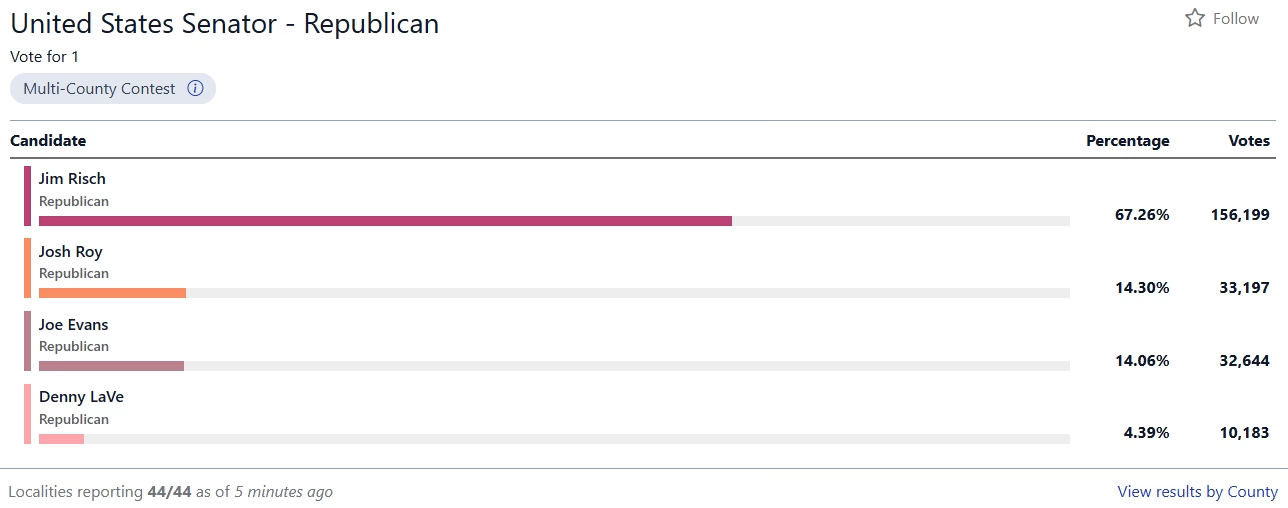
Sen. Jim Risch cruised to reelection despite three tenacious challengers. This went about as I expected—I surmise that there will always be at least 1/3 of the electorate who will vote against the incumbent in any situation.
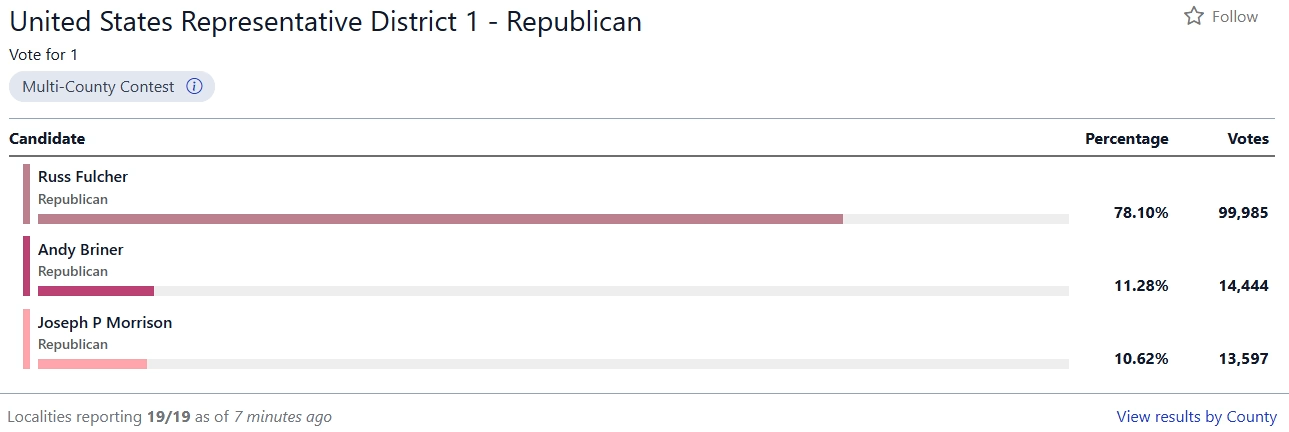
Congressman Russ Fulcher ran far ahead of the rest of Idaho’s congressional delegation. Voters in congressional district 1 fully support his work.
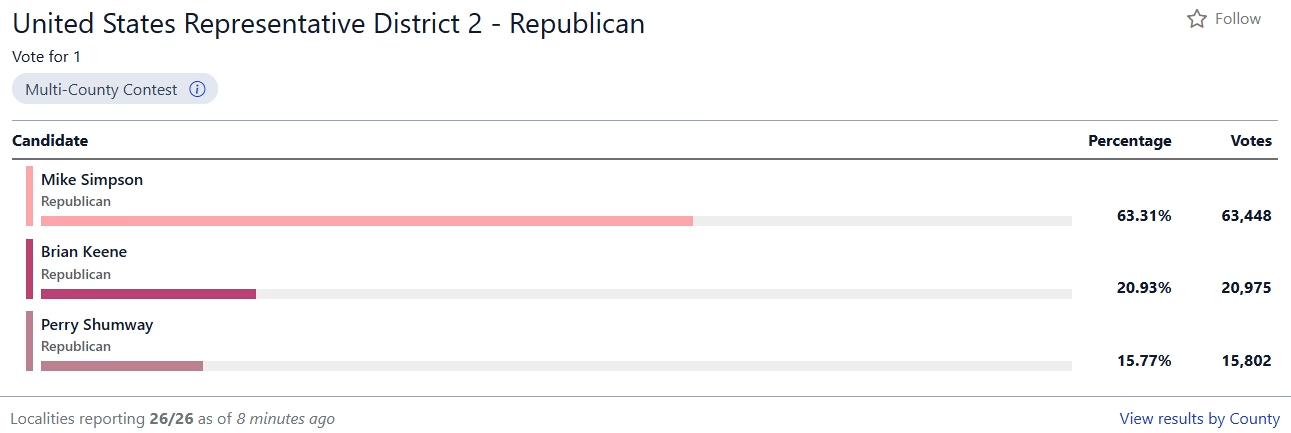
Congressman Mike Simpson continues to survive. His 63.31% is his highest primary total in six years. He has a lot of passionate opposition, but voters in the second congressional district continue to reward him for bringing home the bacon (or pork, as you will).
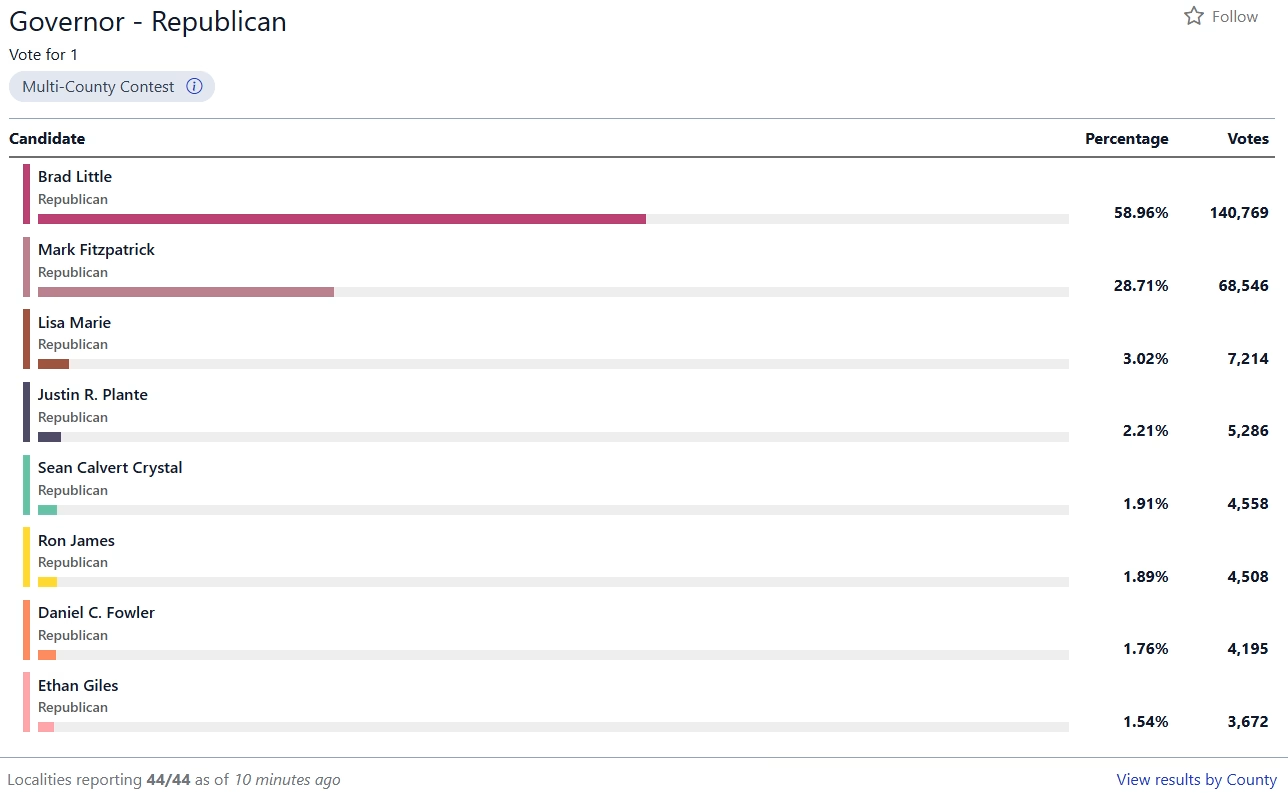
Gov. Brad Little was never in danger of losing this race, but I expected him to hit north of 65%. Hopefully he takes these results as a warning that he is not immortal, and that he still must work within a conservative state. Mark Fitzpatrick’s mark of nearly 29% is impressive considering his truncated campaign and limited fundraising. Janice McGeachin campaigned for nearly a year and raised three times as much but only hit 32.2%.
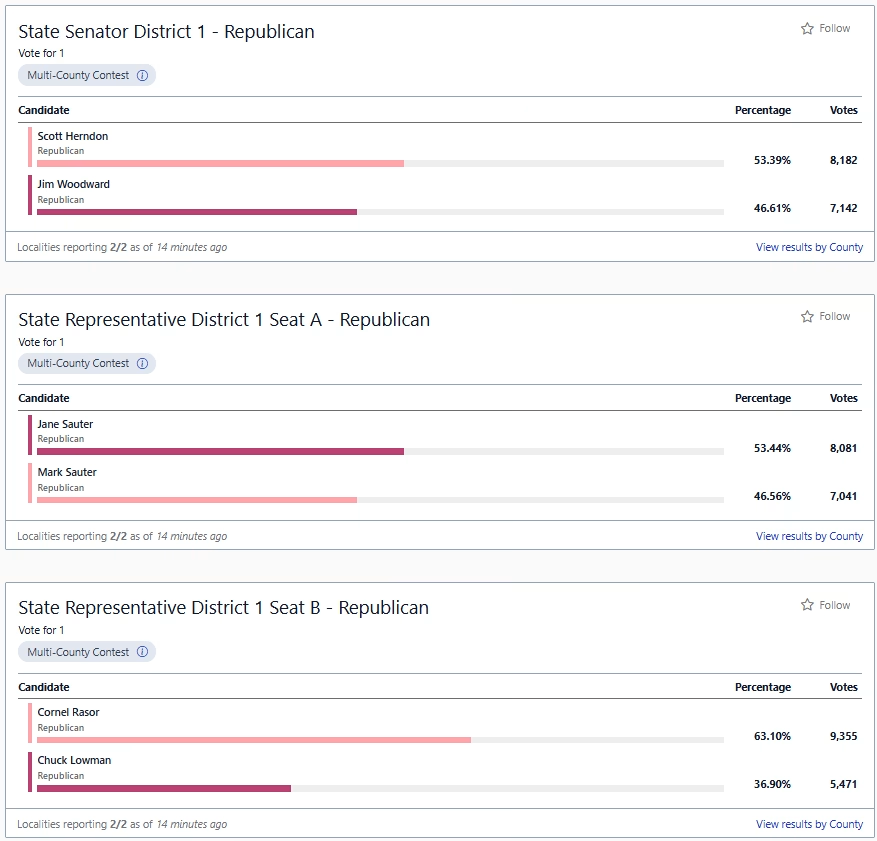
I spoke to the once and future state senator Scott Herndon this morning and he said he was confident of victory as soon as he saw early returns only barely favoring Sen. Jim Woodward. Those two have now competed in four of the past five primaries in district 1, each winning two victories. I believe that Herndon was not only one of the most conservative legislators in the 2023-24 sessions, but one of the most effective, and having him back in office is a game changer.
Herndon ran together with Jane Sauter and Rep. Cornel Rasor, which means LD1 has a conservative trifecta for the first time in recent memory. Sauter combined with Spencer Hutchings for just a hair over 50% last time, and this year she was able to overcome Rep. Mark Sauter (no relation). Rep. Cornel Rasor won a slim race against Chuck Lowman in 2024 for an open seat, but voters rewarded his hard work and solid conservatism with a huge victory last night.
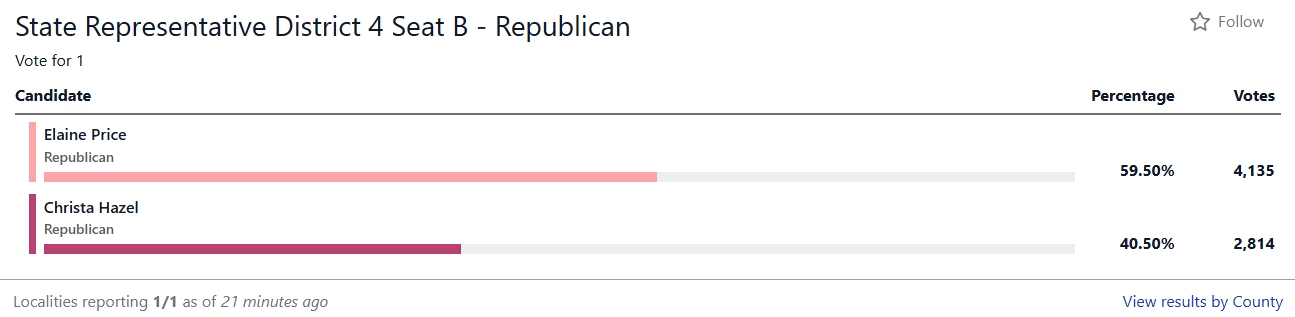
One of the only contested races in Kootenai County was a referendum on whether that region was still conservative, or would it support a proud Biden/Harris fangirl. Early returns showed this race too close for comfort, but Election Day voting gave Rep. Elaine Price a surge and she won comfortably.
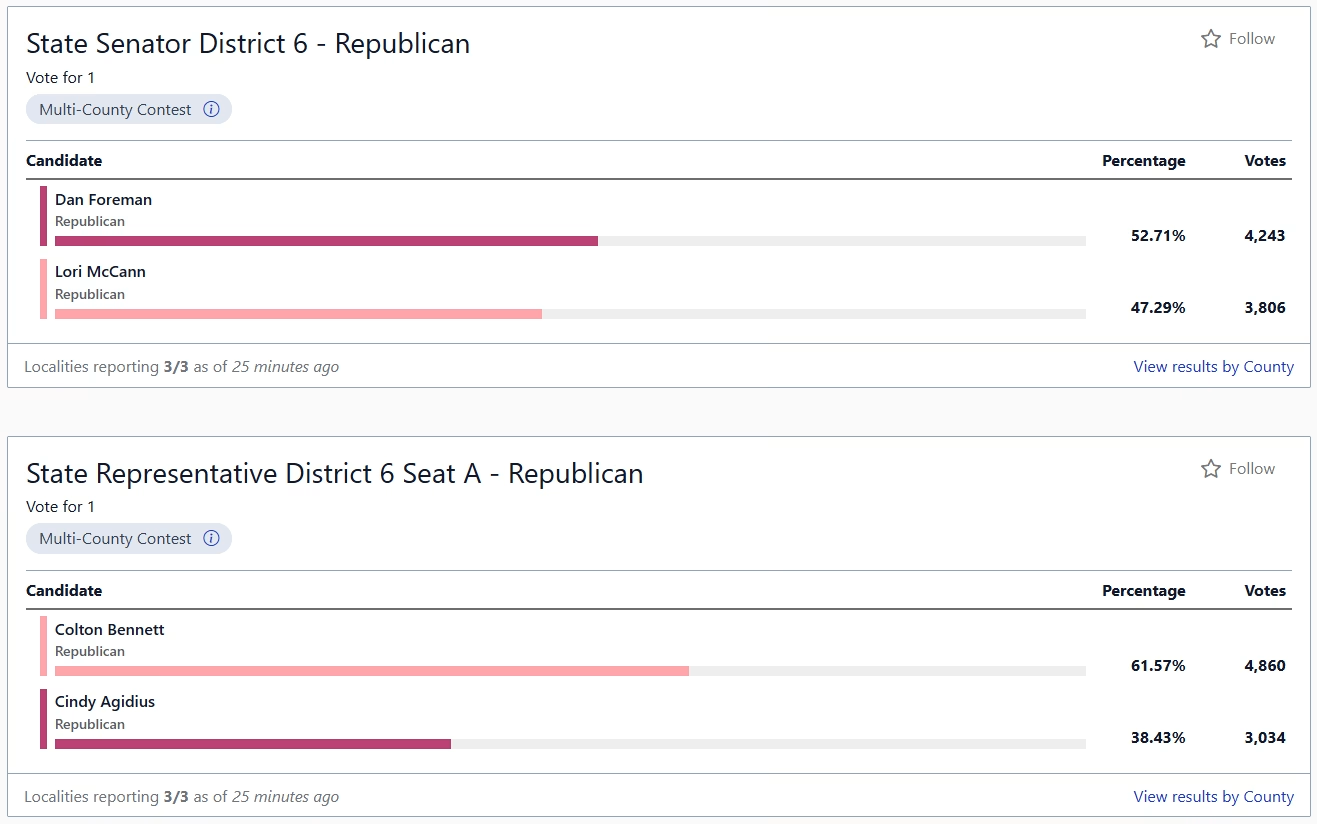
Terrific results out of district 6. Keep in mind that this is one of four districts in Idaho that are contested between Republicans and Democrats, so nothing is certain yet. However, it is great to see Colton Bennett with the victory that was snatched away in 2024 due to a third candidate splitting the vote. I won’t miss Rep. Lori McCann, one of the most liberal members of the House GOP caucus.
I was critical of the way in which Sen. Dan Foreman pulled the rug out from under supporters of the bill to prohibit taxpayer subsidies for teacher’s unions, but there’s no question he has the support of his voters. When it came to choosing between him or McCann, they stuck by him.
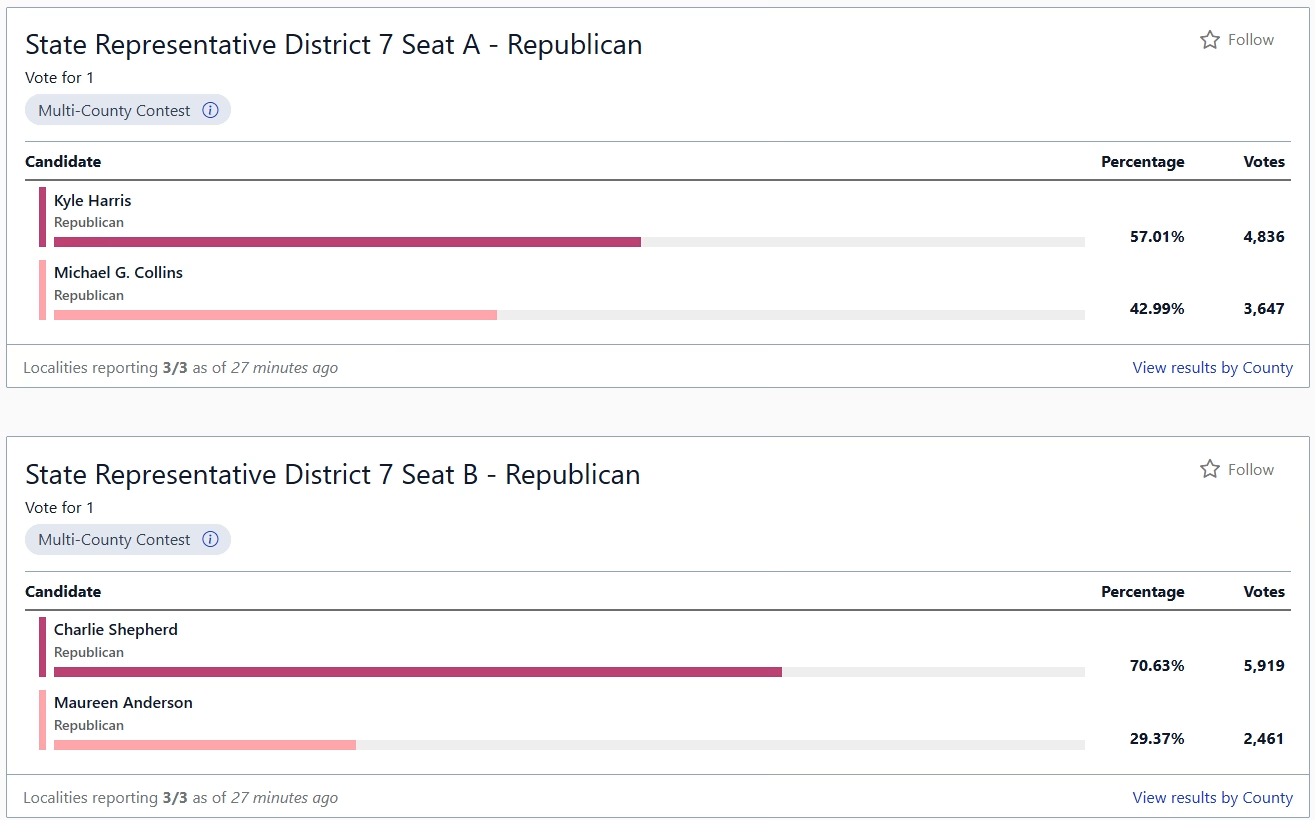
Like Rep. Rasor, Rep. Kyle Harris proved that if you earnestly work hard for your constituents, they will reward you, even in the face of big outside spending. Harris was down in early voting but pulled ahead for a very comfortable victory. Michael Collins benefited from a lot of money from PACs and special interests, but it wasn’t enough to overcome Harris, who won a slim contest for an open seat in 2024.
Rep. Charlie Shepherd continues to maintain support from his voters as well. 70% is a new high-water mark for him.
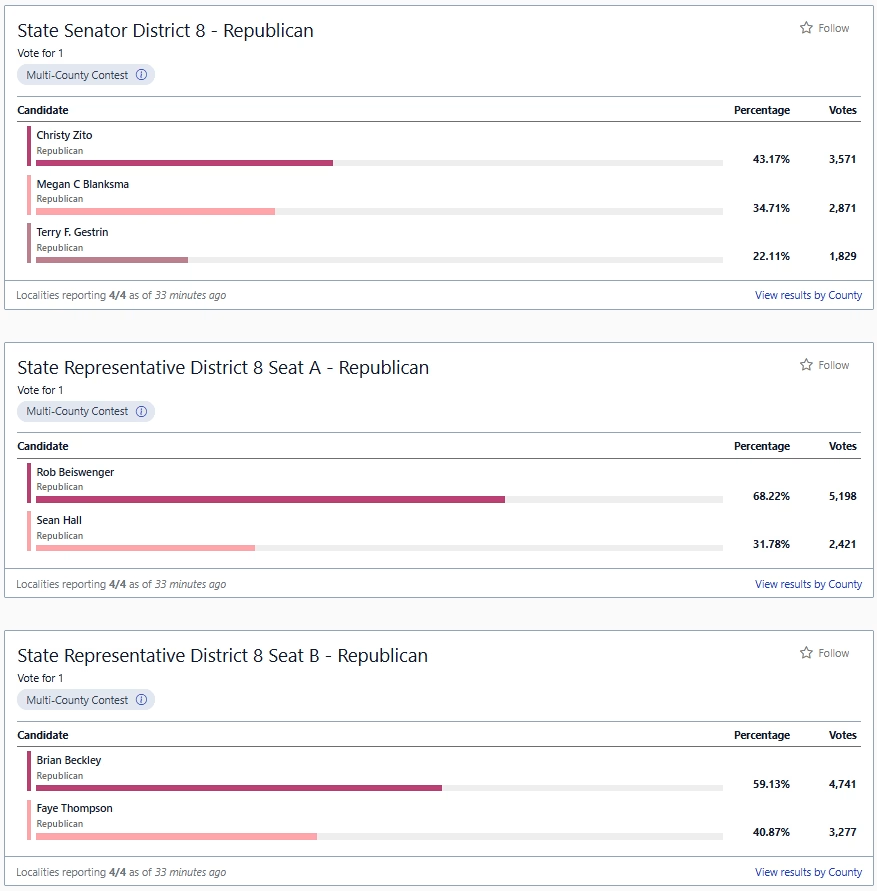
District 8 saw wholesale change in 2024, with three moderate lawmakers giving way to three conservatives. Sen. Christy Zito and Rep. Faye Thompson aligned with the Gang of 8 while Rep. Rob Beiswenger joined the Idaho Freedom Caucus. Zito held on against two former legislators but Thompson fell to Brian Beckley, former chair of the Idaho Department of Parks and Recreation, who raised a massive amount of money from both individuals and special interests. (He also registered brianforidaho.com, for what that’s worth.)
Like Rasor and Harris, Beiswenger proved that honest hard work pays off. He carried the nation’s best medical freedom bill to fruition in 2025 and was rewarded with a second term.
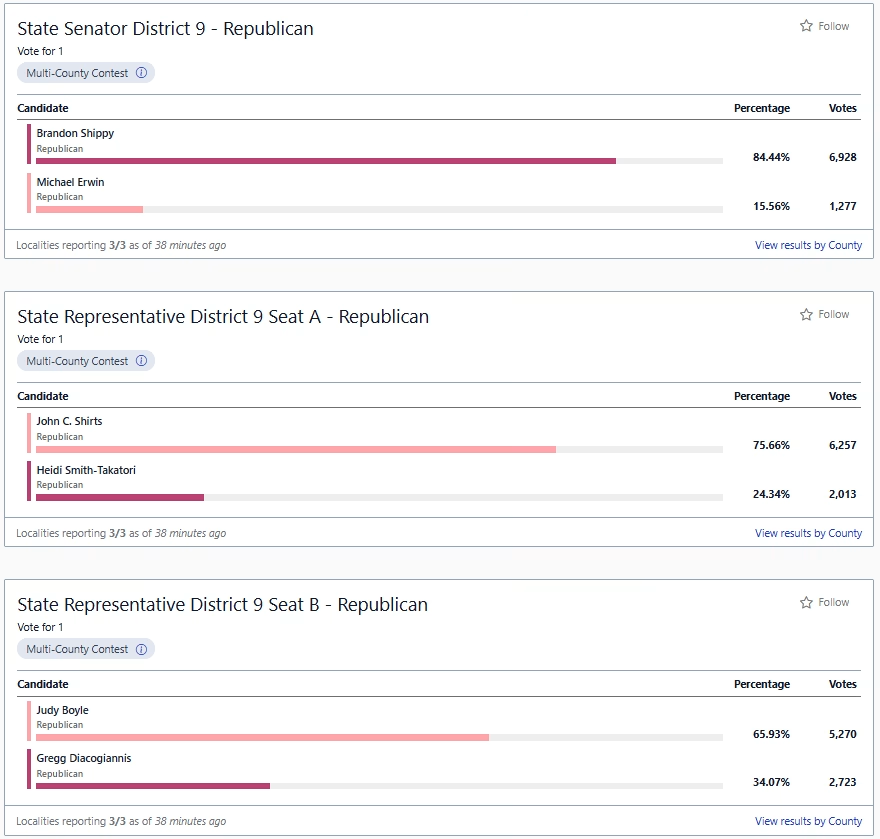
District 9 saw all three incumbents win comfortably, with freshman Sen. Brandon Shippy leading all with a massive 84% of the vote. Gregg Diacogiannis had campaigned since even before the previous primary, and led all challengers, but Rep. Judy Boyle is a southwestern Idaho institution, and was always going to be tough to defeat.
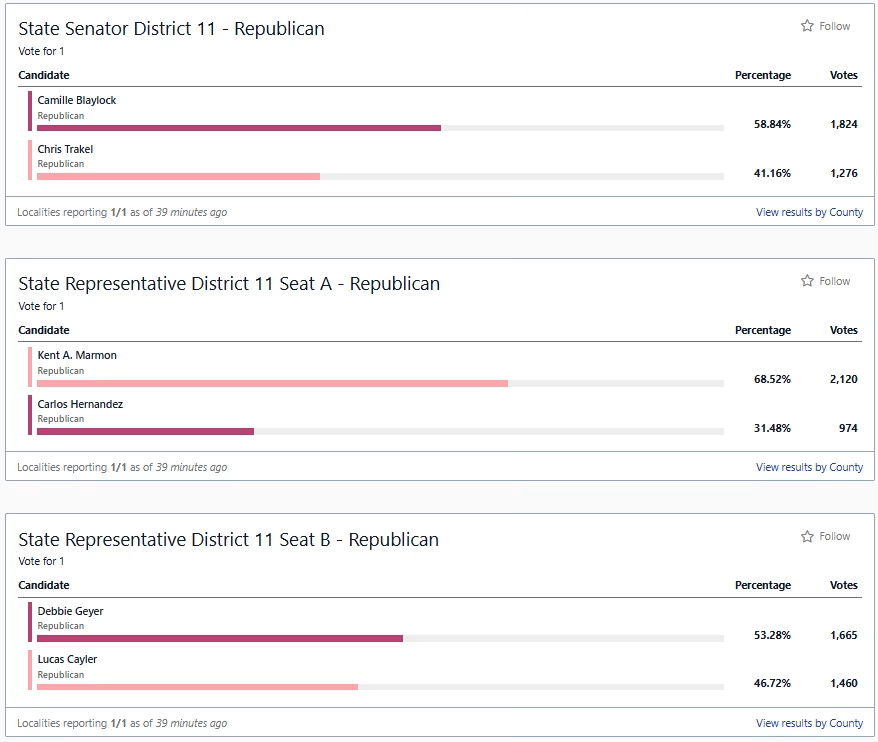
Sen. Camille Blaylock barely defeated then-incumbent Chris Trakel in 2024, but since then has not only voted fairly conservatively but made a significant connection with Caldwell voters. Over the last two years she’s shown herself to be one of the most naturally gifted politicians I’ve seen in my time in Idaho.
The split between Gang of 8 members Reps. Kent Marmon and Lucas Cayler is striking. They voted very similarly, but have very different personalities. Perhaps there was something about their opponents that affect the race as well—Debbie Geyer clearly struck a chord that Carlos Hernandez did not.
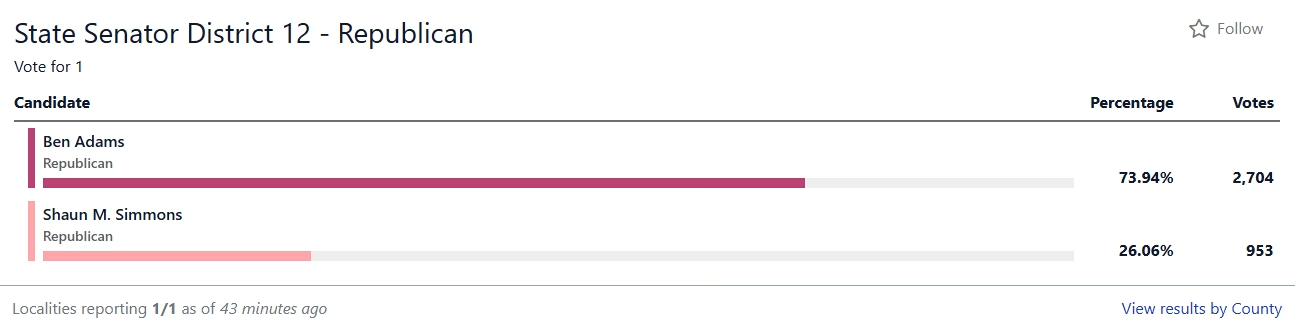
Nampa loves Sen. Ben Adams. At just under 74% of the vote, this was by far the best primary showing of his career.
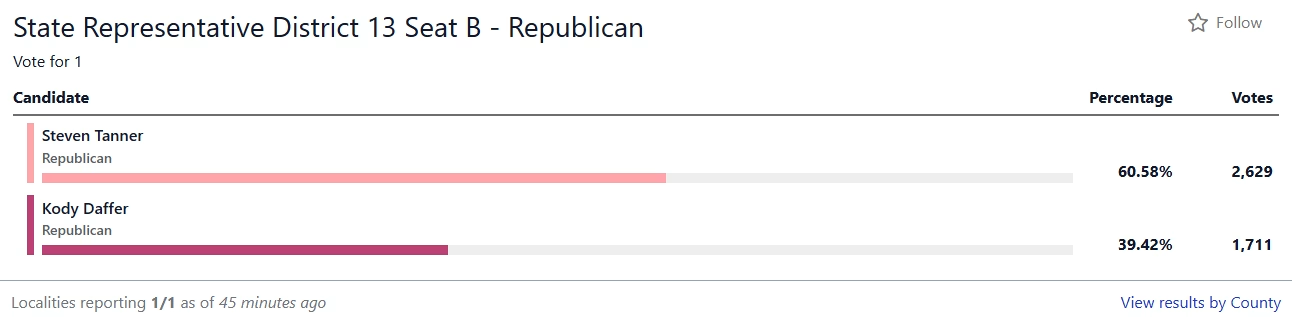
I know I’m starting to sound like a broken record, but Rep. Steve Tanner has again proved that constituents reward those who work for them. Kody Daffer got a big chunk of special interest money and an endorsement from the governor, but still could not clear 40%. Tanner went from a close victory in a three way race in 2024 to a solid reelection victory in 2026.
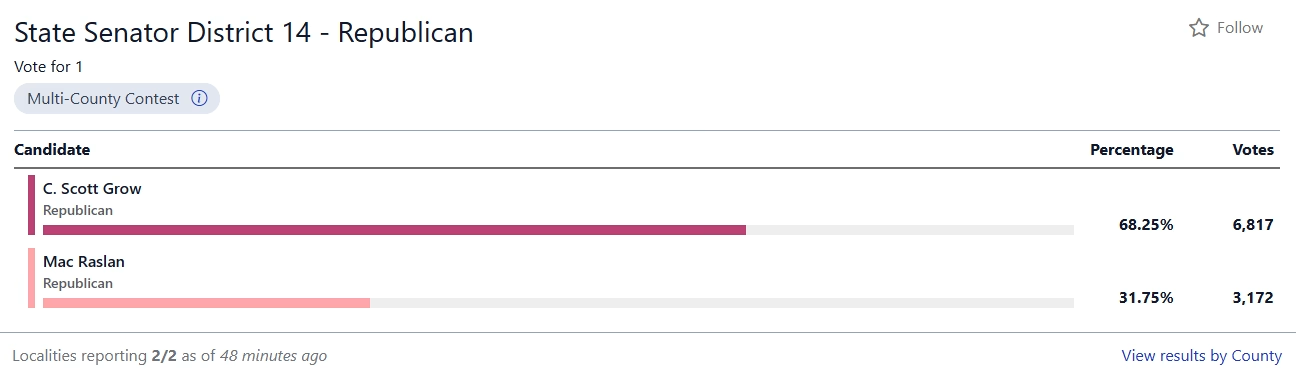
Sen. Scott Grow has maintained solid support in district 14 as he has steadily reformed the legislative budget process. The one third anti-incumbent vote was here for Mac Raslan.
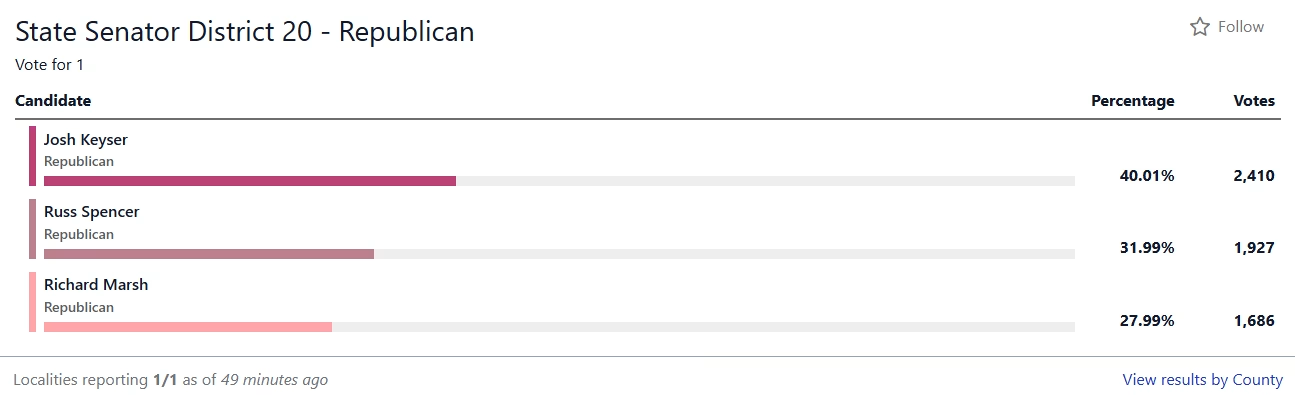
Following his stunning victory over then Senate Pro Tem Chuck Winder in 2024, Sen. Josh Keyser earned two challengers. Though they dragged him under 50%, he still won by nearly 500 votes and will return for a second term.
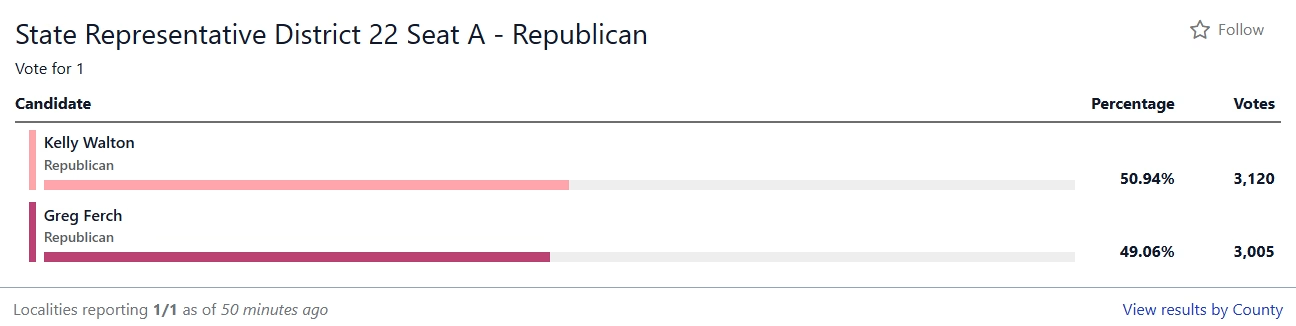
One of the closest legislative elections of the night was in south Meridian, where former lawmaker Greg Ferch and machine darling Kelly Walton competed for the open seat vacated by the retiring Rep. John Vander Woude. Ferch ran a great race but fell just short.
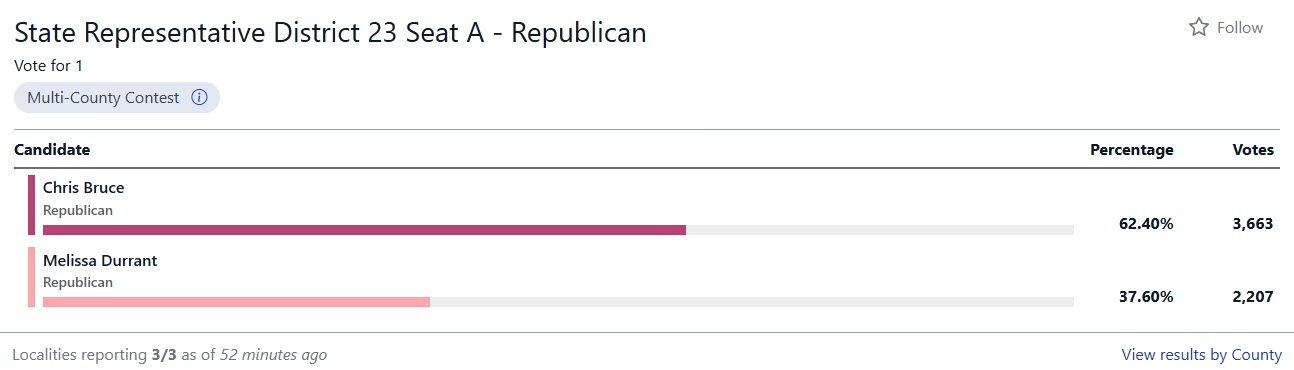
Need I say it again? Like Reps. Rasor, Harris, and Tanner, Rep. Chris Bruce won a very close race in 2024 and then spent two years working diligently for his constituents. They rewarded him with a landslide over Melissa Durrant, who returned for a rematch following that close race two years ago.
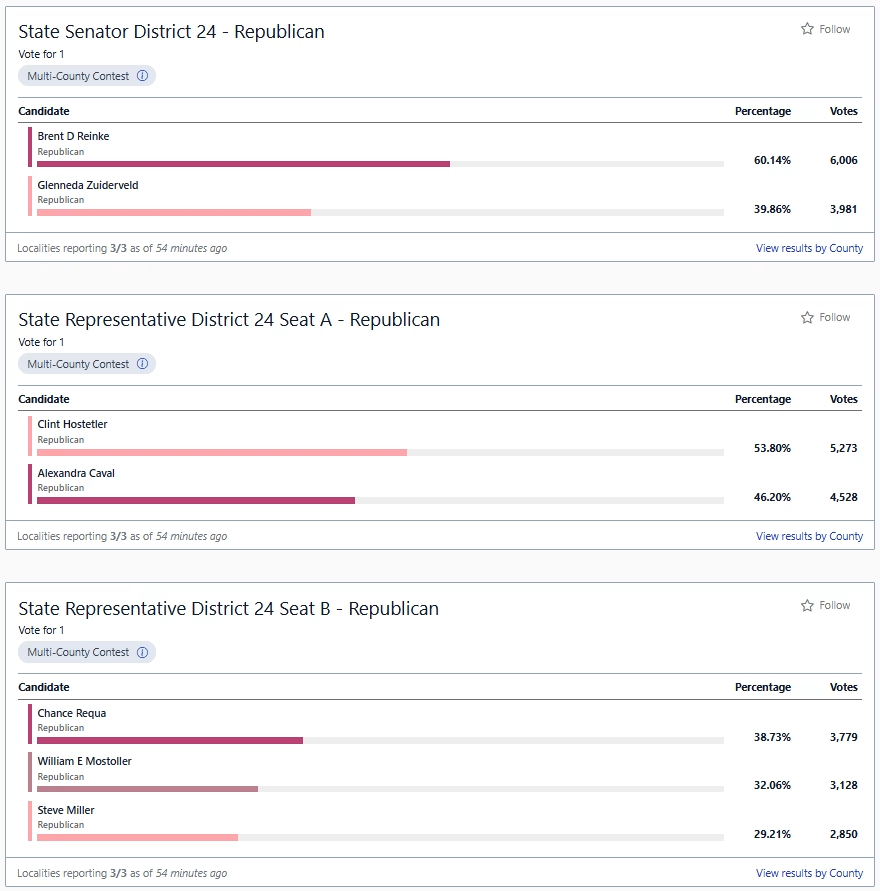
I said before the election that I wouldn’t be surprised by any outcome, but I was wrong. I absolutely did not see Sen. Glenneda Zuiderveld losing, and certainly not by the margin she did. Combine that with Rep. Clint Hostetler holding on for a comfortable victory, and Rep. Steve Miller taking third in his primary, and I just have to admit that district 24 boggles my mind. Hostetler defeated Alexandra Caval, who had previously challenged Zuiderveld in 2024 and lost convincingly. Perhaps, as in Caldwell, it came down to candidate personalities.
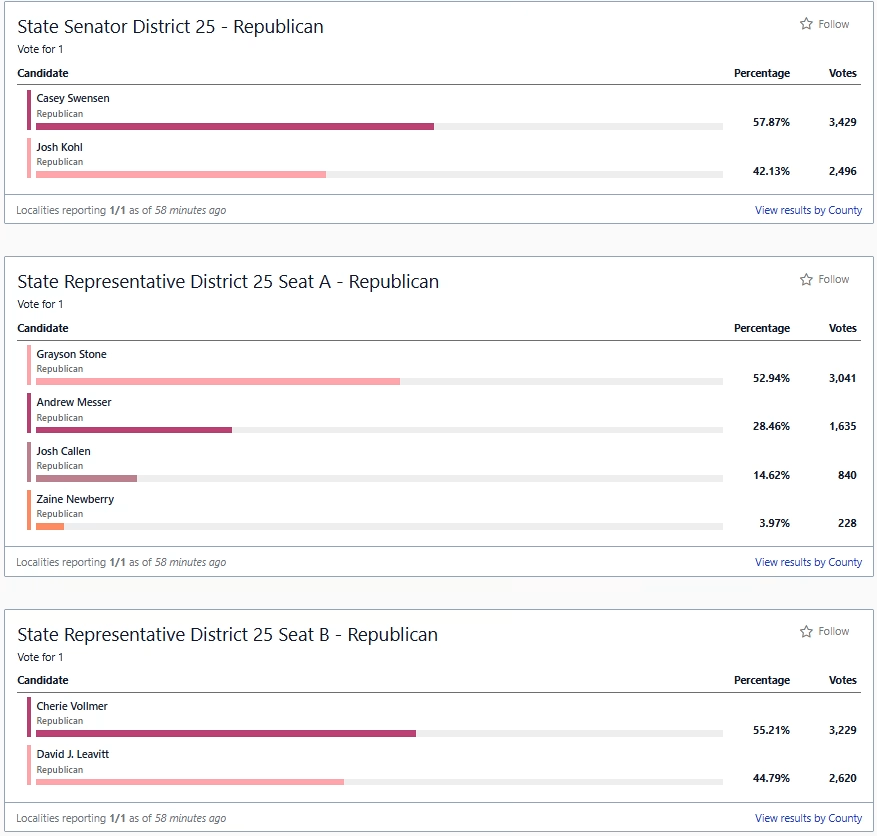
Twin Falls was a tough break for conservatives all around this year. In 2024, the Magic Valley Miracle saw Zuiderveld win reelection, joined by Reps. Hostetler and David Leavitt and Sen. Josh Kohl. Now, three of those four have lost reelection. Does this mean that Twin Falls is ideologically moderate, and 2024 was a fluke? Or is the region still figuring itself out, and could swing rightward again in two years?
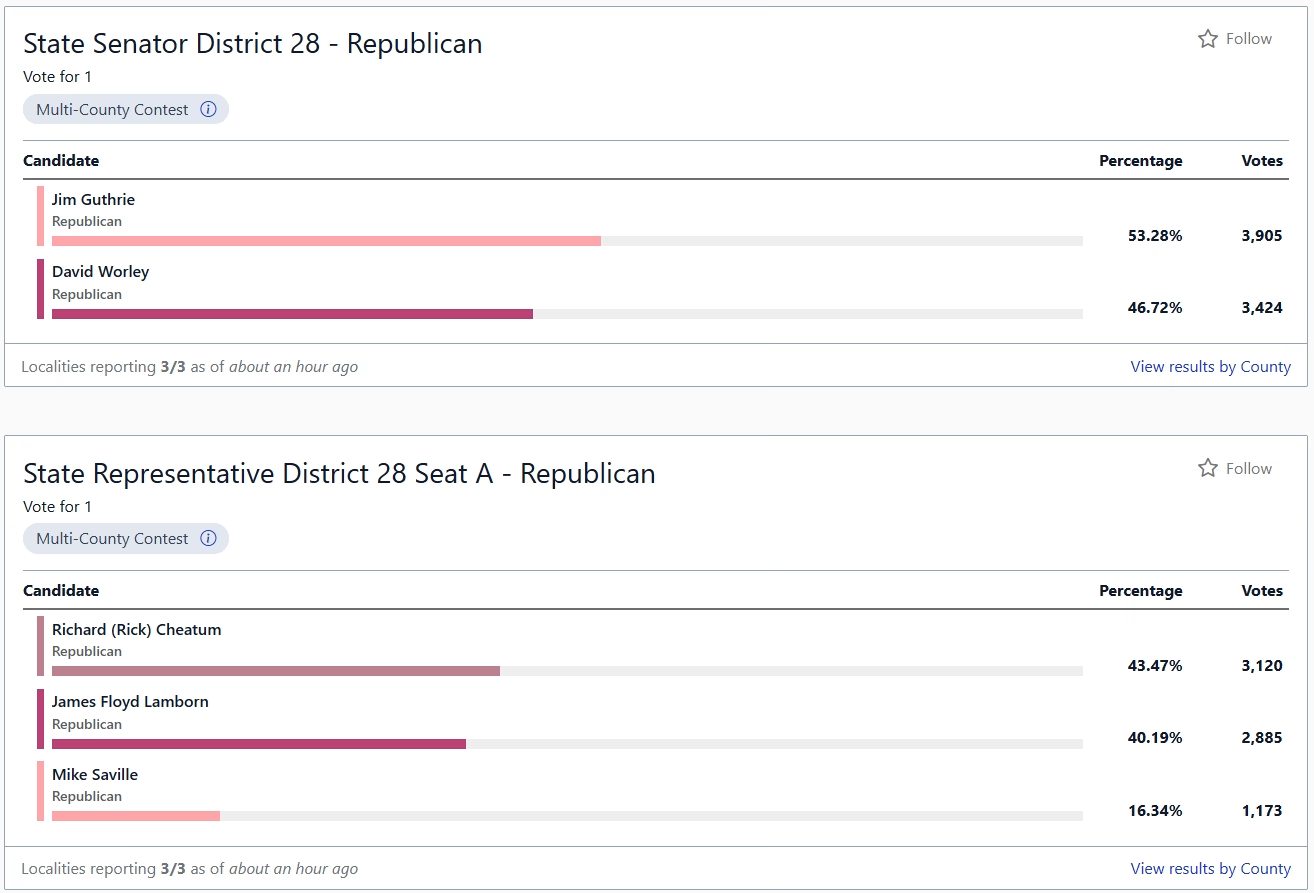
Eastern Idaho was once again a firewall for the governor’s machine, though it took a lot more effort, money, and even a personal visit from Gov. Little himself to carry his people across the line. Sen. Jim Guthrie’s reelection astounds me, as I can’t believe that Republican voters in district 28 support his positions which have become indistinguishable from Boise liberals. Nevertheless, David Worley has proven that these eastern Idaho icons are not invulnerable.
The House race was a rematch from 2024, with both Rep. Rick Cheatum and James Lamborn improving their numbers at the expense of perennial candidate Mike Saville. Lamborn gained on Cheatum, having lost by 480 votes in 2024 but only 235 this year. Disappointing result, but again this shows that conservatives can potentially win in the east.
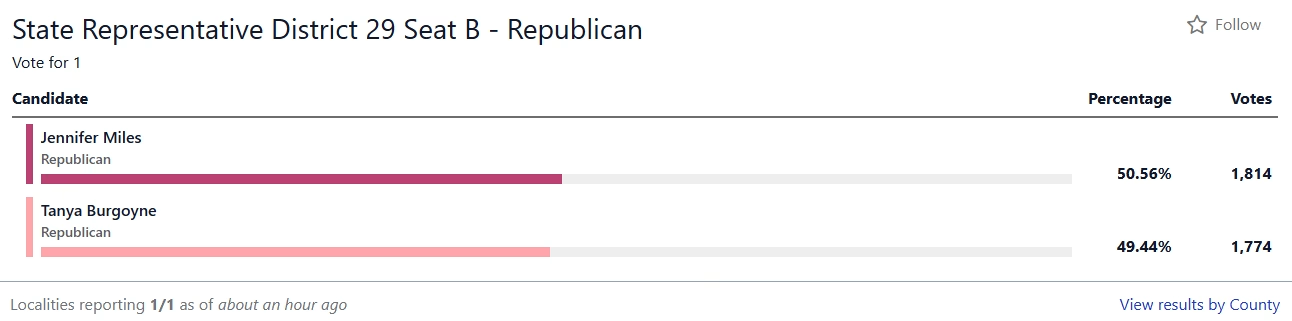
Rep. Tanya Burgoyne was a bright spot in Pocatello these past two years, and I’ll miss her in the Legislature. A 40-vote loss is heartbreaking.
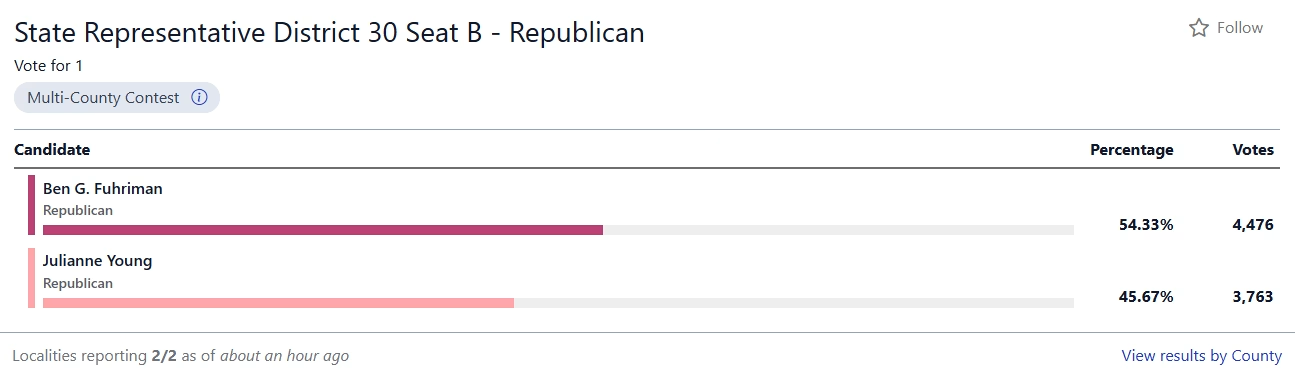
I don’t know if this is better or worse than Julianne Young’s 4-vote loss to Rep. Ben Fuhriman two years ago. I thought she ran a terrific campaign and had a lot of support from conservatives statewide. For some reason, voters decided to send Fuhriman back for another term.
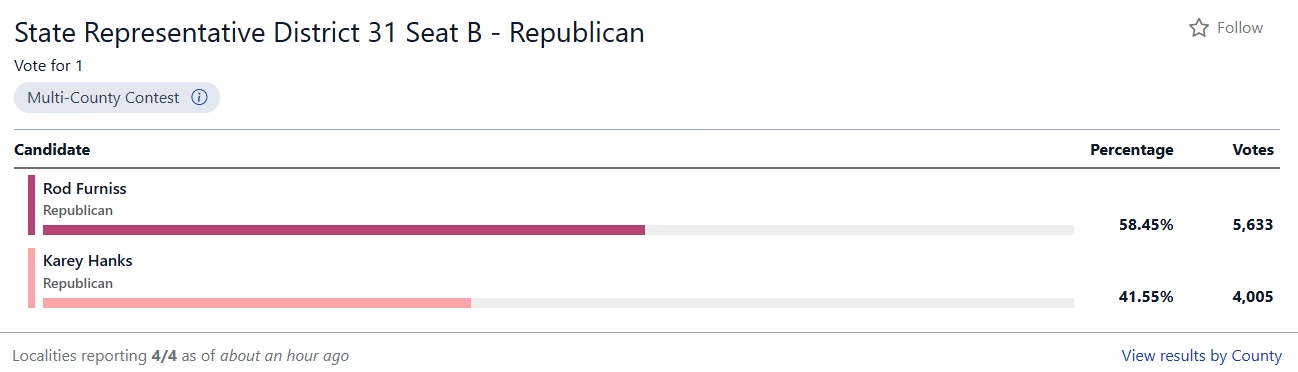
Karey Hanks’ latest comeback attempt fell short. Rep. Rod Furniss won by less than 300 votes in 2024, but this time he won by more than 1,600. It seemed that Furniss played it fairly quietly the past two sessions—no red flag law attempts, no talk of tampons on the House floor—which certainly didn’t hurt. In the end, institutional power is a tough nut to crack.
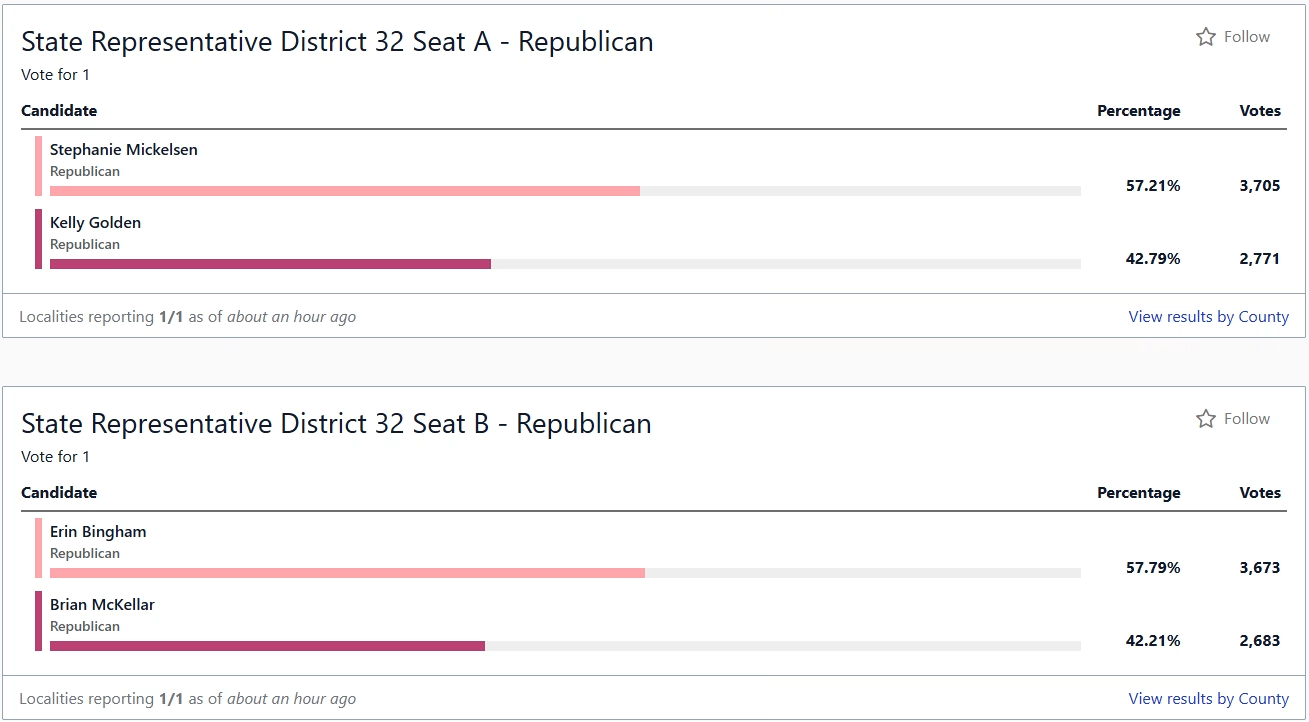
Kelly Golden improved on her 2024 numbers against Rep. Stephanie Mickelsen, turning a 1900-vote margin into a 900-vote span. Both Mickelsen and seatmate Rep. Erin Bingham won by about the same margin, showing again the institutional power of Big Ag and the governor’s machine in eastern Idaho.
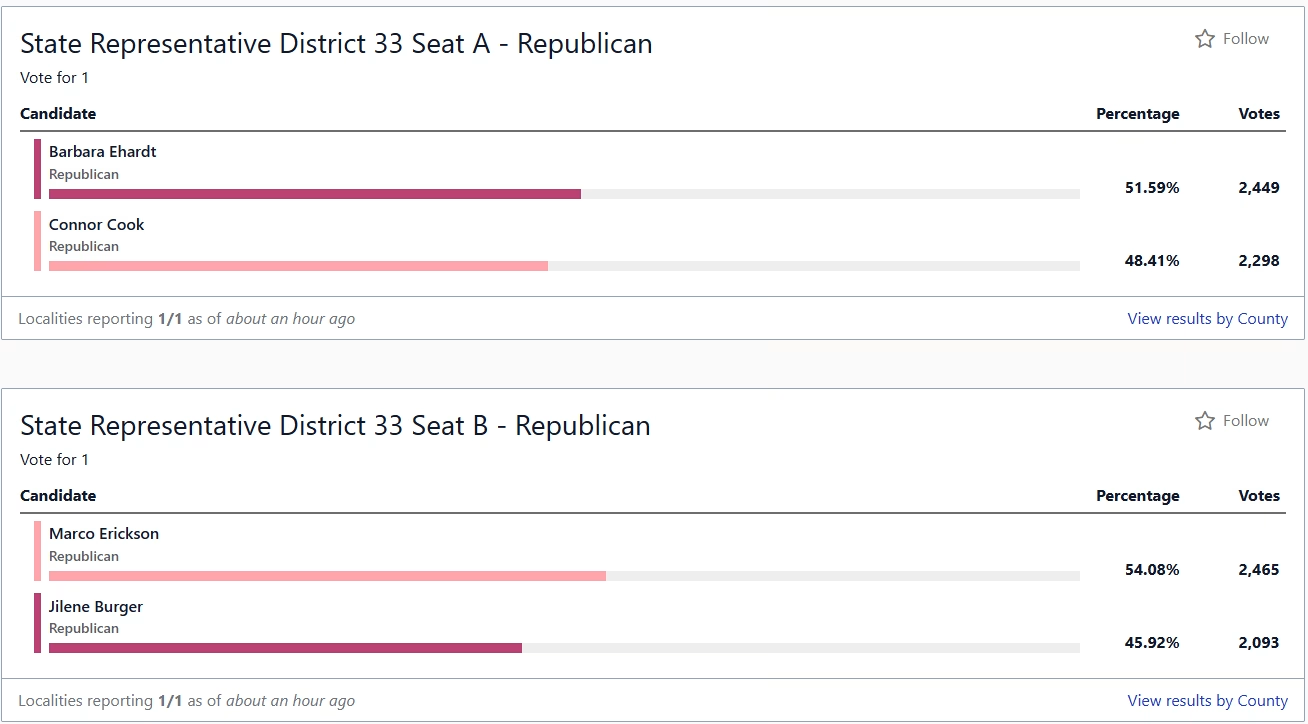
Rep. Barbara Ehardt remains the lone bulwark of how I define conservatism out in eastern Idaho. The machine threw everything it had at her but she prevailed yet again. Ehardt is a very special and unique person, and I’m gratified she will return for another session.
Jilene Burger gained about one hundred votes on Rep. Marco Erickson, but still fell short. Combined with Ehardt’s victory, this shows that there is a demand for a liberty-focused candidate in Idaho Falls.
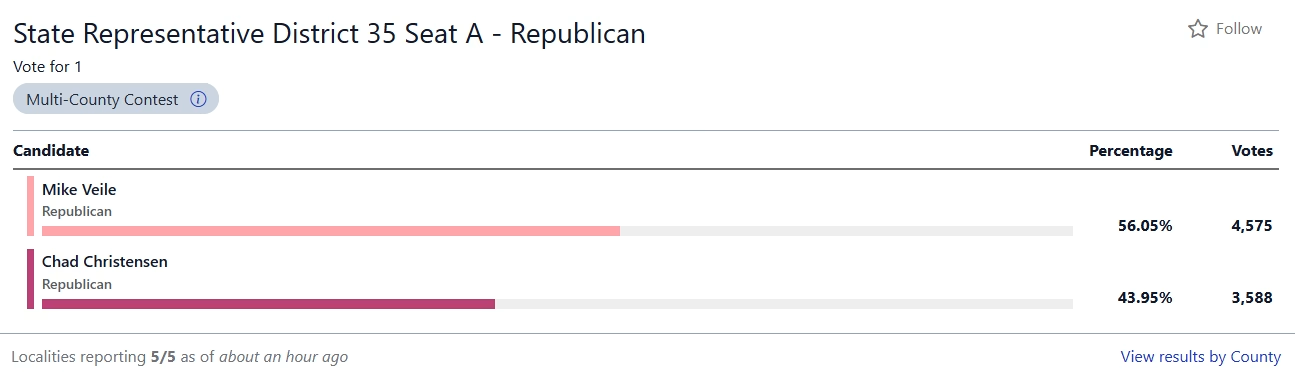
Former state representative Chad Christensen’s comeback attempt against appointed freshman Rep. Mike Veile fell short as well.
I’ll continue digesting these results and sharing my thoughts over the coming weeks. Most of last night’s victors will serve as our legislators in 2027, but those in districts 6 and 29 still face tough Democratic opponents in November. That means we won’t know the exact makeup of the Legislature—or what it means for committee assignments and leadership races—until the end of the year.
Earlier this year, I broke down the ideological makeup of the House of Representatives using two floor votes: H704, mandating E-Verify, and HJR7, repealing the Blaine Amendment. I took another look at those numbers in light of yesterday’s results and found that the generally conservative caucus went from 36 members to 35, while the liberal caucus increased from 12 to 14. While this represents a step back from the victories of 2024, we are still in a much stronger position than we were heading into that election just two years ago. I think this shows that Idaho is still trending conservative, but the moderate machine will not give up without a fight.
As always, we will learn as much as we can from these results and keep looking ahead. We must continue working to pass good policy and defeat bad bills during the 2027 and 2028 legislative sessions, while maintaining a long-term view of how our actions today will shape the Idaho our children inherit.
Running a campaign is not easy, and I appreciate every conservative candidate who stepped up to stand for election. Win or lose, our task remains the same: move forward with a positive vision for Idaho’s future.
Feature image created with Microsoft Copilot.
The Gem State Chronicle delivers daily analysis, op-eds, press releases, and Idaho Insider updates — free to your inbox.
Free newsletter · Unsubscribe anytime · View on Substack

About Brian Almon
Brian Almon is the Editor of the Gem State Chronicle. He also serves as Chairman of the District 14 Republican Party and is a trustee of the Eagle Public Library Board. He lives with his wife and six children in Eagle.