By Tim Oren
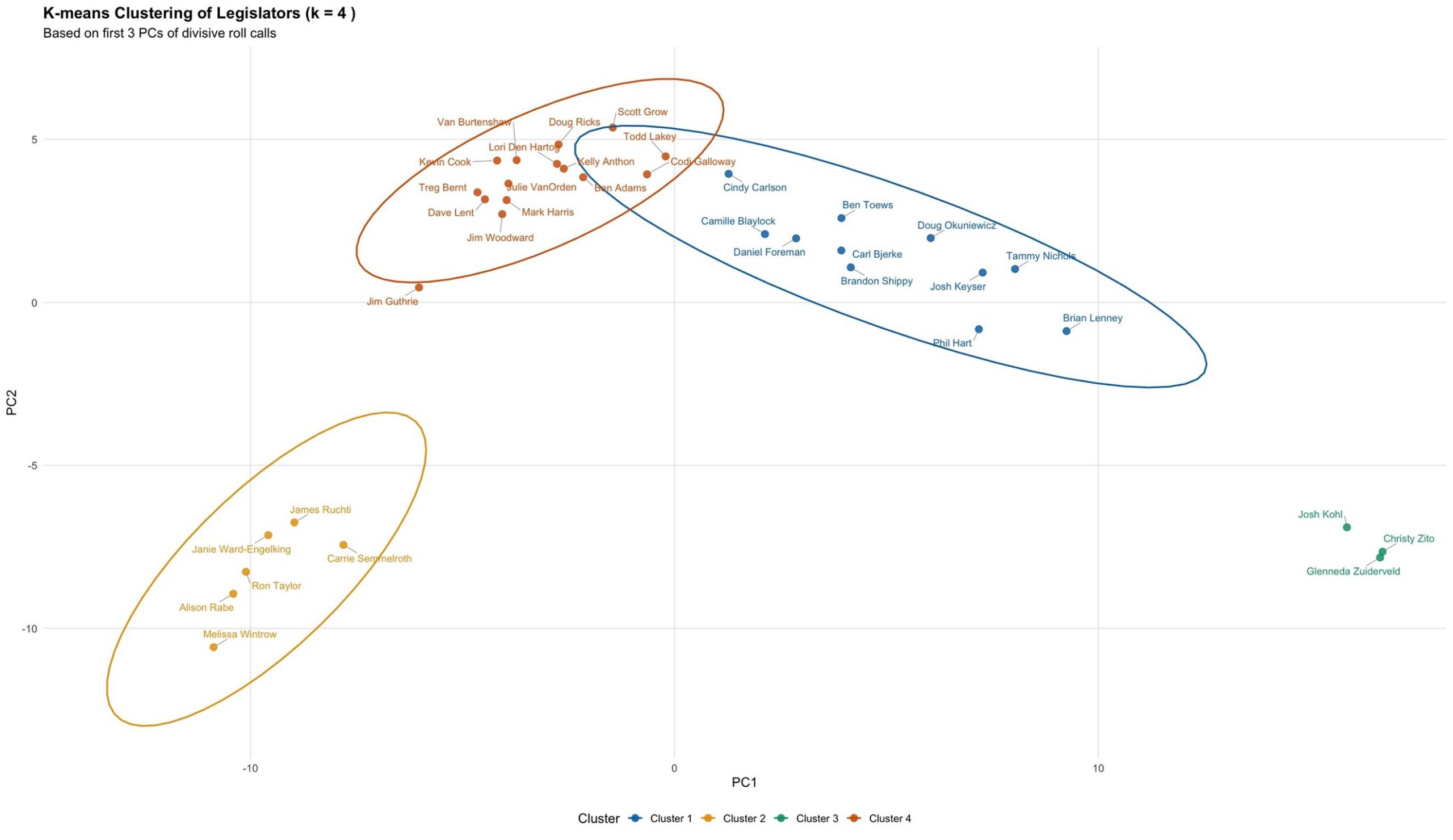
In possibly the last full week of the Idaho legislative session before sine die, the cascade of appropriations bills overwhelmed the daily reporting, making them a good subject for statistical methods. The picture in the Senate is much the same as last week, with a somewhat wider spread amongst the ‘Swing’ faction:
In the House, there’s a visible change as the members of the Gang of 8 broke into a separate cluster, leaving an elongated ‘Swing’ group that varies largely on spending issues.
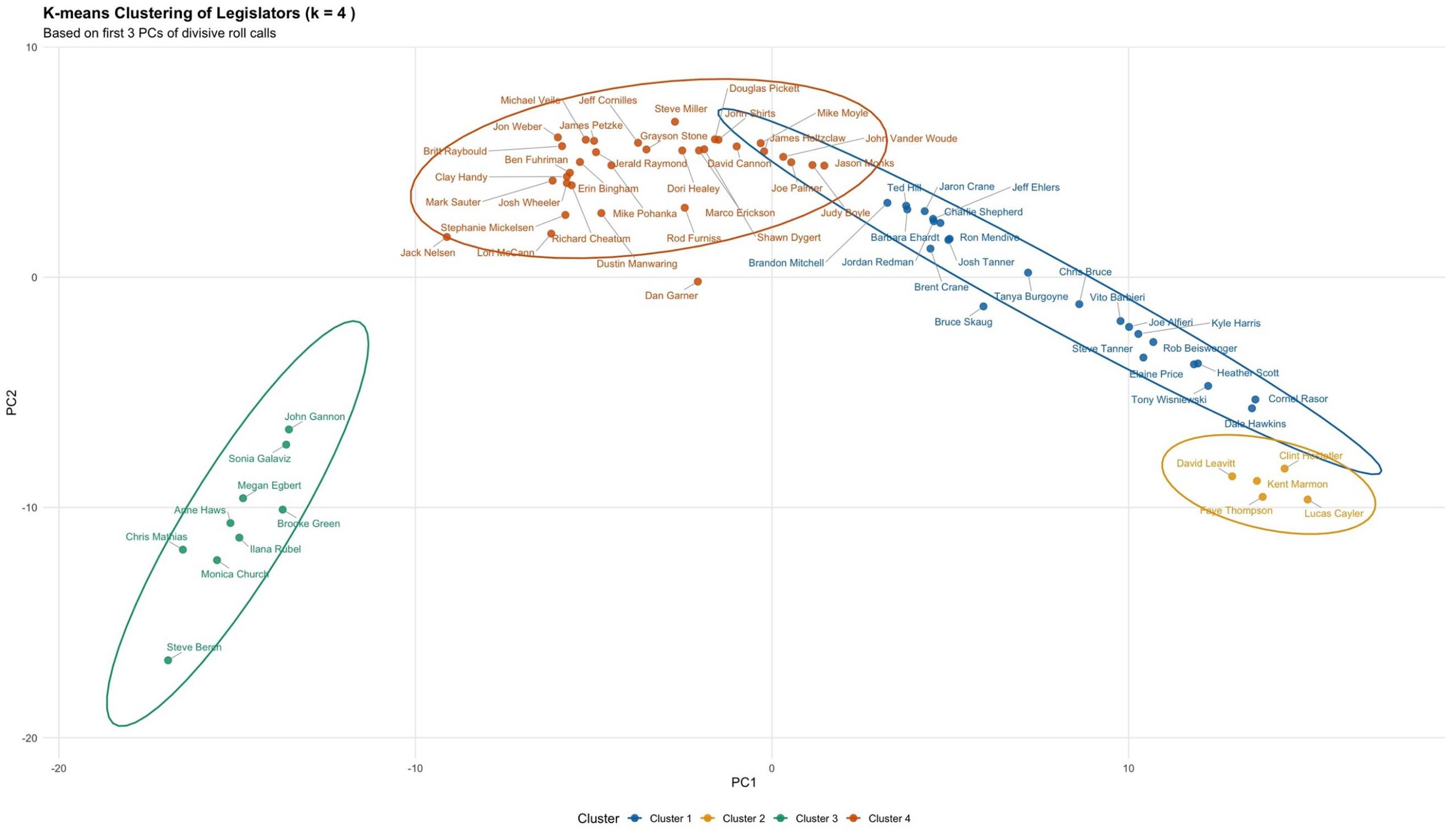
I could break that into two clusters, but I think it’s more interesting to emphasize the spectrum of fiscal attitudes in the Swing faction, while the RINO bloc votes consistently for more state spending. Note, however, that the variation amongst the ‘Swingers’ doesn’t translate into much saving of taxpayer dollars: I counted only two failed appropriations bills in the House last week. The process is designed to be fairly ‘insensitive’ (in a statistical sense) to individual representatives, emphasizing the theme of this project: Legislation is a team sport.
What got the public attention last week, and will likely this as well, is the interaction between the immigration issue and legislative process. I’m going to look at the struggle over H0760, which would let non-profit organizations in on “property tax exemption for qualified workforce and affordable housing developments”. It might sound innocuous, but as emerged in the debates, it’s a recipe for the (in)famous NGOs to join with those who profit from cheap migrant labor in dumping costs on the rest of us, in this case, by shifting tax burden onto those who pay full freight for their own or rented housing.
The bill ultimately failed on a dramatic tie vote in the Senate. In showing the vote, I’m adding a new feature: The first fruits of my work on campaign contributions (there’s been some throat clearing in the Afterwords and on my personal X account), is to overlay the pattern of 2026 primary donations onto the legislative maps:
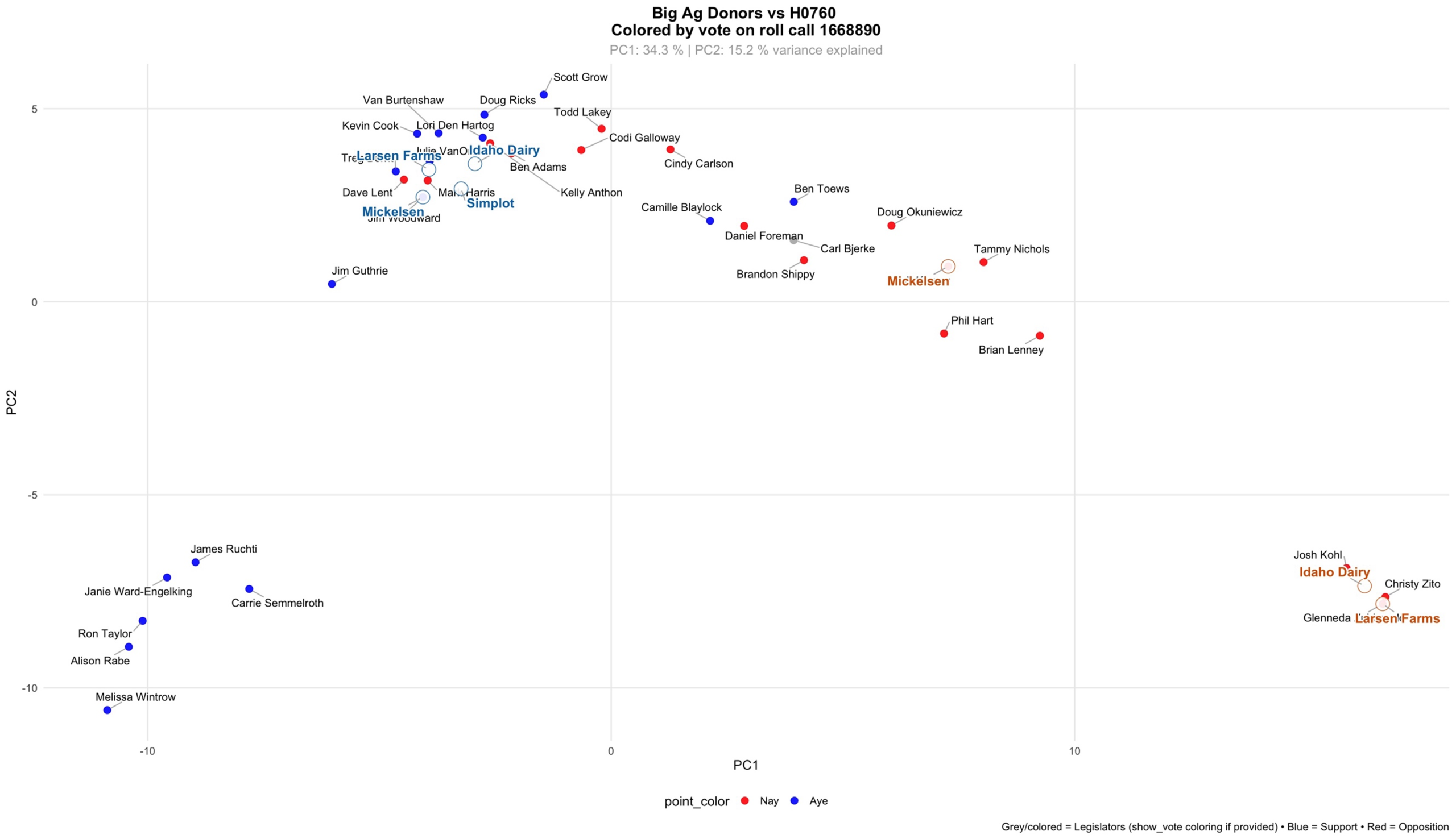
Here I’ve picked four of the largest and best known ‘big ag’ influencers: a corporate (Simplot), two family enterprises (Larsen and Mickelsen) and a PAC (Idaho Dairy). I’ve combined all linked donor entities – family members, LLCs and S corps, and related PACs – many of which appear in multiple accidental or obfuscating variations – under one group label. The large blue points and labels are the average map location (centroid) of Republican legislators received supporting donations from that group. When present, the large red point and label is the centroid of opposing donations, that is, where the group has funded an opponent to the incumbent legislator. (That’s Josh Keyser right under the red Mickelsen point.)
Here’s the same thing for the House vote:
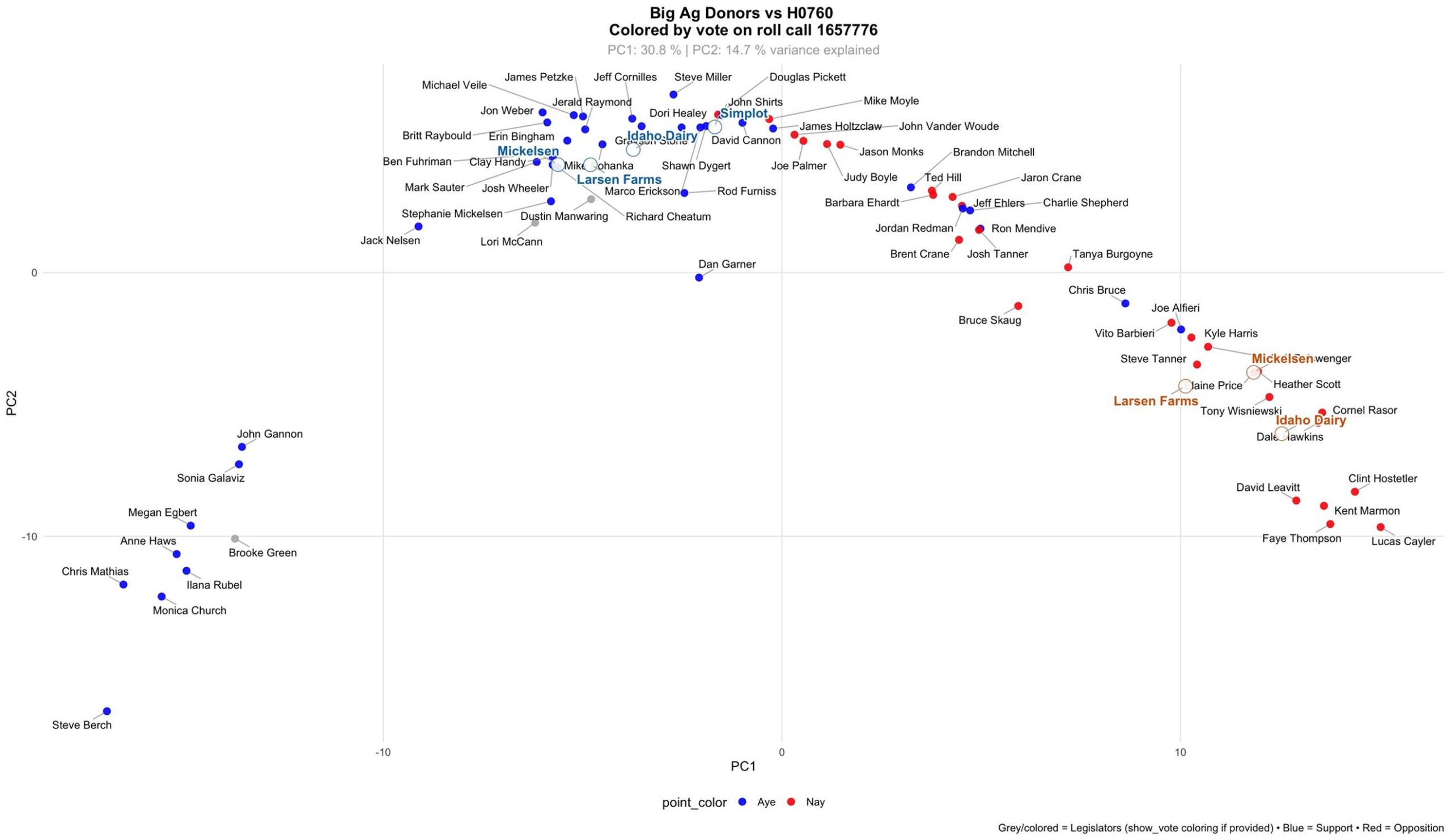
Note that Simplot had not made any opposing donations as of last Friday, so there’s no red points for them.
You may judge for yourself the coincidence of contribution patterns and the votes on housing for illegals.
Afterword
I’ll be doing some wrap-ups after the session closes. One of them will be to look at the issues that separated the various voting blocs. While the math I’m using here can be hard to explain at times, it has the virtue of being able to spit out ordered lists of what votes made a difference, rather than listening to the screaming. In the meantime, I will leave with a quote from a Great American:

About Tim Oren
Tim Oren retired to Idaho after a 30 year career in Silicon Valley. Here he gardens, home-brews, teaches kids to shoot, and has applied his well-aged statistics degree to subjects such as educational funding and results, Idaho legislative race targeting, and now legislators' voting patterns. He is a contributor to the Idaho Freedom Foundation and a number of Idaho candidates.