By Tim Oren
When I began this project, it was a retrospective on Idaho Legislative sessions that had already wrapped up; I was analyzing a done deal. My experiment with a time-lapse of the 2025 session showed how voting clusters evolve through a session, but it failed to capture all of the dynamics I’ve observed while watching the process in real time this year:
I consider only divided votes, since unanimous consents add no information. What’s striking is what a small fraction of the bills that reach a chamber floor actually fail. For instance, in the last week the following failed in the House, out of dozens considered:
- S1271, declaring rats a public nuisance and imposing control requirements on locales.
- S1340, making driving in the left lane for other than passing a traffic violation
- H0745, allowing local governments to opt into Idaho state health insurance
- OK, an unfunded mandate, yet another nuisance violation, and a recipe for adverse selection, I get it. And finally:
- H0909, a $350,000 enhancement appropriation for the Secretary of State to print a voter pamphlet.
That’s the only appropriation bill that did not pass the House in the past week. All of the others passed, albeit on divided votes. The effective coalition of D’s and RINOs are a near rubber stamp for whatever spending makes it to the floor.
And over in the Senate, we had the following failed votes:
- NONE
At the start of this project, I was struck by the greater diversity of voting patterns in the House compared to the Senate. The house had several loose clusters, always with a ‘swing’ group in the middle. In the Senate, the clusters were tighter and the swing group much smaller or sometimes non-existent. At the time, I assumed the Senate was much more polarized. Now I’m seeing it a different way: bills that might fracture a coalition in the Senate often end up expiring in some committee chair’s drawer. It’s a cozy alliance to avoid potentially embarrassing votes, and this week we’ve seen what violations can lead to for a Senator. The House seems more willing to let the chips fall where they may.
However, the Senate has no choice but to vote on spending measures, and so the factions have started appearing there:
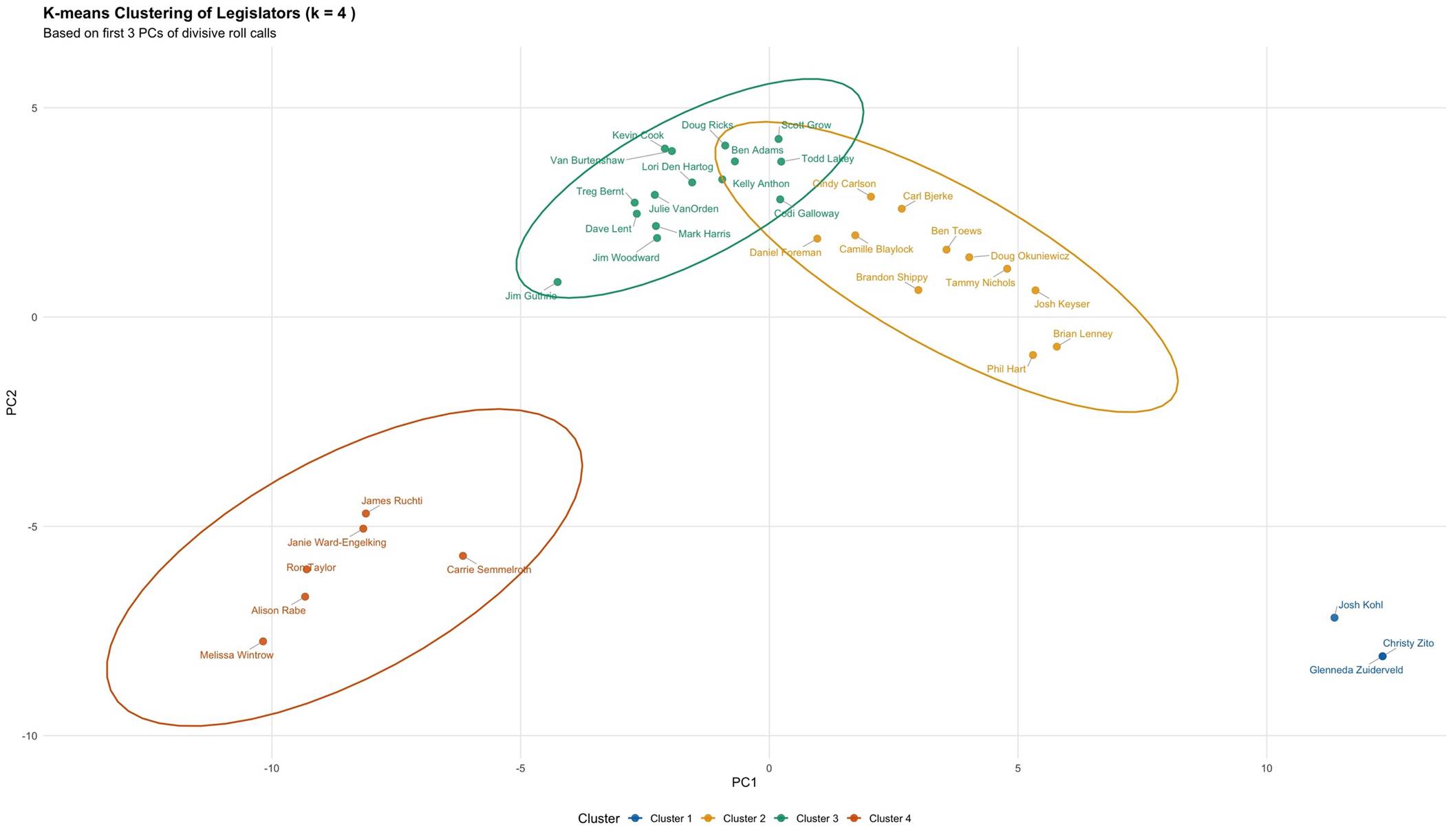
It’s the division of appropriations into maintenance and enhancement bills that has made legislators’ positions on spending more apparent, so kudos to those who made that change. However, in this session it doesn’t seem to be making much difference to the total bill to taxpayers.
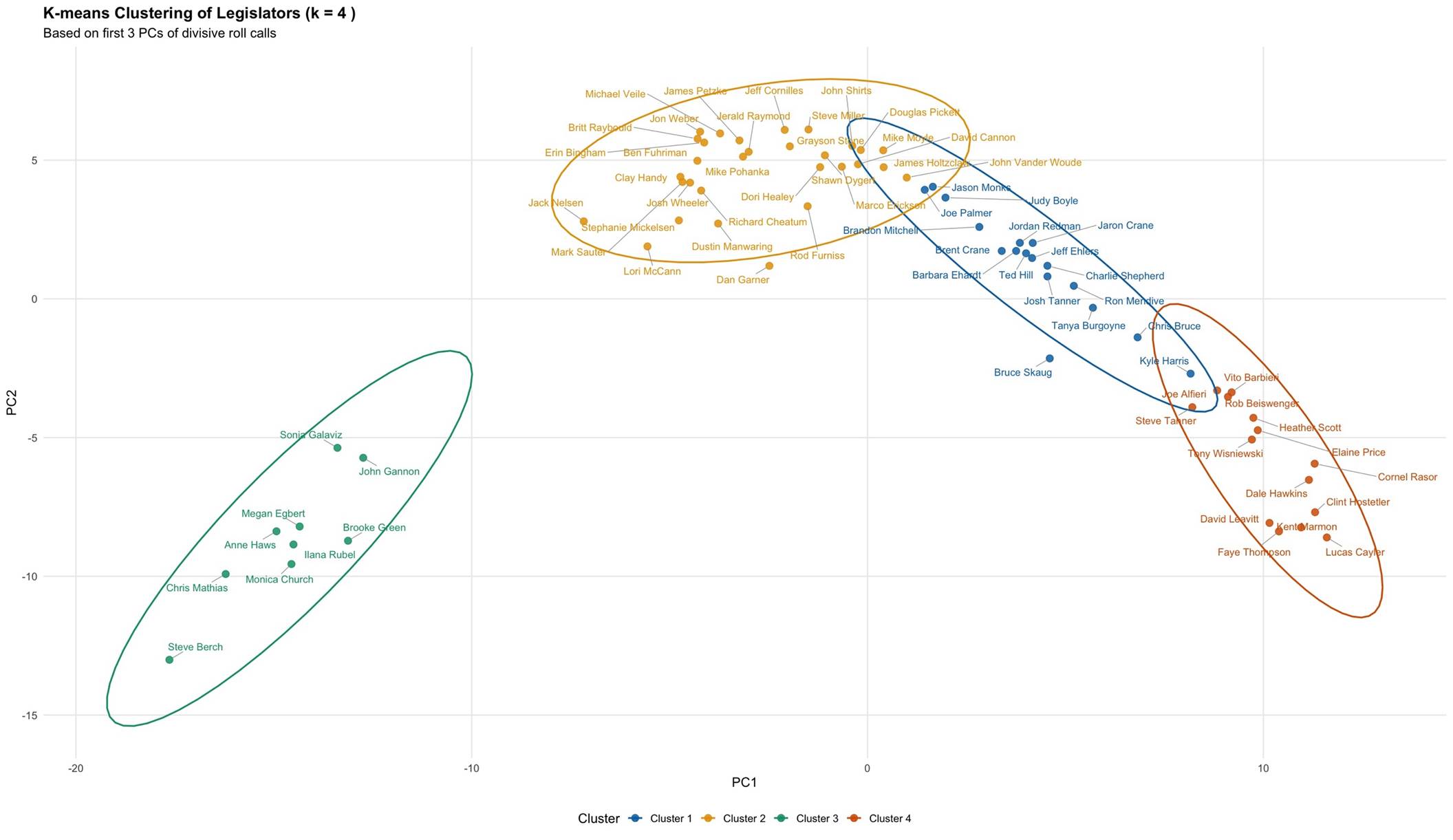
Little change is visible in the House clusters:
For this week, I’ll highlight the vote on H0660, requiring reporting of the nationality and immigration status of arrested individuals:
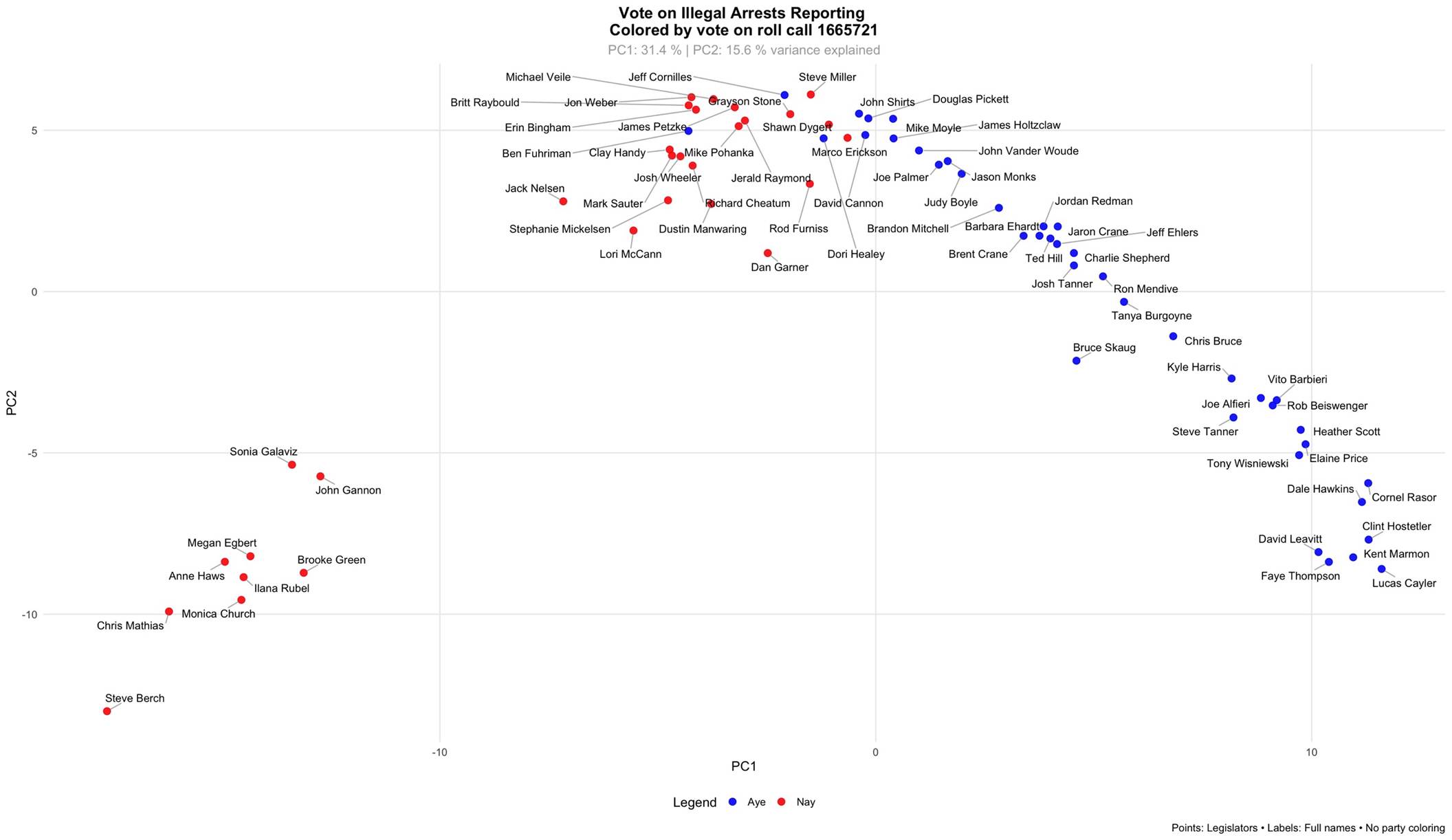
We’re not talking turning illegals over to ICE, only counting noses, to see what kind of problem we might have. The vote may tell you all you need to know about whether there is an actual problem, and who doesn’t want it officially recorded. We’ll see how that fares in the Senate how fast Anthon can send it to Guthrie’s desk drawer.
Afterword
As before, note that clusters appear to overlap because I’m plotting 3-D data on a flat screen. I’m still digging away on analyzing Idaho political contributions, which has involved cataloging the various names used by contributors so I can aggregate their donations. I’ll be publishing some of this information on my personal account, for free use by anyone else who wants to play with Sunshine data.
The Gem State Chronicle delivers daily analysis, op-eds, press releases, and Idaho Insider updates — free to your inbox.
Free newsletter · Unsubscribe anytime · View on Substack

About Tim Oren
Tim Oren retired to Idaho after a 30 year career in Silicon Valley. Here he gardens, home-brews, teaches kids to shoot, and has applied his well-aged statistics degree to subjects such as educational funding and results, Idaho legislative race targeting, and now legislators' voting patterns. He is a contributor to the Idaho Freedom Foundation and a number of Idaho candidates.