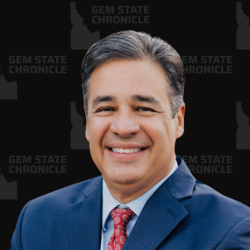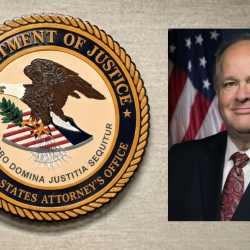
Yesterday, Gov. Brad Little selected Judge Jason Scott of Idaho’s Fourth Judicial District to succeed retiring Justice Richard Bevan on the Idaho Supreme Court. Bevan, who currently serves as chief justice, steps down on October 30; his fellow justices have already chosen Justice Robyn Brody to take over as chief. The governor was given three names by the Judicial Council, which is made up of nine members, including the sitting chief justice. Scott will be up for election in 2030, and if tradition holds, he will likely run unopposed.
Longtime readers may recall my 2025 article “Voting For Justice,” in which I laid out how Idaho’s judicial elections have become an exercise in theater: only one sitting Supreme Court justice has lost a contested race since the 1940s, and only one sitting justice has even been challenged since 2000. Four of the court’s five current members reached the bench through gubernatorial appointment rather than a contested election.
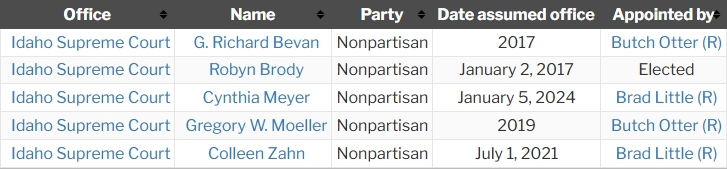
Today, I want to go further and ask what alternatives Idaho might have. The other 49 states and the federal government have their own methods for filling judicial vacancies, each with its own strengths and weaknesses. Ballotpedia lists eight major methods for filling judgeships:
- Partisan election
- Nonpartisan election
- Michigan method (hybrid)
- Legislative election
- Gubernatorial appointment
- Assisted appointment (Bar-controlled)
- Assisted appointment (governor-controlled)
- Assisted appointment (hybrid)
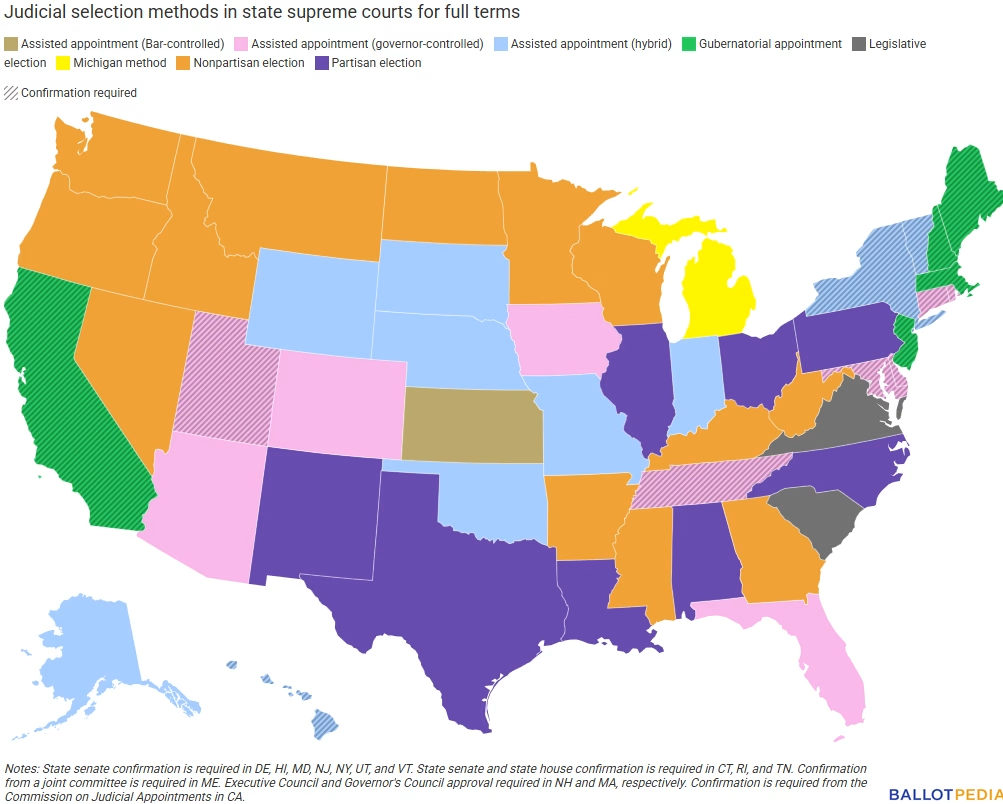
Idaho has a sort of hybrid method for electing judges, though Ballotpedia lists us as having purely nonpartisan elections. Supreme Court justices and Court of Appeals judges are elected to six-year terms, while district judges serve four-year terms. Magistrates—the judges who handle traffic tickets and other minor issues—are appointed by commissions overseen by district judges and then face retention elections. Voters are asked whether to retain the magistrate, and the only options are “yes” or “no.”
However, should a vacancy occur at the district level or above, the Judicial Council forwards three or four names to the governor, who then selects one. That person serves the remainder of the term and then stands for election in his or her own right, often unopposed. That means that, in practice, Idaho is much closer to an appointment method than simply nonpartisan elections.
The Judicial Council, which controls which candidates reach the governor’s desk, is made up of nine members: the sitting chief justice, plus eight others—a district court judge, a magistrate judge, two lawyers, and four non-attorney members—each appointed by the governor and subject to Senate approval. However, the judge seats are, in practice, controlled by the Supreme Court, and candidates for the lawyer seats are nominated by the Idaho State Bar Commission.
This is very different from the way our federal government works. Federal judges are appointed by the president of the United States and confirmed by the Senate, and they serve life terms. This is meant to insulate them from the political process by ensuring that they neither have to face a direct election nor feel pressure from an executive for renomination. Citizen oversight of the federal judiciary, then, is indirect, through the elected president and senators.
Idaho could adopt the federal system and give the governor authority to appoint anyone qualified for a judgeship, with Senate approval. Rather than being limited to a handful of names submitted by the Judicial Council, the governor could choose from among the thousands of Idahoans qualified to serve as a district judge or on the Court of Appeals or Supreme Court. That candidate would then face tough questions in the Senate Judiciary & Rules Committee and then a vote of the whole Senate. Imagine Sen. Brian Lenney asking pointed questions of a prospective Supreme Court justice in a public hearing!
Of course, it’s possible that Idaho voters would balk at taking away even the pretense of voting for judges and justices. Another option would be the Texas model: full partisan elections at every level of the judicial branch. Judicial candidates run just like legislative and executive candidates: in a partisan primary, with the winners advancing to the general election. Candidates in this system are forced to be much more open about their judicial philosophy and how it fits into the modern political context. Parties campaign on behalf of their judicial candidates, just as they do for other candidates.
One effect of partisan judicial elections is that many voters simply vote the party line, and this could result in less-qualified candidates being elected to the courts. However, in theory, voters have complete control over the process. Another potential downside is the influx of campaign contributions into these races. A 2003 paper published by the Federalist Society suggested that plaintiffs’ attorneys have a much larger pool of cash with which to influence judicial elections.
Right now, Idaho seems to exhibit the worst of both worlds. We elect our judges, but most run unopposed, making the process more theatrical than anything else. The governor has authority to fill vacancies, but is given a selection of names that have already been vetted by a small cartel of insiders, and the Senate has very little involvement in the process.
In 2022, Reps. Mike Moyle and Greg Chaney sponsored House Bill 782, which would have overhauled the Judicial Council and judicial appointment process. It would have increased the council’s membership from seven to eleven, given the governor more leeway in appointing members to the council, reduced the terms for judges and justices from six to four years, explicitly allowed the governor to reject the list of candidates from the Judicial Council, and added more public transparency regarding the Judicial Council’s deliberations.
H782 passed both chambers but was vetoed by Gov. Brad Little. In his veto letter, the governor said he agreed with many provisions of the bill but wanted more time to examine the ideas with relevant stakeholders.
The Legislature came back in 2023 with Senate Bill 1148, carried by Sen. Abby Lee, who was the floor sponsor for H782, and Rep. Bruce Skaug. This much more limited bill increased the Judicial Council to nine members, gave the governor the ability to choose from a slate submitted by the Idaho State Bar rather than allowing the Bar to directly appoint members, allowed the governor to ask for additional nominees from the Judicial Council, and increased public transparency. This bill passed both chambers overwhelmingly and was signed into law by Gov. Little.
That same year, Sen. Lee introduced Senate Bill 1157, which would have denied senior status to judges who resigned before the end of their term. It was sent to the amending order by the Senate Judiciary & Rules Committee and never taken up. Sen. Phil Hart introduced similar legislation in 2026 that also failed to reach the floor.
If you could snap your fingers and change the way Idaho selects judges, which method would you choose? Which method do you think would have the support of the people and their elected representatives? Judges and justices make up the third branch of our state government and have enormous power over policy, the structure of our society, and our daily lives. It’s important to ensure that these judges are men and women of good character who have a deep understanding of and respect for the law and the traditions of our civilization, and who resist ephemeral political pressure. What’s the best way to accomplish that?
If you have ideas, share them with your legislators, especially with those who sit on the Senate and House judiciary committees. The only way things change is if enough people demand it.
Feature image created with Microsoft Copilot.
The Gem State Chronicle delivers daily analysis, op-eds, press releases, and Idaho Insider updates — free to your inbox.
Free newsletter · Unsubscribe anytime · View on Substack

About Brian Almon
Brian Almon is the Editor of the Gem State Chronicle. He also serves as Chairman of the District 14 Republican Party and is a trustee of the Eagle Public Library Board. He lives with his wife and six children in Eagle.