By Tim Oren
As said last week, I’m turning from the completed 2026 Idaho legislative session, to the upcoming primary election. But before I go, a bit of retrospective on House voting patterns:
I used the data behind my House voting map to find out which votes had the greatest effect in separating the ‘RINO’ cluster (#2 in last week’s map) from the ‘Swing’ cluster (#3). Those were, in order: H951, HJM18, H700, H660, HJR9 and S1247 – all of them getting ‘ayes’ on average from the Swing group, and ‘nays’ on average from the RINOs.
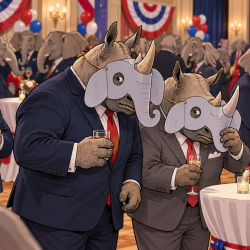
Three of those six are bills related to illegal immigration, H700, H660, and the ‘radiator capped’ House version of S1247. The RINOs clearly stand for cheap, undocumented labor.
H951 is also interesting, an enhancement budget for the Attorney General’s office, rejected by a ‘horseshoe’ alliance of Ds, RINOs and the Gang of 8. Why this? Perhaps it has something to do with hate for AG Raul Labrador, who’s endorsed Cornel Rasor, Colton Bennett and David Worley, no friends of the RINOs.
Buckets of Cash
Last week I introduced the ‘Big Ag / Extractive’ group of campaign contributors, and left the remaining groups to be described now:
- Utility: Primarily energy and communications providers, and their associated PACs.
- Financial: Banks and related PACs, but also non-traditional providers such as those associated with MoneyMetals.
- Developer: Groups that profit from population and geographic growth in Idaho.
- Chemical: A mixture of drug and vax, ag chemicals, and alcohol and tobacco interests. They are all for minimal regulation and being relieved of liability from harms their products might cause.
- Medical: Healthcare providers and insurers, minus the drug & vax companies.
- Special Interest: Remaining interests that don’t fit the previous groups.
- Individual / Insiders: Individual donors, party committees and partisan PACs, inter-candidate donations.
Rather than list all their members, I’ll put a link to a Google Drive file in the Afterword. Comments on the groupings are encouraged.
Cash Flows
Last week, I showed the comparative donations from each group towards the supporters and opponents of immigration enforcement bills. Here’s the same thing, but sorted out by donations to incumbent House legislator clusters:
Again, the contributions are normalized by average per candidate, since the cluster sizes differ. As before, the Big Ag/Extractive contributions flow primarily to the RINOs, the ones voting against immigration control. None of the groups show support for the Small Government cluster, with the exception of Individuals & Insiders, and non-traditional members of the Financial group.
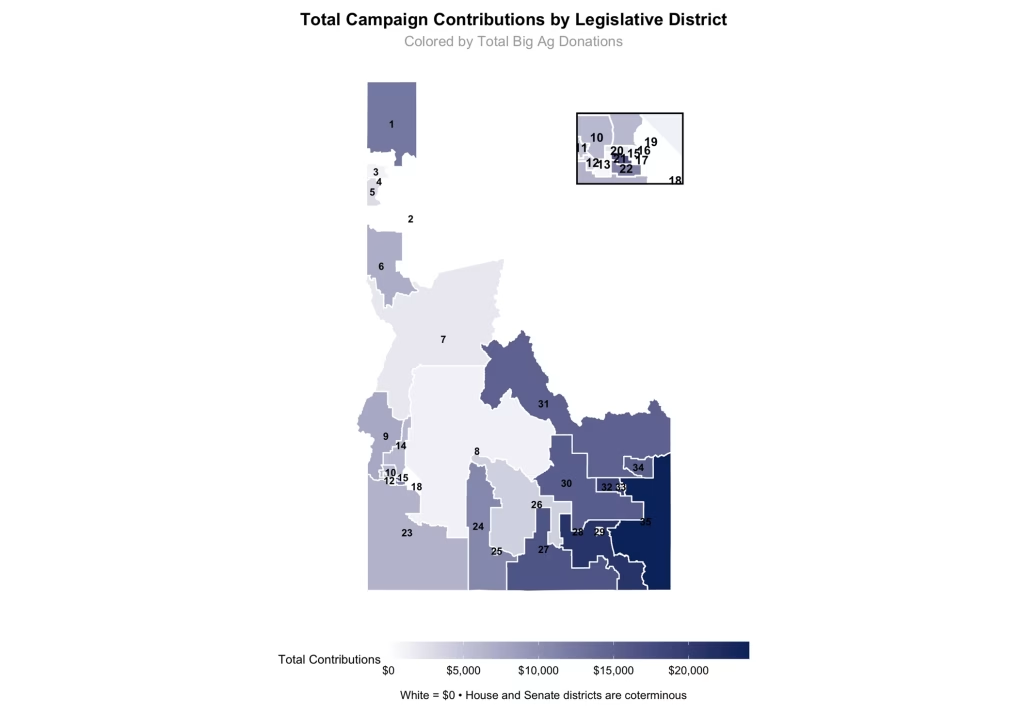
This shows only incumbents, since 1) they have voting records to judge, and 2) there’s a statistical difference between contributions to incumbents and challengers. But I can combine both incumbents and challengers geographically, as I did with last week’s heat map of overall campaign contributions. Here’s the total contributions from the Big Ag / Extractive cluster laid onto the Idaho legislative districts:
And for comparison, here’s a repeat of last week’s map of total ‘aye’ votes in the House for immigration controls:
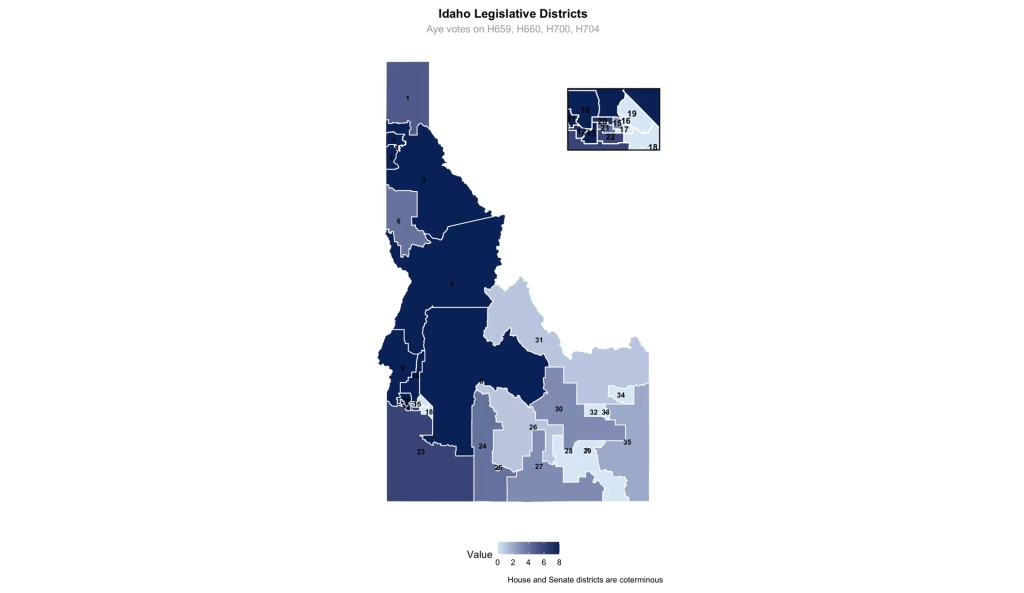
If you put those side by side, the patterns are rather striking. Big Ag money talks.
Afterword
Next week I’ll start digging into specific primary races, with looks at contributions, voting records, and individual versus special interest donations.
For those interested in my breakdown of donor groups, here’s a Google Drive link to group memberships, in CSV format. Comments encouraged, and the data is free to use.
The Gem State Chronicle delivers daily analysis, op-eds, press releases, and Idaho Insider updates — free to your inbox.
Free newsletter · Unsubscribe anytime · View on Substack

About Tim Oren
Tim Oren retired to Idaho after a 30 year career in Silicon Valley. Here he gardens, home-brews, teaches kids to shoot, and has applied his well-aged statistics degree to subjects such as educational funding and results, Idaho legislative race targeting, and now legislators' voting patterns. He is a contributor to the Idaho Freedom Foundation and a number of Idaho candidates.