For Immediate Release
March 23, 2026
Media Contact: Damon Sidur
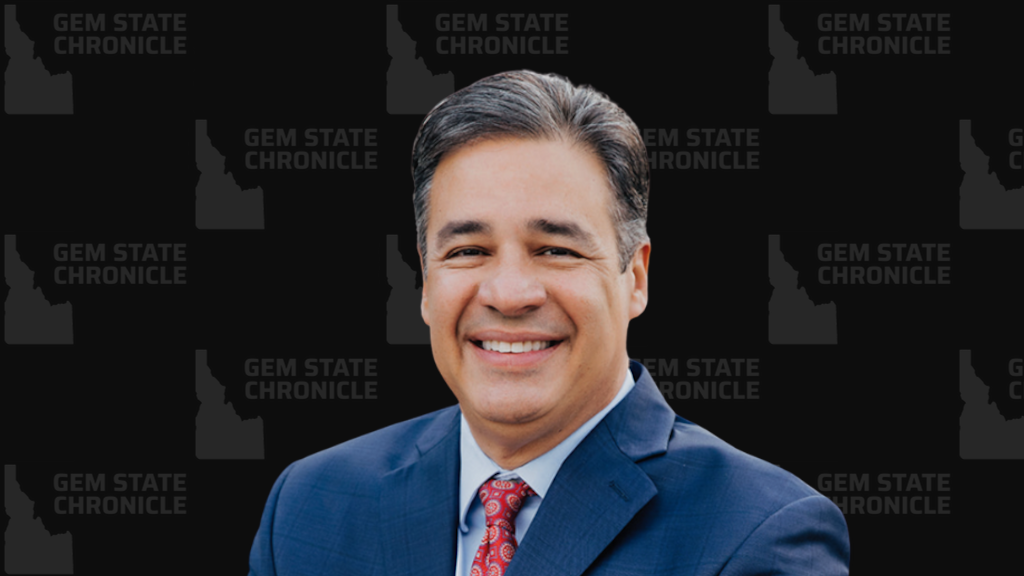
BOISE, ID — Attorney General Raúl Labrador joined a 39-state coalition challenging a federal agency’s attempt to claim authority over sports betting that Congress never granted. The Commodity Futures Trading Commission (CFTC) now claims fifteen-year-old laws passed to regulate Wall Street after the 2008 financial crisis also gave them the power to override state gambling laws nationwide.
In January 2025, online platforms Kalshi and Crypto.com began offering sports betting by calling it “events contracts” on federally-regulated futures exchanges. Users can bet on game scores, player performance, and other sports outcomes. The platforms marketed this activity as sports betting and the public used it that way. Kalshi reported over $1 billion in Super Bowl bets alone in February 2026.
For roughly a year, the CFTC declined to endorse the legality of these contracts. In September 2025, the Commission issued an advisory warning the platforms it had never approved such contracts and cautioned them that state law could result in the termination of their sports betting products if states chose to.
Under new leadership in late 2025, the CFTC reversed course. When Nevada sued the platforms to enforce its gambling laws, the CFTC filed a brief siding with the platforms. The CFTC now argues that these contracts qualify as financial instruments called “swaps,” federal law gives the CFTC exclusive jurisdiction and prevents states from regulating this activity.
“States like Idaho that choose to ban sports betting would be prevented from enforcing those bans under the CFTC’s theory,” said Attorney General Labrador. “An unelected federal agency claims it discovered hidden authority in fifteen-year-old financial reform laws to override state gambling laws nationwide. Congress never granted that power, and Idaho will continue defending our right to regulate gambling as we see fit.”
The coalition’s brief makes four main arguments. First, federal agencies have no special authority when interpreting the scope of their own jurisdiction, especially when claiming new powers that expand their authority. Second, under Supreme Court precedent, broad claims of federal agency authority over significant topics require clear congressional authorization. Congress never clearly authorized the CFTC to regulate sports betting when it granted authority over Wall Street swaps. Third, when Congress intends to shift traditional state powers to federal control, it must speak clearly. Gambling regulation has long been a core state function. Fourth, the CFTC itself has previously acknowledged it lacks expertise in gambling regulation and has no clear statutory mandate to regulate it, while states have extensive experience with age limits, addiction programs, and consumer protections.The brief notes the CFTC allows platforms to self-certify their contracts with no pre-approval and has no gambling-specific regulations. States that have legalized sports betting impose licensing requirements, background checks, age verification, responsible gambling programs, and integrity monitoring. States that ban sports betting would be unable to enforce those bans if the CFTC’s position prevails.
The case has implications beyond sports betting. If a federal agency can claim authority over an entire field of traditional state regulation by reinterpreting decades-old statutes passed for different purposes, the constitutional balance between state and federal power becomes meaningless. The coalition argues courts should reject such claims absent clear congressional authorization.
The Ninth Circuit is reviewing consolidated cases in which Nevada has enforced its gambling laws against prediction market platforms. The 39-state coalition filed this amicus brief supporting Nevada’s position that states retain authority to regulate gambling regardless of how platforms rebrand it.
Read the coalition’s brief here.

About Raúl Labrador
Raúl Labrador is the 33rd Attorney General of Idaho. The Office of the Attorney General provides legal representation for the State of Idaho. This representation is furnished to state agencies, offices and boards in the furtherance of the state's legal interests. The office is part of state government’s executive branch and its duties are laid out in the Idaho Constitution.