By Tim Oren
Big Dogs and Grass Roots
In last week’s column I looked at the race for District 28 Senate, Guthrie vs. Worley. I noted that while incumbent Guthrie had a large lead in company and PAC contributions, Worley was actually ahead if you looked at the Sunshine totals, due to a 7:1 advantage from small donors, aka ‘the grassroots’.
The percentage of total support from the grassroots may be a useful indicator of support on election day. The Sankey diagrams I’m using to assess interest group cash floors are totals based on ‘big dog’ contributors, that make at least four donations for a total of at least $1000. Any entity or individual doing that is playing outside their home district, presumably with some strategy in mind.
If I take the ‘big dog’ total for a candidate and subtract it from the Sunshine all sources total, what’s left is smaller donors, both individual and organizational, that are more likely to be playing ‘close to home’ – chipping in on a race that’s of local importance to them. This remainder I’ll call the ‘grassroots percentage’.
The ultimate test of a measure will be election day. But there ought to be some correlations observable in advance. I’ve looked at ‘big ag’ cash flows as they related to incumbents’ stances on illegal immigration related bills and seen that they overwhelming flow to those who opposed such measures. That seems like a good test for the ‘grassroots percentage’ as well – is it related to how legislators balance between corporate and community interests?
Turns out it is. If I average the grassroots donations to House members who backed none of this year’s illegal related bills, the average is 24%. The average for incumbents who backed all four such bills is 42%. By a simple test (see afterword) the difference is statistically significant; on average, the grassroots percentage is higher for House members who backed these bills. But averages are just that, the mix can vary widely in individual races, so let’s look at some.
Down in the Valley
Districts 24 and 25 lie in the Magic Valley of southern Idaho, comprising the city of Twin Falls and part of its agricultural hinterlands. Like all of Idaho, this area has been changing due to in-migration, though these districts are about average in that regard.
Its Statehouse representation has been changing as well. The 2024 primaries returned a more conservative, small government-oriented delegation from Districts 24 and 25. Four of the legislators – Zuiderveld, Kohl, Leavitt and Hostetler – are members of the well-known Gang of 8 fiscal conservatives. Big Ag has boosted a slate of candidates to take back the conservative-held seats, so this looks like a good area to see how these groups and averages are working in reality. I’ll examine the races in order of total contributions, starting with the highest. The heavyweight contest is Zuiderveld vs. Reinke for the District 24 Senate seat:
The unified donor groups (see last week’s column) are solidly behind the challenger. The Individual & Insider donors break for Zuiderveld. Her supporters from the Financial group are those associated with the MoneyMetals business, a pattern that will recur. Zuiderveld appears to be lagging in this diagram, but when I look at the Sunshine totals, she’s on par:
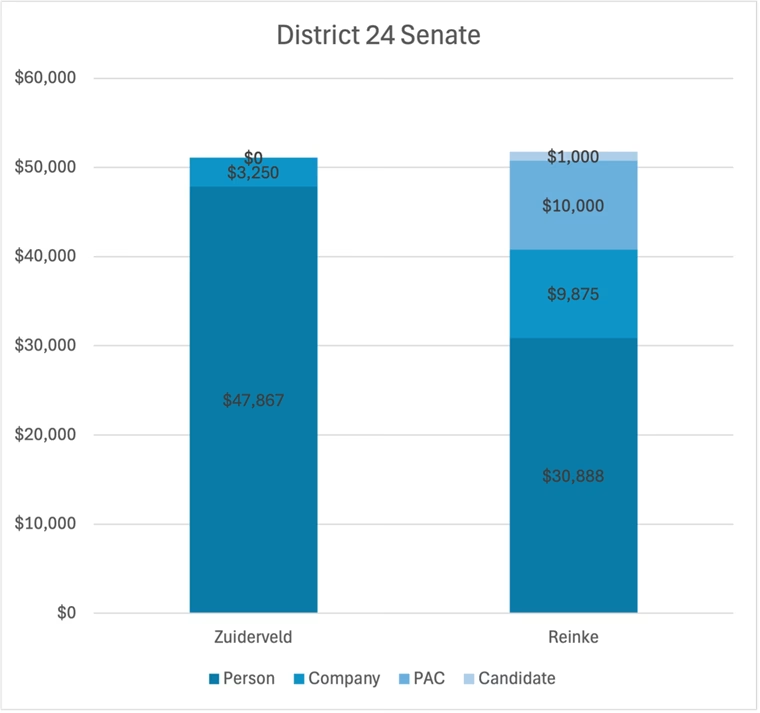
The difference is made up by smaller donations. This is one race where the grassroots are dominating: 81% of Zuiderveld’s money is coming from small players, 70% of Reinke’s.
Next up is incumbent Hostetler vs. challenger Alexandra Caval for the House A seat in District 24:
Hostetler voted for all of the illegal immigration bills in the House and the cheap labor groups are out in force for his opponent. His backers from the Financial group are the same as Zuiderveld’s. When I look at the Sunshine totals…
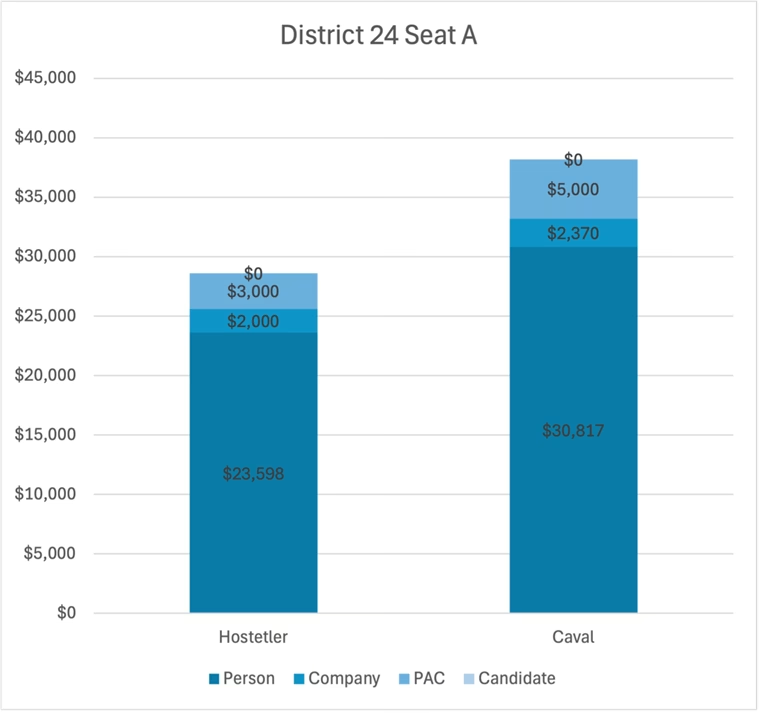
Caval actually increases her lead. Her overall donations are 62% grassroots, Hostetler’s are 54%.
Next is Leavitt (incumbent) vs. Vollmer in 25B. Again, Leavitt voted for all the illegal immigration bills, and the cheap labor groups are in force against him. Chemical and Financial go for the incumbent in this race.
Going to the totals…
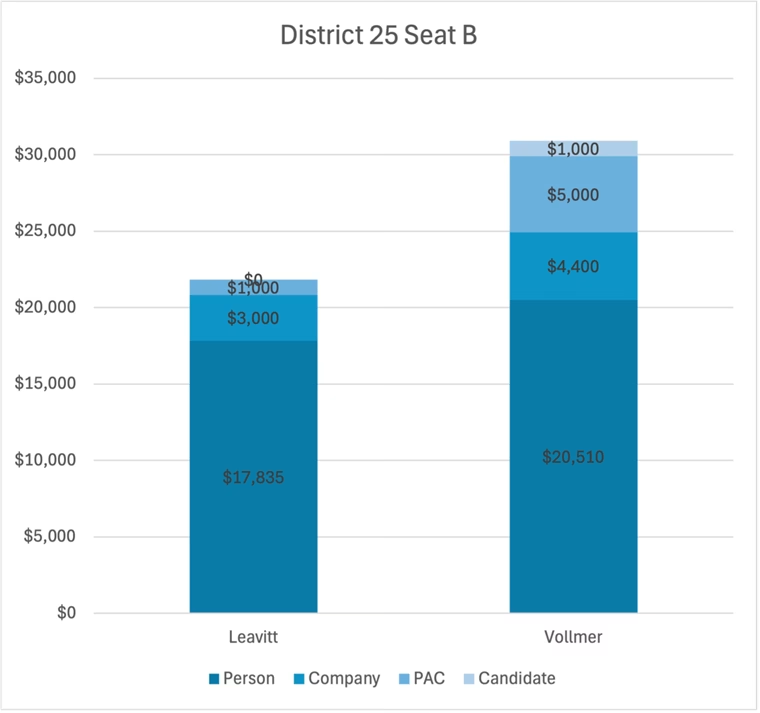
Vollmer maintains the lead. Her grassroots percentage is 52% while Leavitt’s is 46%.
Fourth in total dollars is Josh Kohl (incumbent) vs. Swensen for the District 25 Senate seat:
The Utility and Big Ag interests, both unified groups in opposing the Gang of 8 members, break for the challenger, but Kohl gets high levels of support from big dog individual donors. Going to the Sunshine totals…
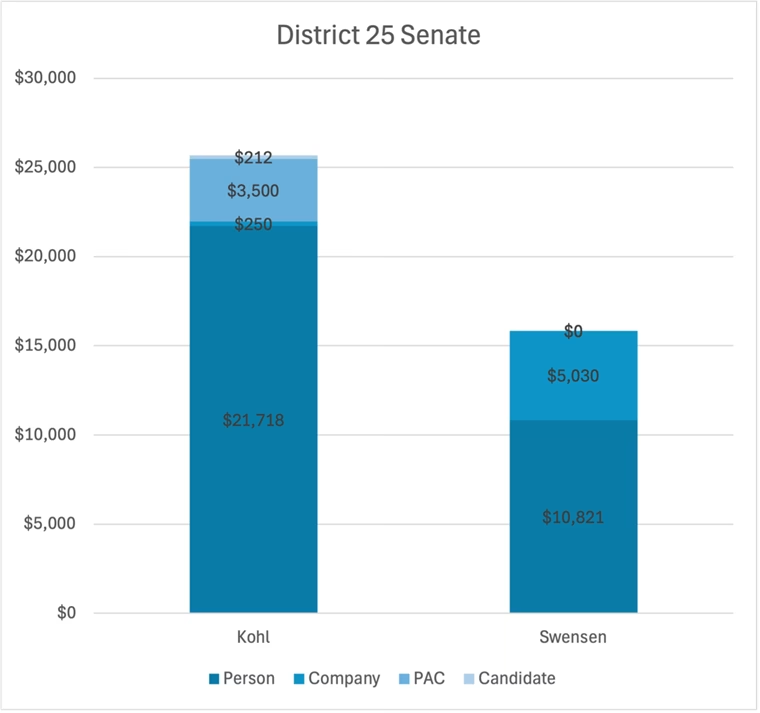
Kohl continues to lead. Swensen actually has a higher grassroots percentage, 75% vs. 67%, but not enough to make up the difference.
All four of these races involve incumbents from the Gang of 8. Notice that the grassroots percentages in each race, for both incumbent and challenger, are substantially above the benchmarks I found above. These are truly contests for the direction of Districts 24 and 25, with a divided base of politically active locals. While the big dogs have set up a challenger slate, the races are being dominated by small contributors.
That leaves two under card House races, with incumbents who are solidly in the RINO cluster, and opposed the illegal immigration bills during this year’s session. Each has drawn two opponents:
Grayson Stone is challenged by Callen and Messer in 25A:
A very sparse diagram, as the big dogs have largely stayed away. Callen only shows up on the Sunshine totals:
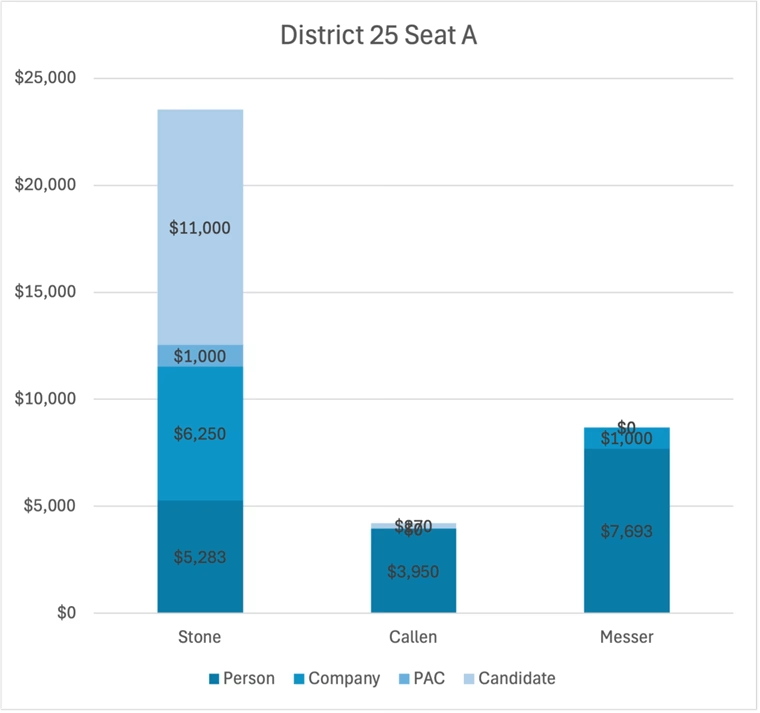
Messer leads in grassroots donations, but the race totals are skewed due to Stone dropping $11,000 of his own money into the campaign.
Finally, incumbent Miller versus challengers Mostoller and Requa in House District 24B:
Again, a very sparse diagram. The Sunshine totals show a fairly even distribution…
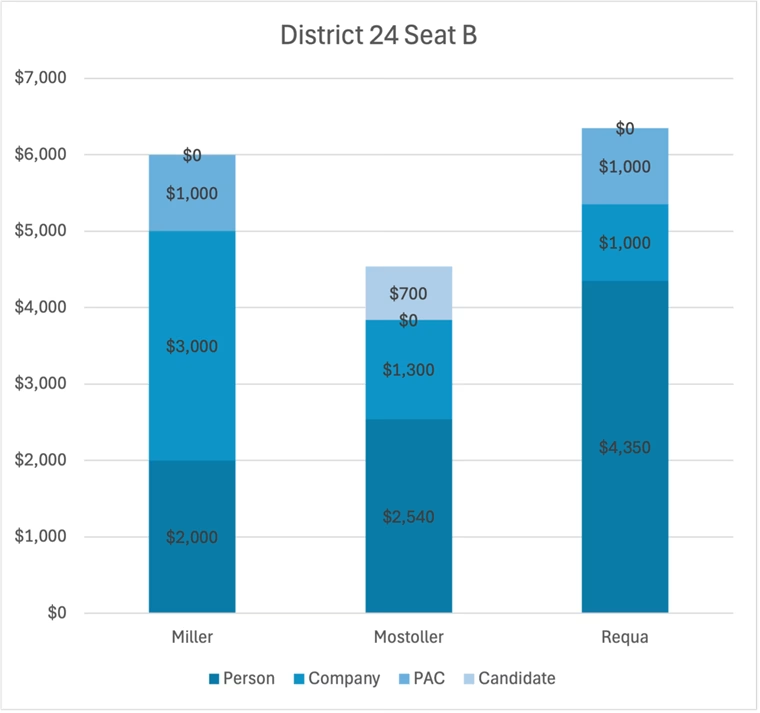
With challenger Requa actually having the highest grassroots percentage at 84%.
The attack on the Gang of 8 is drawing most of the attention and cash flow, but these races also reveal a divided base.
Afterword
Significance test for grassroots percentage difference versus votes on illegal immigration measures: t-Stat -2.287 on 19 degrees of freedom, for one-tail p < .02.
Disclosure: I am a contributor to Kohl, Leavitt and Hostetler.
The Gem State Chronicle delivers daily analysis, op-eds, press releases, and Idaho Insider updates — free to your inbox.
Free newsletter · Unsubscribe anytime · View on Substack

About Tim Oren
Tim Oren retired to Idaho after a 30 year career in Silicon Valley. Here he gardens, home-brews, teaches kids to shoot, and has applied his well-aged statistics degree to subjects such as educational funding and results, Idaho legislative race targeting, and now legislators' voting patterns. He is a contributor to the Idaho Freedom Foundation and a number of Idaho candidates.