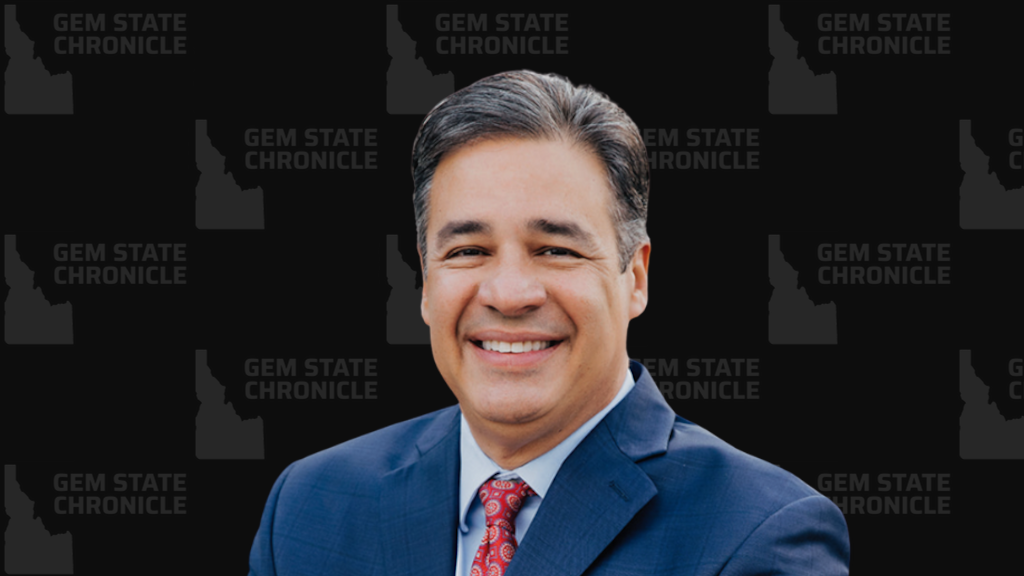
By Attorney General Raúl Labrador
Last week, the U.S. Supreme Court issued its decision in Little v. Hecox, affirming Idaho’s Fairness in Women’s Sports Act and ending six years of litigation that began before the law ever took effect. The Court confirmed what Idaho argued from the very beginning: “states may maintain women’s and girls’ sports for biological females.”
In 2020, Idaho became the first state in the nation to enact such a law. Five former Idaho attorneys general, Republicans and Democrats alike, urged Governor Brad Little to veto it, warning that it was constitutionally vulnerable. Even the Attorney General at the time wrote an opinion agreeing with his predecessors.
The Governor signed it anyway. Two weeks later, the ACLU sued, and within months a federal district court blocked the law before a single season had been played. That injunction remained in place for years as the case worked its way through the federal courts.
When I ran for Attorney General in 2022, defending this law was one of my central commitments. I believed Idaho could make a stronger constitutional case than it had, and more importantly, I believed the unfairness of allowing biological males to compete on girls’ teams deserved an Attorney General willing to fight all the way to the Supreme Court.
After taking office in January 2023, we made that fight a priority. We petitioned the Supreme Court in 2024, and the Court agreed to hear Idaho’s case alongside a similar challenge from West Virginia, one of 26 other states that had since enacted comparable protections. My former Solicitor General, Alan Hurst, argued the case in Washington in January 2026. Last week, the Court ruled in Idaho’s favor.
Justice Kavanaugh’s majority opinion explained why protecting girls’ sports remains a legitimate and compelling state interest:
“Sports are generally zero sum. Allowing a biological male athlete to compete on a girls’ team necessarily displaces or disadvantages a female athlete, replacing her on the roster, knocking her out of the starting lineup, reducing her playing time, depriving her of a medal, and the like. That hard reality of sports cannot be ignored or swept under the rug.”
The Court resolved two fundamental questions. First, it held that Title IX permits schools to maintain separate athletic teams based on biological sex because the statute has always used “sex” in that sense, and federal regulations have expressly allowed sex-separated teams since 1975. Second, it held that the Equal Protection Clause allows states to reserve women’s and girls’ teams for biological females because protecting fairness and safety in women’s athletics is an important governmental interest. The Court also rejected the argument that states must create individualized exceptions based on gender identity, recognizing that legislatures—not judges—are better equipped to resolve the complex medical and policy questions involved.
That last principle may prove to be the decision’s most enduring legacy. Idaho’s law rested on the simple premise that elected lawmakers, accountable to the people they serve, are the proper body to make difficult policy judgments, not individual judges deciding constitutional challenges one case at a time. The Supreme Court agreed.
The case also offers an important reminder about how our judicial system works. Too often, a single district court injunction is reported as though it settles the law forever. It does not. It is one stage in a much longer process. Idaho’s law spent six years under an injunction, and many assumed it had been permanently defeated. It wasn’t. The law was constitutional all along. It simply took the nation’s highest court to say so.
For Idaho families, this decision finally brings certainty. Parents can send their daughters onto the volleyball courts, the wrestling mat, the cross-country course, or the pool deck knowing the opportunities before them belong to them. Every roster spot, every starting position, every medal should be earned through competition among female athletes. And even for the girl who never stands atop the podium, sports offer something just as lasting: teamwork, discipline, resilience, and the confidence that comes from competing on a level playing field.
This victory took six years, three presidential administrations, three levels of the federal judiciary, and an Attorney General’s Office committed to seeing the case through to the end. Along the way, 26 other states adopted similar laws, and organizations including the NCAA, the U.S. Olympic & Paralympic Committee, and the International Olympic Committee ultimately embraced the same principle Idaho recognized first in 2020.
I’m grateful to every attorney and staff member in this office who helped bring this case to a successful conclusion. Most of all, I’m grateful to the young women of Idaho whose courage and perseverance inspired this fight from the beginning. They reminded the country that fairness in women’s sports is worth defending, and after six years, the Constitution proved they were right.
The Gem State Chronicle delivers daily analysis, op-eds, press releases, and Idaho Insider updates — free to your inbox.
Free newsletter · Unsubscribe anytime · View on Substack

About Raúl Labrador
Raúl Labrador is the 33rd Attorney General of Idaho. The Office of the Attorney General provides legal representation for the State of Idaho. This representation is furnished to state agencies, offices and boards in the furtherance of the state's legal interests. The office is part of state government’s executive branch and its duties are laid out in the Idaho Constitution.