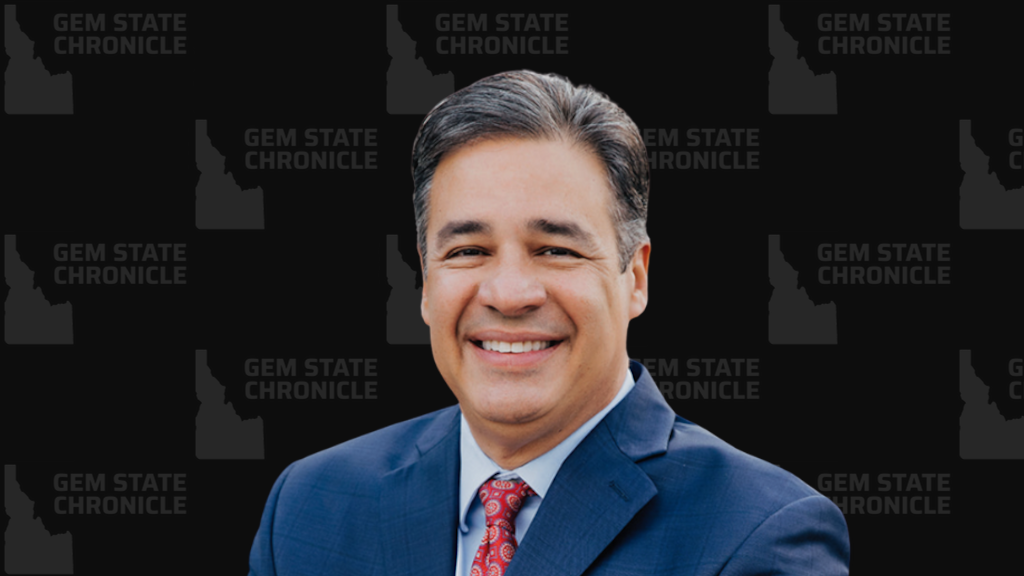
By Attorney General Raúl Labrador
Dear Friends,
When Congress created the H-1B visa program, the purpose was to allow American employers to hire skilled foreign workers when they genuinely couldn’t find qualified Americans to fill specialized jobs. A software engineer with a rare skill set, a researcher with expertise unavailable in the domestic labor market. That was the deal.
Major corporations have turned it into a cost-cutting mechanism. Amazon, Apple, Google, Disney, and Meta have all conducted mass layoffs in recent years while simultaneously filing thousands of H-1B petitions for new hires. The most documented example involved Southern California Edison, which replaced hundreds of American IT workers with H-1B hires at 40 percent lower cost and then required the fired employees to train their own replacements before they left.
Idaho workers aren’t insulated from this. When corporations nationwide systematically replace American workers with cheaper foreign labor, it drives down wages across entire industries and career tracks, including the technical and professional fields where Idaho workers compete for jobs. My office joined a 13-state coalition submitting formal comments to the U.S. Department of Labor in support of a proposed rule that would raise the minimum wages employers are required to pay foreign workers under the H-1B program. I signed on because protecting American workers is not a regional issue, and the Idaho families who depend on fair wages in competitive fields deserve an immigration system that puts their interests first.
The mechanics of the problem are worth understanding. Right now, H-1B employers are required to pay foreign workers the “prevailing wage” for the occupation, but the methodology used to calculate that wage was set through informal agency guidance in 1998 and 2005 without any public comment process and without any reasoned explanation for why the figures produced actually reflect what the statute requires. The Department of Labor has acknowledged this itself, noting in the proposed rule that the current wage levels were “based on the assumption that the mean wage of the lowest paid one-third of the workers surveyed in each occupation could provide a surrogate for the entry-level wage” but that the Department “did not previously conduct any meaningful economic analysis to test its validity.” When the wage floor is set artificially low, the entire incentive structure of the program tilts toward replacing American workers rather than supplementing them.
There is also a national security dimension that deserves attention. Roughly one in eight H-1B workers granted a visa in recent years was a Chinese national. The federal government designates China as a foreign adversary. When the five largest recipients of approved H-1B petitions are companies developing some of America’s most sensitive technology, the volume of foreign national access to those industries is not an abstract concern.
The Department of Labor’s proposed rule would raise the wage floors that H-1B employers must meet. Higher wages mean the program returns to its stated purpose: bringing in workers with genuinely rare and advanced skills whose compensation reflects that. The coalition comments also make the legal case that the current wage methodology is likely unlawful under the Administrative Procedure Act, having been established outside the required notice-and-comment process and without the reasoned analysis federal agencies are obligated to provide when setting binding requirements.
Congress will ultimately need to act to make more fundamental reforms, including requiring employers to demonstrate they tried to hire American workers before turning to the H-1B program. But raising the wage floor is the most consequential administrative fix available right now, and the Department is right to pursue it. Immigration policy that serves American workers is not a hostile position. It’s the baseline the law was supposed to guarantee all along.
Best regards,

The Gem State Chronicle delivers daily analysis, op-eds, press releases, and Idaho Insider updates — free to your inbox.
Free newsletter · Unsubscribe anytime · View on Substack

About Raúl Labrador
Raúl Labrador is the 33rd Attorney General of Idaho. The Office of the Attorney General provides legal representation for the State of Idaho. This representation is furnished to state agencies, offices and boards in the furtherance of the state's legal interests. The office is part of state government’s executive branch and its duties are laid out in the Idaho Constitution.