Judicial candidates are severely limited in how they can campaign for election. After all, many of the issues that executive or legislative candidates proudly proclaim in their own campaigns could potentially come before a sitting judge, and there cannot be any implication of bias regarding how they will rule. That means voters must look deeper when deciding who to support for these important positions.
A few weeks ago, I wrote about how the race for Fourth District Judge between Greg Woodard and Jeffrey Street was playing out, and how gauging each candidate’s base of support could be helpful in determining whom to vote for:
Just as a black hole is visible only by the effect it has on the light around it, the ideological leanings of judicial candidates can often be discerned only by looking at the people and organizations around them. With Jeffrey Street, I see the trial lawyer establishment and Idaho leftists rallying around someone who publicly opposed legislation that would have held organizations harboring illegal aliens accountable. With Greg Woodard, I see support from conservatives for someone who is not only open about his faith, but lives it.
While most feedback came from those who agreed with my take, I got some pushback from several very conservative people who were impressed with what Street had to say and how he seemed to embody the nonpartisan character needed in the judicial branch. Those in Boise, Elmore, and Valley Counties especially might miss what those of us here in Ada see every day: offices and houses with Jeffrey Street signs next to signs for John Stegner for Governor, Miranda Gold for Ada County Highway District, or even Yes on Prop 1.
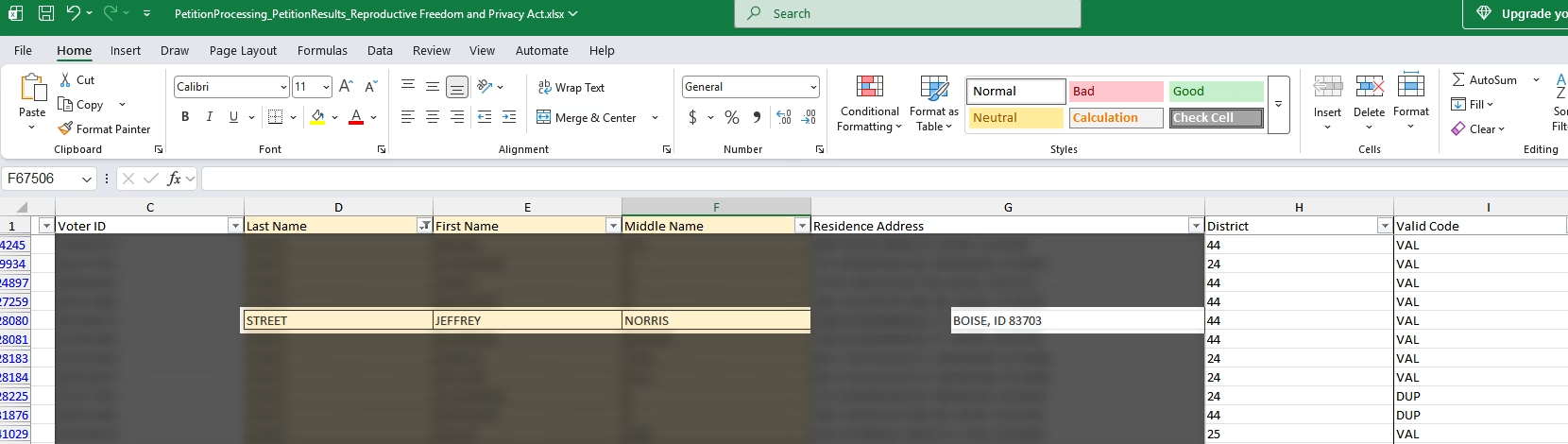
Today I learned that Jeffrey Street signed the abortion initiative petition, which is now on the ballot as Proposition 1.
Summer Bushnell has been compiling lists of those who signed the Prop 1 petition in every county, redacting personal information such as home addresses. After all, signing a petition to put an initiative on the ballot is a public act. In addition to her work, I requested my own copy of the list of Ada County voters who signed Prop 1, just to be sure. And I am sure: the address of the Jeffrey Street who signed the abortion petition matches the address of the Jeffrey Street who filed to run for district judge.
Why is this important? Because, like so many hot-button issues today, our laws regarding abortion are ultimately decided by judges, not legislators. Our lawmakers passed Senate Bill 1385 in 2020 and House Bill 366 in 2021, both of which made abortion illegal once Roe v. Wade was overturned by the United States Supreme Court. That’s exactly what happened in June 2022, when the Supreme Court ruled in Dobbs v. Jackson Women’s Health Organization that states had the authority to limit or even prohibit abortion.
Planned Parenthood sued, naturally, and on January 5, 2023, the Idaho Supreme Court upheld our defense-of-life laws, but only by a razor-thin 3–2 margin. Justice Robyn Brody, now chief justice, wrote the majority opinion, joined by Chief Justice Richard Bevan and Justice Gregory Moeller, stating that “The Idaho Constitution does not contain an implicit fundamental right to abortion.”
Justice Colleen Zahn, who is still on the court, wrote that “A pregnant woman has a fundamental right to obtain an abortion to preserve her life or health.” Zahn then went on to describe the potential side effects of pregnancy, including morning sickness and postpartum depression.
Justice John Stegner, since retired and currently running an independent campaign for governor, concurred with her dissent, adding that Idaho’s abortion ban infringed upon what he called a woman’s right to terminate her pregnancy. Stegner concluded his dissent by claiming that the right to abortion was indeed “fundamental” under the Idaho Constitution, and that the state had no obligation to follow the Supreme Court’s decision in Dobbs.
If Jeffrey Street had been the deciding vote in that case, would abortion be legal in Idaho today?
We like to think that the law is clear, but in this case, different Idaho Supreme Court justices came to very different conclusions based on reading the same law and the same constitution. That is why voters must weigh their options carefully when selecting candidates for judicial seats. The Fourth Judicial District is especially important—consider that just a few weeks ago, Gov. Brad Little selected Judge Jason Scott from the Fourth District to succeed Bevan on the Supreme Court.
Proponents of Prop 1 claim that it is a limited measure to protect women, but the text of the initiative goes much further. The way it is written, Prop 1, if passed, could authorize abortion on demand, no questions asked, even into the ninth month of pregnancy. It would almost surely do away with parental consent, as well as laws requiring doctors to do their best to save an unborn baby’s life should there be complications. Proponents are lying to Idahoans about our current law, which has good-faith exceptions for complications that pose a threat to the life of the mother, including ectopic pregnancies and miscarriages. Jeffrey Street is a lawyer who knows how to read the law, yet he still signed the petition to put this radical initiative on the ballot.
Is that someone you believe should be in a position to decide how our laws are applied in the future?
Of course, just because Street signed the abortion initiative petition doesn’t guarantee how he would rule on future cases involving abortion and Idaho’s defense-of-life laws. But the nature of judicial campaigns is such that voters must take into account as many data points as possible before making a choice. This is one more thing to consider before you mark your ballot.
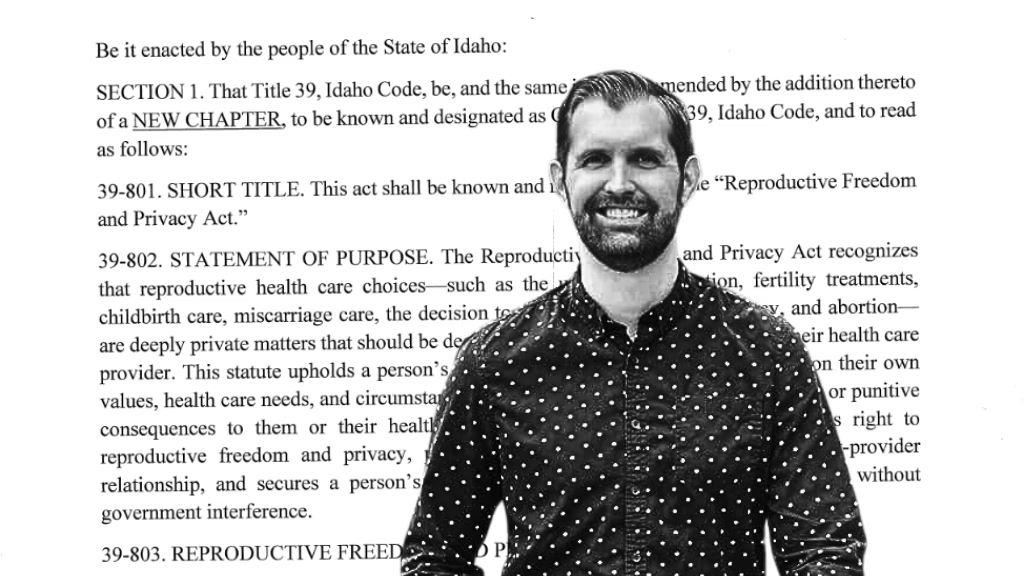
Feature image made in Canva.
The Gem State Chronicle delivers daily analysis, op-eds, press releases, and Idaho Insider updates — free to your inbox.
Free newsletter · Unsubscribe anytime · View on Substack

About Brian Almon
Brian Almon is the Editor of the Gem State Chronicle. He also serves as Chairman of the District 14 Republican Party and is a trustee of the Eagle Public Library Board. He lives with his wife and six children in Eagle.