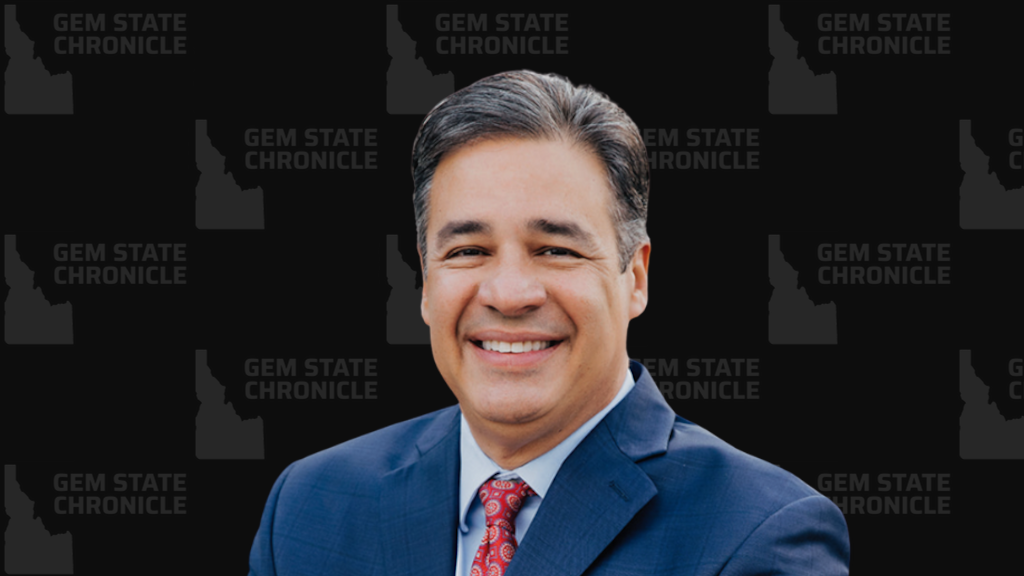
By Attorney General Raúl Labrador
Dear Friends,
Across the country, corrections officers are watching drones fly over prison facilities carrying drugs, weapons, and cell phones directly to inmates. They can see it happening. Under current federal law, they often cannot legally stop it.
In March, I joined 20 other attorneys general in a letter to Dr. Sebastian Gorka, Senior Director for Counter Terrorism at the National Security Council, urging the Trump administration’s Task Force to Restore American Airspace Sovereignty to grant state and local law enforcement the authority to detect, track, and disable unauthorized drones over correctional facilities. Federal law currently reserves that authority for a narrow set of federal agencies. That means the people closest to the threat are among the least empowered to stop it. Our letter asked the administration to close that gap with carefully defined authority for state and local officials to act before a drone reaches the prison. After we sent out letter, the administration reached out to our office and we spoke about this issue where they indicated they are actively working with Congress on the issue and heard our concerns.
Idaho’s Legislature acted on the same problem this session. Representative Ted Hill sponsored House Bill 522, which was signed into law and takes effect July 1. The new law establishes a no-fly zone over Idaho’s correctional facilities, makes operating a drone in that restricted airspace a misdemeanor with mandatory fines and forfeiture, and authorizes the Department of Correction and law enforcement to use detection, tracking, and mitigation measures against drones operating there in a nefarious manner. The law operates within existing federal restrictions, which is exactly why our multistate letter is critical.
Drone drops have become one of the most effective methods for smuggling contraband past perimeter security. The drugs that arrive this way fuel addiction, overdoses, and violence inside facilities. Smuggled weapons raise the risk of assaults on staff and other inmates. Contraband cell phones allow incarcerated individuals to run fraud schemes, intimidate witnesses, and continue directing criminal activity from behind bars.
Public safety responsibility and public safety authority should coexist. When state and local corrections officers are responsible for what happens inside a facility, they need the legal tools to respond to threats targeting that facility. Right now, federal law creates a mismatch where Idaho officers bear the public safety responsibility but lack the necessary authority to truly prevent criminal activity in correctional facilities.
Idaho has taken every step available to us. The Legislature passed a strong state law. My office joined a broad coalition of attorneys general making the case to Washington. We are engaged directly with the administration as it works through the policy questions. The remaining piece is federal action that matches our officers’ responsibility with real authority to act.
Best regards,

The Gem State Chronicle delivers daily analysis, op-eds, press releases, and Idaho Insider updates — free to your inbox.
Free newsletter · Unsubscribe anytime · View on Substack

About Raúl Labrador
Raúl Labrador is the 33rd Attorney General of Idaho. The Office of the Attorney General provides legal representation for the State of Idaho. This representation is furnished to state agencies, offices and boards in the furtherance of the state's legal interests. The office is part of state government’s executive branch and its duties are laid out in the Idaho Constitution.