By Karey Hanks | Originally published at Idaho Patriot Substack
While many Americans ask, “Why are we involved in the Middle East—why the focus on Iran right now?”—it’s worth stepping back to understand the bigger picture. This isn’t about endless wars or abstract causes. It’s about the hard realities that keep our families safe, our economy stable, and our nation strong.
Right now, young Americans—18- to 22-year-olds—and their seasoned leaders are standing watch in distant places most of us can’t locate on a map. They are there to maintain American leverage—the forward positioning that deters aggression and protects what matters most at home.
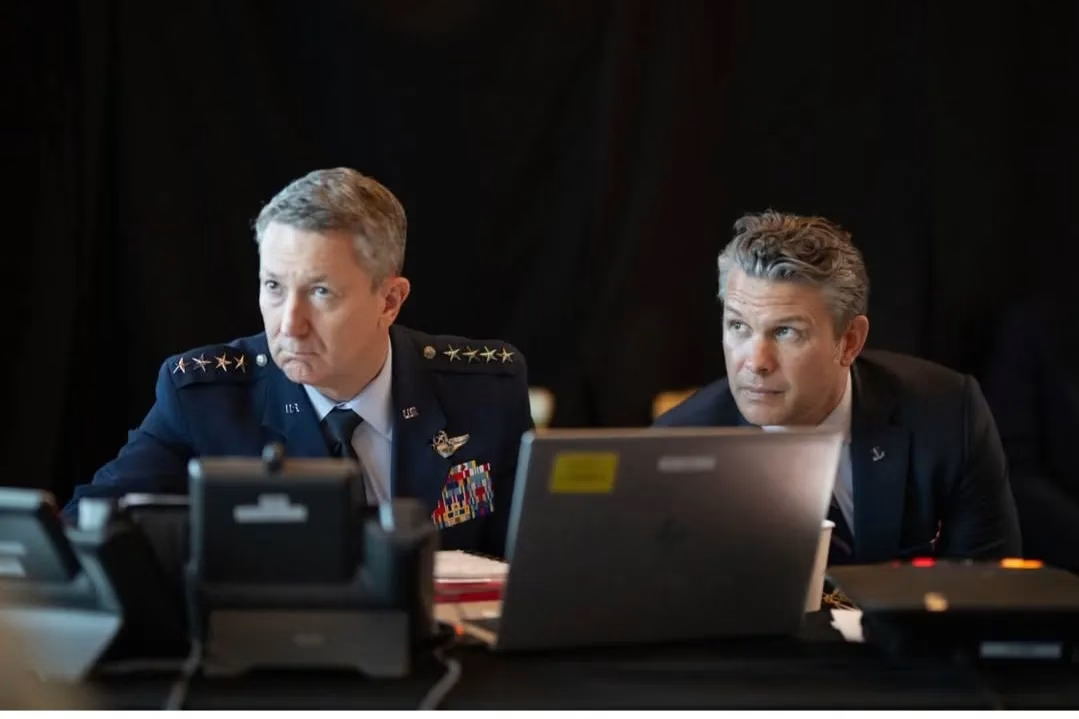
President Trump, Defense Secretary Pete Hegseth, and our military leaders face extraordinarily tough decisions in these moments. They must weigh grave risks, act with resolve against threats like Iran’s missiles and nuclear pursuits, and bear the heavy responsibility of protecting our people so the rest of us can live in peace and prosperity. These aren’t easy calls—they require moral clarity and courage, and we owe them our gratitude and prayers as they lead with strength.
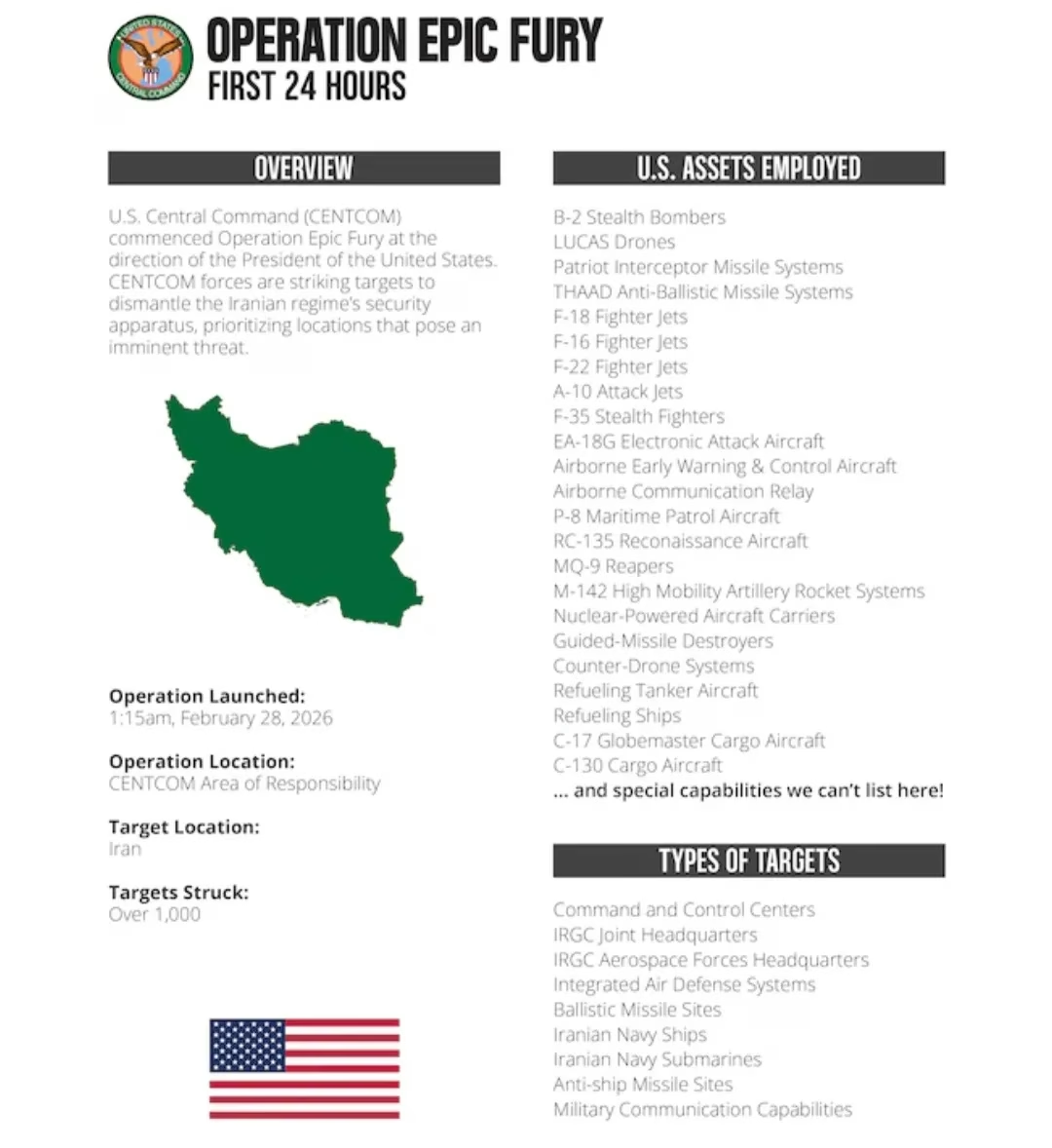
A key reason our leaders are acting decisively now is to prevent Iran from ever acquiring a nuclear weapon—a red line that protects not just the Middle East, but the entire world. President Trump and his team have made it clear: we are striking to eliminate the regime’s ability to rebuild its nuclear program after previous setbacks, ensuring Tehran never crosses the threshold to a bomb that could embolden its aggression or trigger wider catastrophe. Russia’s conventional military isn’t a direct threat to American soil, but its vast nuclear arsenal remains a sobering global danger, reminding us why deterrence matters everywhere. Similarly, North Korea’s ongoing nuclear pursuits pose a real and growing risk to the United States, our allies like South Korea and Japan, and stability in the Pacific. Keeping nuclear weapons out of the hands of dictators and rogue regimes isn’t warmongering—it’s responsible stewardship. It safeguards innocent lives, prevents blackmail or proliferation, and upholds the principle that freedom-loving nations must stand firm so tyrants never gain the ultimate leverage. As Christians, we pray for peace and the wisdom to use strength wisely, but history shows that unchecked nuclear ambition rarely ends without confrontation—better to stop it now, through resolve and deterrence, than face the consequences later.
The U.S. maintains a network of bases across the globe (roughly 750–800 in over 80 countries) because global leadership requires infrastructure. In the Middle East, we have 40,000–50,000+ troops (with surges for current operations) supporting key hubs such as:
- Al Udeid Air Base in Qatar — The largest U.S. base in the region and forward headquarters for U.S. Central Command, housing around 10,000 troops and coordinating operations across a vast area.
- Camp Arifjan in Kuwait — A major logistics backbone and forward headquarters for U.S. Army Central, supporting thousands of personnel and sustainment for regional missions.
- United States Fifth Fleet headquartered in Bahrain — Guarding critical maritime arteries in the Gulf, Red Sea, Arabian Sea, and beyond, with 8,000–9,000 U.S. and coalition personnel.
- Prince Sultan Air Base in Saudi Arabia — Supporting air defense, Patriot/THAAD systems, and fighter operations.
- Ain al-Asad Airbase in Iraq — Maintaining a presence to support Iraqi security forces, NATO missions, and coalition efforts.
This presence secures the Strait of Hormuz—the narrow chokepoint through which much of the world’s oil flows. Stable energy prices, reliable supply chains, and a strong dollar don’t happen by accident. They’re maintained by American readiness and deterrence.
If the U.S. withdrew, history shows vacuums get filled—often by adversaries like China (expanding naval reach), Russia (pushing into energy markets), or Iran (using proxies to disrupt trade without check). The result? Higher fuel costs hitting Idaho families at the pump, spiking groceries and heating bills, unstable markets, and threats creeping closer to home.
Deterrence works. Presence prevents miscalculation. Carrier strike groups (each with 5,000–6,000 sailors and aviators) aren’t theater—they’re a visible reminder that America stands ready to protect sea lanes, alliances, and our way of life.
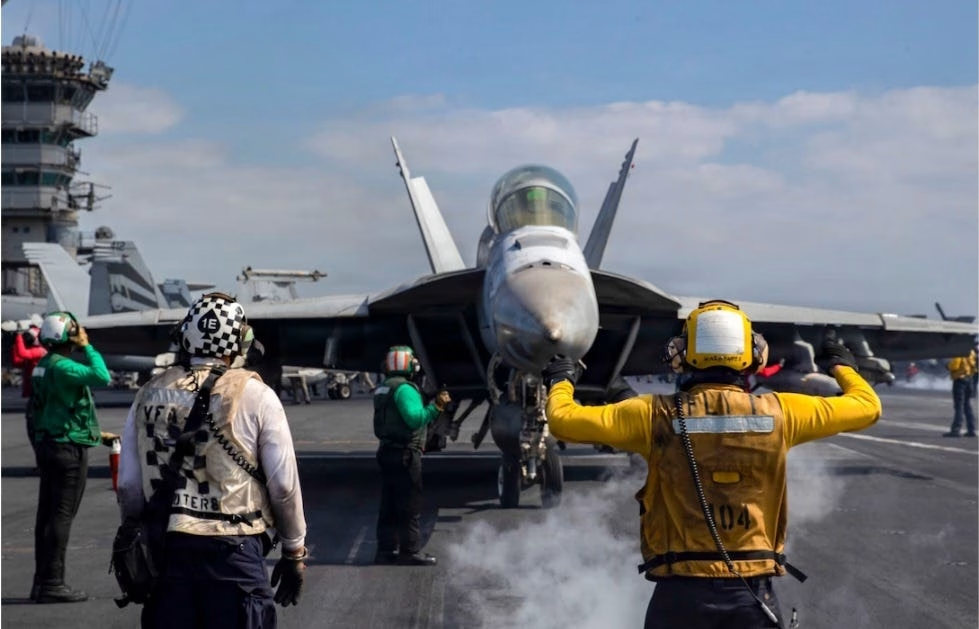
We can (and should) dislike war and pray for peace. As Christians and conservatives, we value life, stewardship, and the wise use of strength to avoid greater conflict. But pretending disengagement brings peace ignores human history. Empires that retreat often decline; superpowers that maintain principled strength preserve prosperity and security for generations.
This isn’t cheerleading for conflict—it’s recognizing the uncomfortable truth: The comfort we enjoy (affordable gas, stable trade, a secure homeland) is bought and sustained by service members, younger and older, in tough spots under leaders willing to make the hard calls. They deserve our gratitude, our prayers, and policies that honor their sacrifice by keeping America the leader that fills the space—rather than letting others with less honorable motives—do it.
More photos HERE.

About Karey Hanks
Karey Hanks is a Christian, patriot, mother of seven, grandmother of eighteen, and a two-term Idaho state legislator. She is currently a candidate for Idaho House of Representatives in District 31.