On Wednesday morning, the Senate State Affairs Committee took testimony from Idaho Human Rights Commission (IHRC) Vice President Estella Zamora, who was nominated by Gov. Brad Little to serve an additional term as a commissioner. Zamora’s social media history revealed constant agitation against immigration enforcement, accusing President Trump of racism, labeling his supporters as cowards, and calling for resistance against ICE.
I discussed the appointment with Matt Edwards on Idaho Signal later that day:
I heard from quite a few readers who emailed members of the Senate State Affairs Committee asking them to reject Zamora’s reappointment. The issue went viral on social media as well, with the Idaho Signal segment garnering nearly 9,000 views, while my initial tweet from Wednesday morning reached 18,500.
By Thursday, I was hearing rumors that the nomination was being put on ice, and on Friday evening, Senate President Pro Tempore Kelly Anthon confirmed it:
When our elected officials are moving in what we believe is the wrong direction, we have several options as participants in the Republic:
- Ignore it and hope for the best
- Make a big fuss online
- Threaten a primary challenge
- Call them up and engage in respectful dialogue
One of these has a chance of success—can you guess which one?
Ignorance can be bliss if you’re not concerned with the state of our society. But if you don’t want the IHRC to be run by far-left anti-ICE activists, your tax dollars going to illegal aliens, or public school curricula infused with radical gender ideology, then you need to speak up.
Complaining on social media is easy. It takes just a few seconds, and then you’re back to doomscrolling—bonus points if you get the dopamine hit of likes and reposts. But what did you really accomplish? The internet is full of outrage, a sea of noise with few signals to be found.
Threatening primary challenges is even more ridiculous. I remember when the cause of the day on conservative social media was the leadership vote in the U.S. Senate. Numerous posters threatened to support a primary challenger against Sen. Jim Risch if he didn’t back their preferred candidate. Well, here we are: there are at least two such challengers, but neither has much of a chance. It’s very easy to issue an empty threat on X; it’s much harder to put in the work of raising money and campaigning against a powerful incumbent. Most longtime incumbents likely learned years ago to ignore empty rhetoric like that.
Calling or emailing your elected representatives might not always get results, but it has the best chance of success. Even if you can’t change their mind on one issue, you can build a trusted connection for future issues down the road.
Idaho legislators hear a lot of voices on any given day. Professional lobbyists jockey to make their clients’ case, executive branch staffers offer opinions, and legislative leadership works to ensure certain outcomes. If you’re not taking the time to talk to your elected officials, someone else is—and you can’t then blame them for not doing what you want.
Obviously, there are times when it makes sense to replace an elected legislator with someone closer to your values. In that case, you should find a competent challenger (maybe that’s you!) and put as many resources as possible toward getting that person elected. That means raising money, knocking doors, and doing the legwork to get it done.
Either way, sitting on the couch is not an option.
The furor over Estella Zamora’s reappointment shows that our republican form of government can still function if you’re willing to put in the work. I think most elected officials genuinely want to hear from their constituents. After all, they want to stay in office, which means knowing the mood of their voters on any given issue. If all they see are the usual suspects screaming on social media, they may discount it. But if they hear calm, measured perspectives from dozens of citizens, they might think twice.
Gov. Little makes hundreds of appointments each year. Even with multiple staff members, it’s possible that something like Estella Zamora’s social media rhetoric was missed—or perhaps it was deemed unimportant. Whatever the case, it’s up to us as citizens of Idaho to inform our governor and legislative leaders of issues like this. It doesn’t hurt to start with the benefit of the doubt. Rather than assuming everything you disagree with is part of a malicious plot, give your lawmaker a call and ask for their perspective. You might even be able to tell them something they didn’t know. And even if you still disagree in the end, a respectful dialogue is rarely wasted.
Keeping an anti-ICE ideologue off the Idaho Human Rights Commission is a small victory in the grand scheme of things, but it’s a worthwhile one. Let’s use dialogue and persuasion to build on this and keep winning for the people of Idaho.
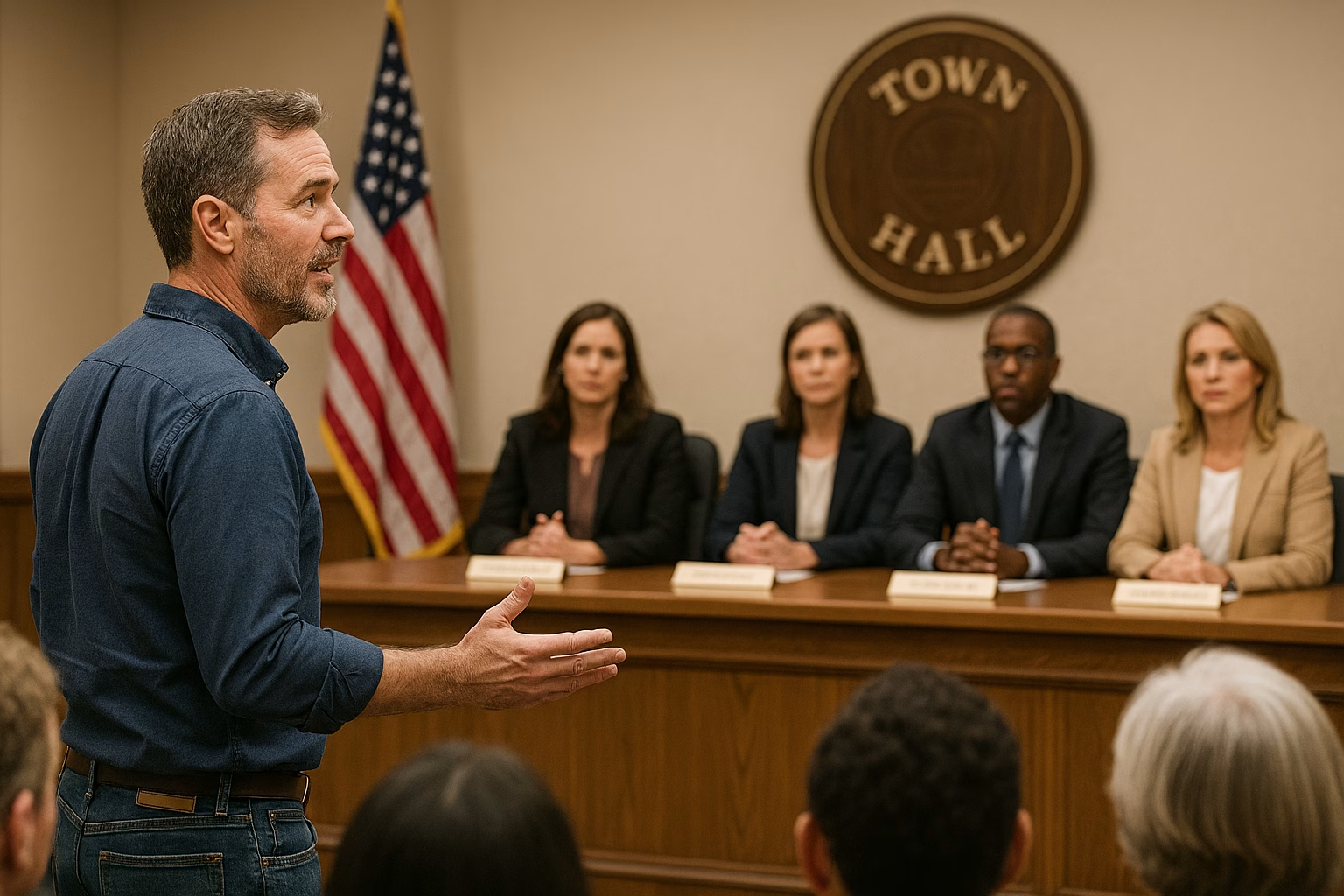
Feature image created with Microsoft Copilot.
Gem State Chronicle is a reader-supported publication. To receive new posts and support my work, consider becoming a free or paid subscriber.
The Gem State Chronicle delivers daily analysis, op-eds, press releases, and Idaho Insider updates — free to your inbox.
Free newsletter · Unsubscribe anytime · View on Substack

About Brian Almon
Brian Almon is the Editor of the Gem State Chronicle. He also serves as Chairman of the District 14 Republican Party and is a trustee of the Eagle Public Library Board. He lives with his wife and six children in Eagle.