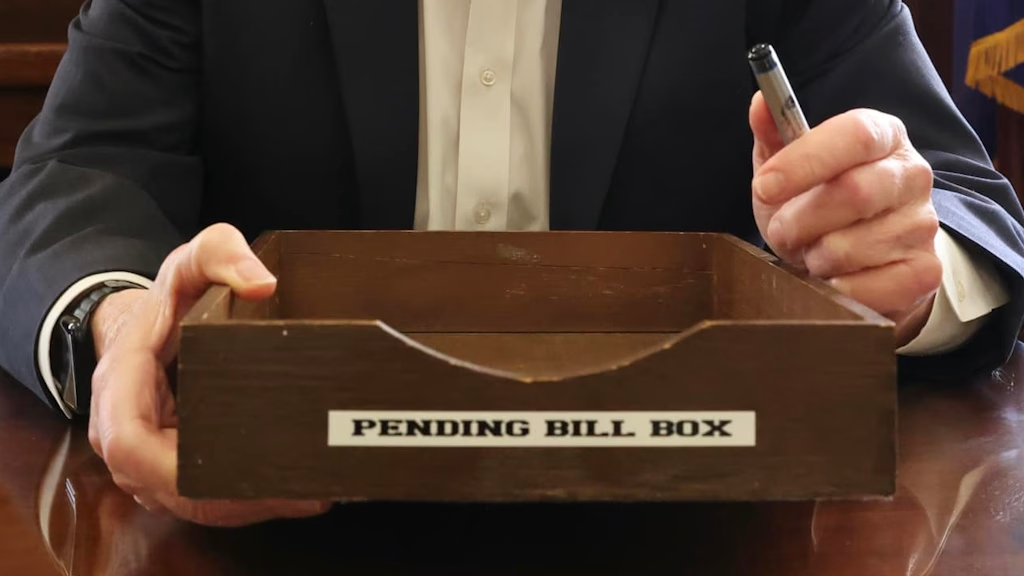
After returning to the office following a day spent branding cattle at the ranch, Gov. Brad Little vetoed four bills on Wednesday night, and used his line-item veto on a fifth.
House Bill 758, sponsored by Reps. Barbara Ehardt and Rod Furniss, would have rolled back regulations on daycare facilities. It would have allowed daycare staff to monitor a sleeping infant via video rather than remaining in the same room, and it would not have counted an in-home daycare provider’s own children against staff-to-child ratio limits.
In his veto letter, Gov. Little claimed that H758 would threaten child safety and make it more difficult to root out fraud:
This bill could eliminate licensing and fire inspection requirements for providers. In a fire or emergency evacuation, higher ratios and weaker safety requirements would prove catastrophic.
Additionally, rooting out childcare fraud and abuse is a top priority of mine. IDHW Director Juliet Charron just completed a rigorous audit of ldaho’s childcare program with limited resources, finding Idaho’s childcare fraud rate is among the lowest in the nation. We want to keep it that way. This bill heightens the risk of fraud and abuse because bad actors will more easily take advantage of the new requirement for the state to verify which children in a home are legitimate relatives. IDHW would have to create a new process to review birth certificates or other forms of identification to ensure compliance.
H758 passed the House 66-2-2 and the Senate 28-7, both above the two-thirds threshold needed to override a veto. However, because the Legislature adjourned sine die last week, lawmakers will not be able to return for an override vote.
House Bill 975, carried by Rep. James Petzke and Sen. Kevin Cook, would have restricted cash transfers from the Budget Stabilization Fund to the General Fund for Fiscal Year 2027. Idaho law already caps this rainy day fund at 15% of total General Fund revenues, yet this bill would have locked up funds above that threshold. In his veto letter, Gov. Little noted that the reserve fund is already at 24% of General Fund revenues and said the additional funds could be needed to combat what appears to be a severe forest fire year.
H975 passed the House 43-23-4 and the Senate 19-13-3.
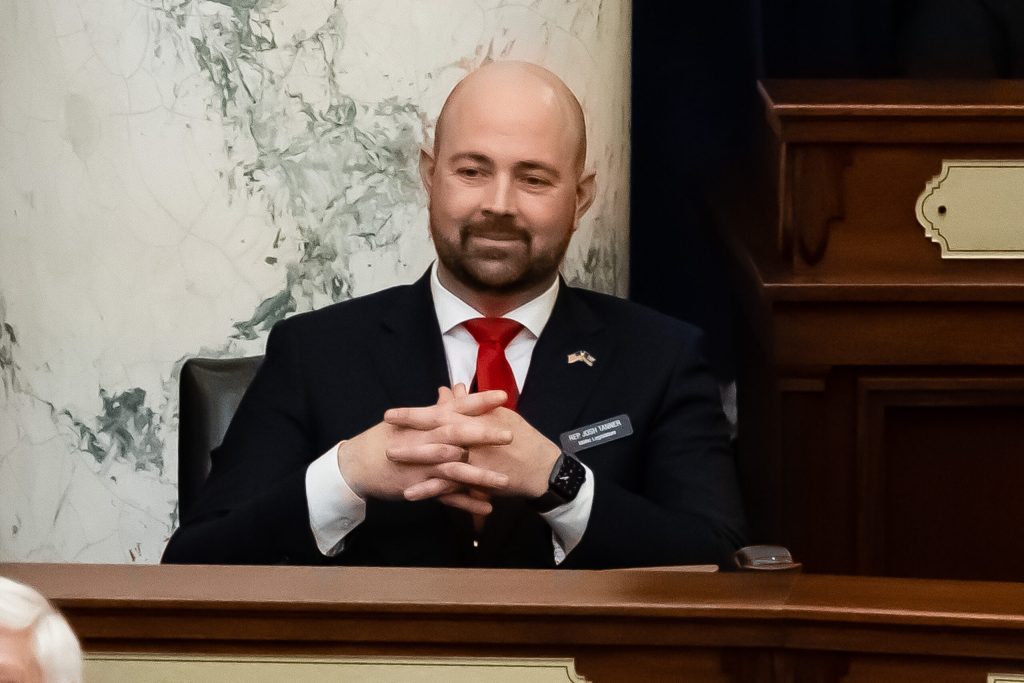
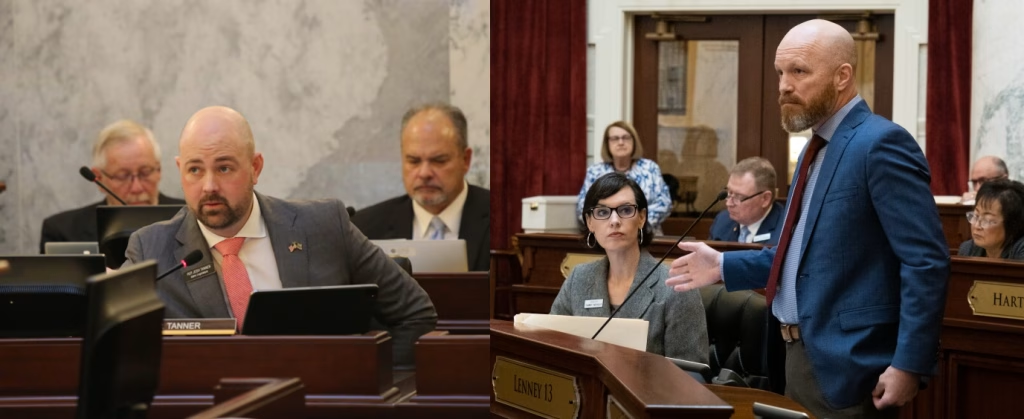
House Bill 968 also dealt with cash transfers within the government. Rep. Josh Tanner and Sen. Scott Grow, co-chairs of the Joint Finance-Appropriations Committee (JFAC), sponsored the bill to move money into the General Fund to cover obligations for Fiscal Years 2026 and 2027. Gov. Little used his line-item veto authority to reject two provisions: a $5.8 million transfer of unused building fund money, which he said should be reappropriated to other projects, and a provision allowing funds to be drawn from the Twenty-Seventh Payroll Fund if General Fund revenue comes in below projections.
The Twenty-Seventh Payroll Fund was created to cover years in which state employees receive 27 biweekly paychecks, spreading out those extra costs rather than taking a roughly 4% hit to the budget in those years.
H968 passed the House 53-13-4 and the Senate 28-6-1.
Senate Bill 1359, sponsored by Sen. James Ruchti and Rep. Dustin Manwaring, aimed to combat scams that trick individuals into using virtual currency kiosks to send money without detection or recourse. It would have required kiosk operators to register with the state, provide mandatory disclosures and fraud warnings, maintain transaction records, and implement “reasonable” limits and safeguards. In his veto letter, Gov. Little agreed that protecting seniors from fraud is a commendable goal, but said the bill contained too many “critical drafting deficiencies” that would create uncertainty for “regulators and regulated parties alike.”
S1359 passed the Senate 19-16 and the House 39-30-1.
Finally, House Bill 674, sponsored by Rep. John Vander Woude and Sen. Lori Den Hartog, would have updated Idaho law regarding the discontinuance of telephone service. The bill aimed to streamline regulations by recognizing and relying on existing federal rules—precisely the reason the governor vetoed it. In his letter, Gov. Little expressed concern that Idahoans could face disruptions in telecommunications services if the federal government were to change its regulations without state input.
H674 passed the House 65-1-4 and the Senate 22-12-1.
Gov. Little maintains his record of vetoing at least one bill in every session since taking office in 2019. Thirty-three bills remain on the governor’s desk, most of which have a signing deadline of Tuesday, April 14, 2026, at 5:00 p.m. MT.
Feature image courtesy of Gov. Brad Little on Facebook.

About Brian Almon
Brian Almon is the Editor of the Gem State Chronicle. He also serves as Chairman of the District 14 Republican Party and is a trustee of the Eagle Public Library Board. He lives with his wife and five children in Eagle.