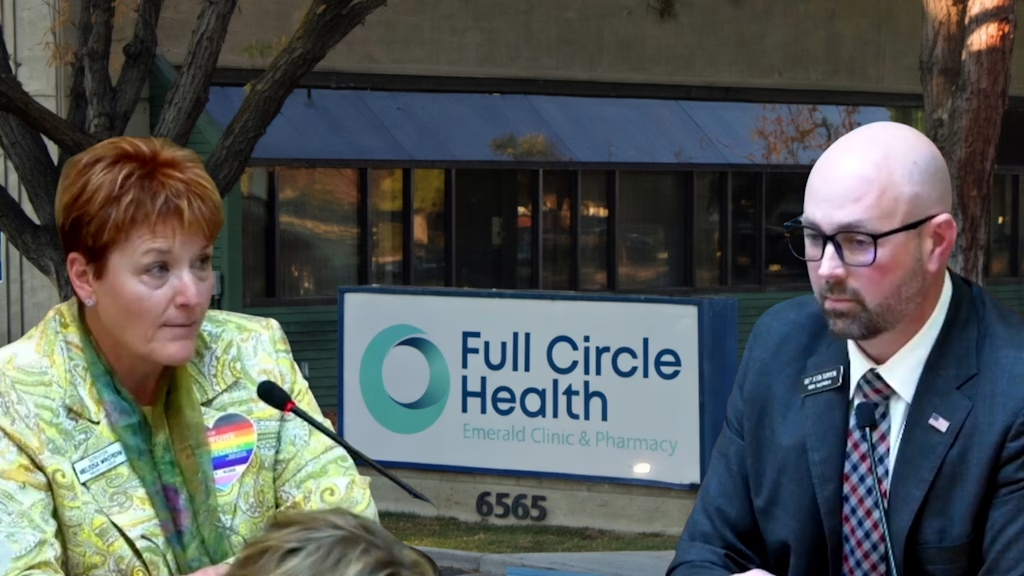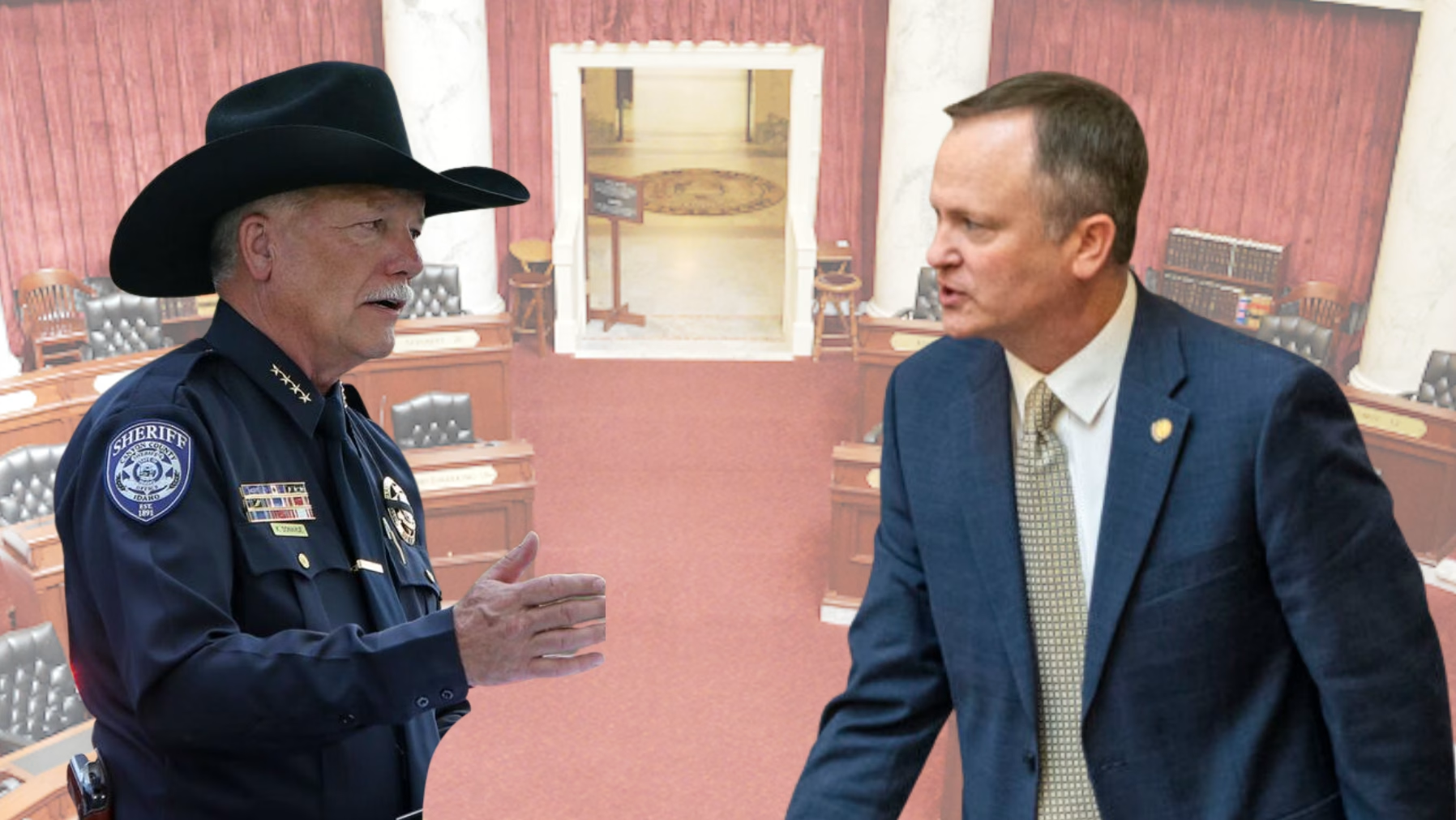
Numerous days during the legislative session featured a familiar sight: law enforcement officers in full uniform testifying against legislation related to illegal immigration. Canyon County Sheriff Kieran Donahue and Ada County Sheriff Matt Clifford, due to their proximity to the Capitol, were often found standing before committees urging a “no” vote on the latest immigration bill.
County sheriffs did not claim to be speaking in their official capacity; rather, they represented the Idaho Sheriffs’ Association. Police officers appeared on behalf of organizations such as the Idaho Fraternal Order of Police. Yet standing there in uniform, wearing their sidearms—the very image of law enforcement—surely had an effect on members of the committee.
It was not only immigration bills that drew the attention of law enforcement. Lobbyist filings for the Idaho Sheriffs’ Association show the organization took positions on 25 bills this year, including legislation related to child custody, kratom, reckless driving, and property rights. Still, immigration bills drew the most vocal opposition.
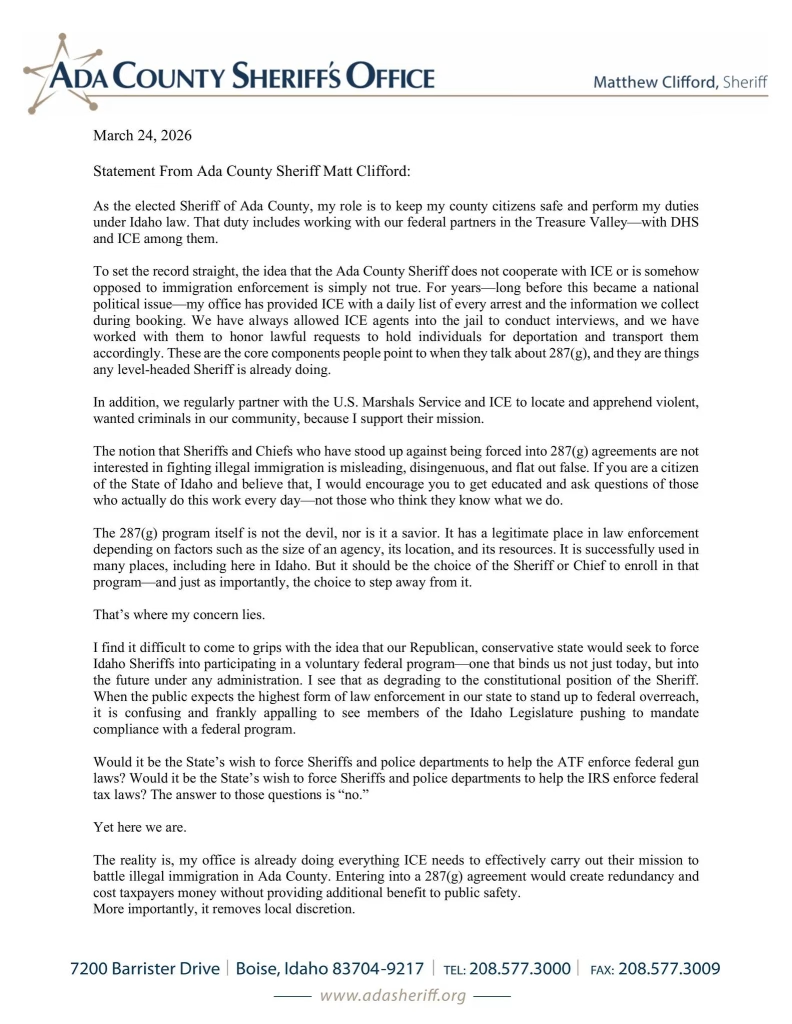
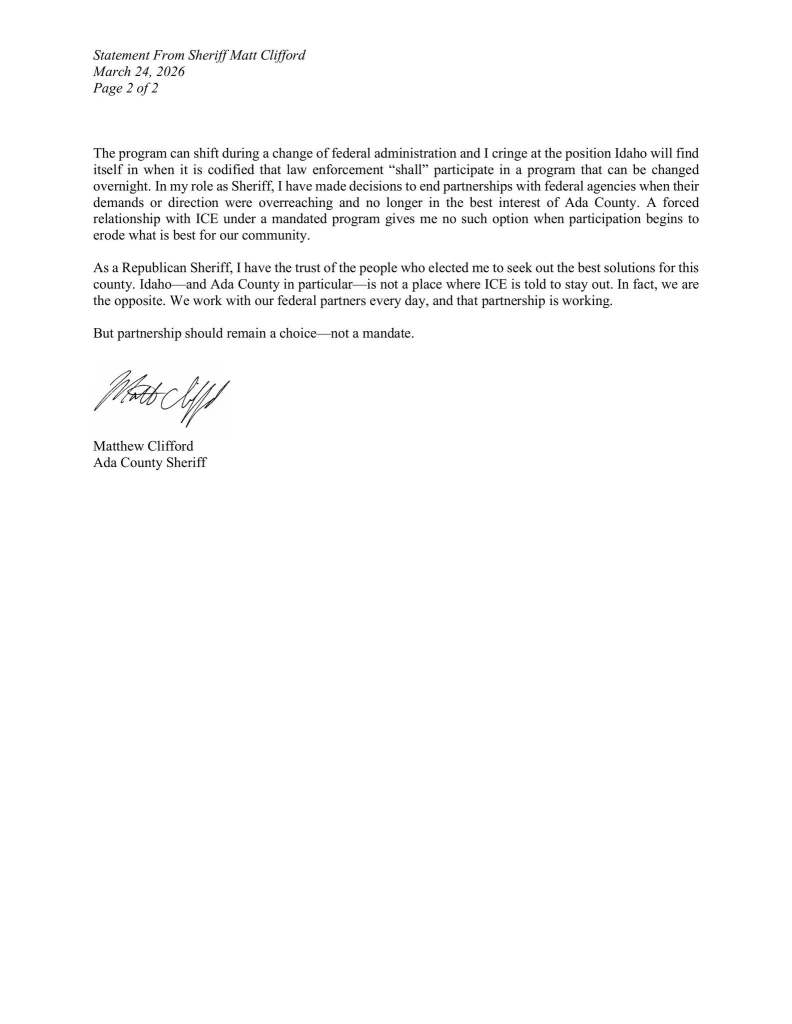
On March 24, Ada County Sheriff Matt Clifford issued a statement in response to criticism he had received for testifying against these bills:
The issue came to a head in the final weeks of the session over Senate Bill 1441, which was a second attempt to require sheriffs’ offices to sign 287g memorandums of understanding with ICE. Carolyn Komatsoulis of the Idaho Statesman characterized the situation as Republican lawmakers ignoring the concerns of law enforcement on immigration legislation. In her March 31 article, she quoted Sheriff Donahue accusing lawmakers of refusing to work with them on what he called “crappy bills.”
However, Senate President Pro Tempore Kelly Anthon, who sponsored several unsuccessful immigration bills in the final week of the session, pushed back on this characterization. In a press release issued just before the Legislature adjourned sine die, Anthon accused the sheriffs of making misleading statements about discussions surrounding the legislation:
Idaho Senate Republicans today called on representatives of the Idaho Sheriffs’ Association to correct false public statements made about Senate Bill 1441 and the legislative process surrounding the bill.
“Idahoans deserve an honest debate about immigration policy,” Senate President Pro Tempore Kelly Anthon said. “Reasonable people can disagree about whether S1441 is good policy. But they should not make false statements about the process, about my actions, or about my motives.”
According to a March 26 article in the Statesman:
Anthon said he listened to law enforcement and tried to make changes. His bills are not an indictment of the police and sheriff’s offices, who are doing a good job, Anthon said.
Donahue disputed that. He said they made one change: taking out the future participation clause. The bill is still an overreach, Donahue said, and he added that he was concerned by the trend of lawmakers listening to out-of-state groups like The Heritage Foundation, which he said helped draft these bills.
A March 31 article at KTVB was even more explicit:
“I got a question – why in the hell are we asking the federal government what good policy is,” Sheriff Donahue questioned. “Now, at the same time, the good senator never reached out to the sheriffs.”
Sheriff Donahue told KTVB that legislators did not reach out to him for input on the last-minute attempt to pass Senate Bill 1441.
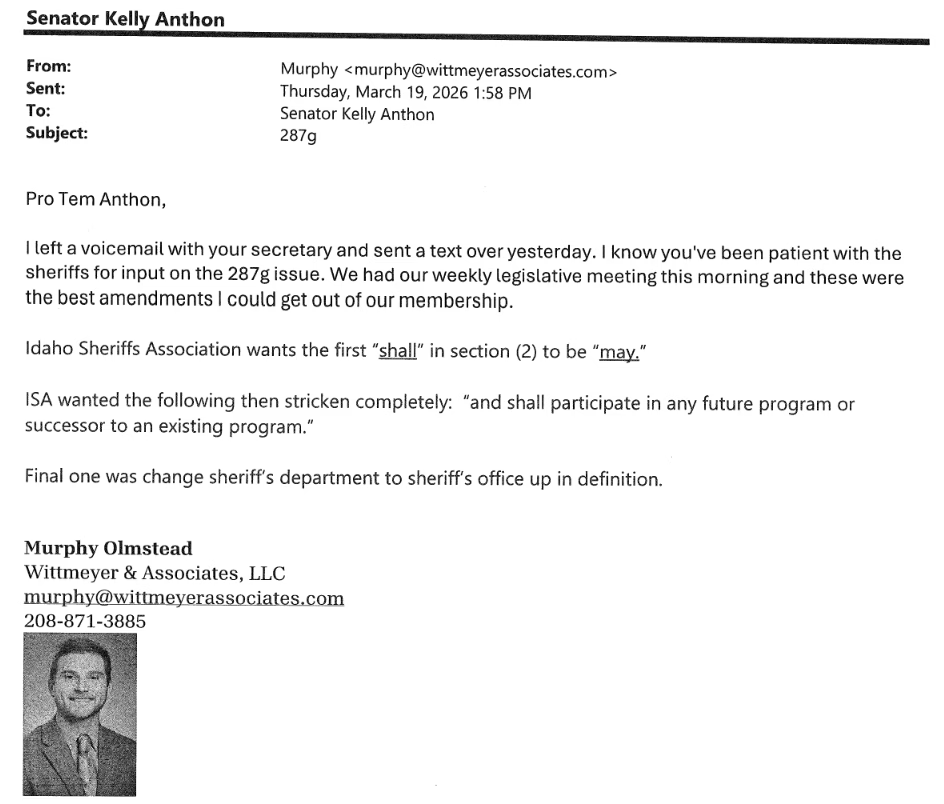
However, the Senate GOP Caucus provided the Chronicle with a copy of an email exchange between Murphy Olmstead, a registered lobbyist for the Sheriffs’ Association, and Sen. Anthon, in which Olmstead outlined three changes the sheriffs wanted to see in S1441:
Conservatives have long supported law enforcement. Even during the COVID-19 lockdowns—when police officers arrested Idahoans for activities such as praying outdoors or visiting parks—many Republicans placed the blame on policy decisions by cities and health districts rather than on law enforcement personnel themselves. Yet how much weight should be given to law enforcement when it comes to crafting the laws they are tasked with enforcing?
During testimony on these bills, sheriffs frequently reminded legislators that they, too, are constitutional officers elected by the people of their counties. That is true and worth considering. Yet not all elected officials serve the same function. We elect legislators to make laws, the governor to execute them, and county sheriffs to enforce them. All take an oath to uphold the Idaho Constitution and the laws of the land, with the ultimate aim of protecting life, liberty, and property.
When the Idaho Sheriffs’ Association or the Fraternal Order of Police testifies for or against legislation—or hires lobbyists to advocate on their behalf—are they providing a necessary check on the Legislature? After all, lawmakers are often not responsible for implementing the laws they pass, nor do they put their lives on the line in service to their communities.
At the same time, there is something unsettling about seeing uniformed officers opposing the Legislature on major policy issues such as immigration enforcement. Does this risk blurring the lines of separation between the branches and functions of government?
I fear that an adversarial relationship is developing between those elected to make the law and those elected to enforce it. Now that the session has ended, perhaps all sides can set aside frustration and ego, engage in productive dialogue, and refocus on their shared goal of protecting freedom in Idaho.

About Brian Almon
Brian Almon is the Editor of the Gem State Chronicle. He also serves as Chairman of the District 14 Republican Party and is a trustee of the Eagle Public Library Board. He lives with his wife and five children in Eagle.