Living in a republic means more than just rights; it also confers responsibilities. We must make our voices heard and use the political process to, as Thomas Jefferson wrote in the Declaration of Independence, effect our safety and happiness.
A challenge arises from the fact that we all have different views of how society should be structured and what role government should play in that structure. My top priority might not be yours, and people who agree on one issue often disagree on another. European parliamentary systems handle this by allowing numerous small parties to form situational alliances based on shared goals. The United States, with its two-party system, requires a different approach.
The Republican Party is a coalition of people who have a wide variety of political goals. Pro-lifers and abortion abolitionists join hands with those who support deregulation and tax relief to win political power so that both can implement policies that support their positions. The rise of Donald Trump brought trade protectionists into the Republican coalition, but it also created new tension between techno-optimists and libertarian-leaning skeptics.
The current conflict over the war in Iran illustrates the tension between pro-intervention Republicans and those who lean more isolationist. As with everyone in this coalition, both sides claim the mantle of being “real Republicans” or “actual MAGA,” while denouncing the other as imposters betraying the cause.
Nearly two years ago, I wrote about how various factions of the Idaho GOP make equal and opposite errors in how they view the coalition. We must walk a fine line between purity spiraling into irrelevance and compromising so much that we have no principles left on which to stand.
With all that in mind, I wanted to take a look at how two House votes this year portray the state of the Republican coalition in Idaho. For more in-depth analysis of political factions, go check out Tim Oren’s work from this session.
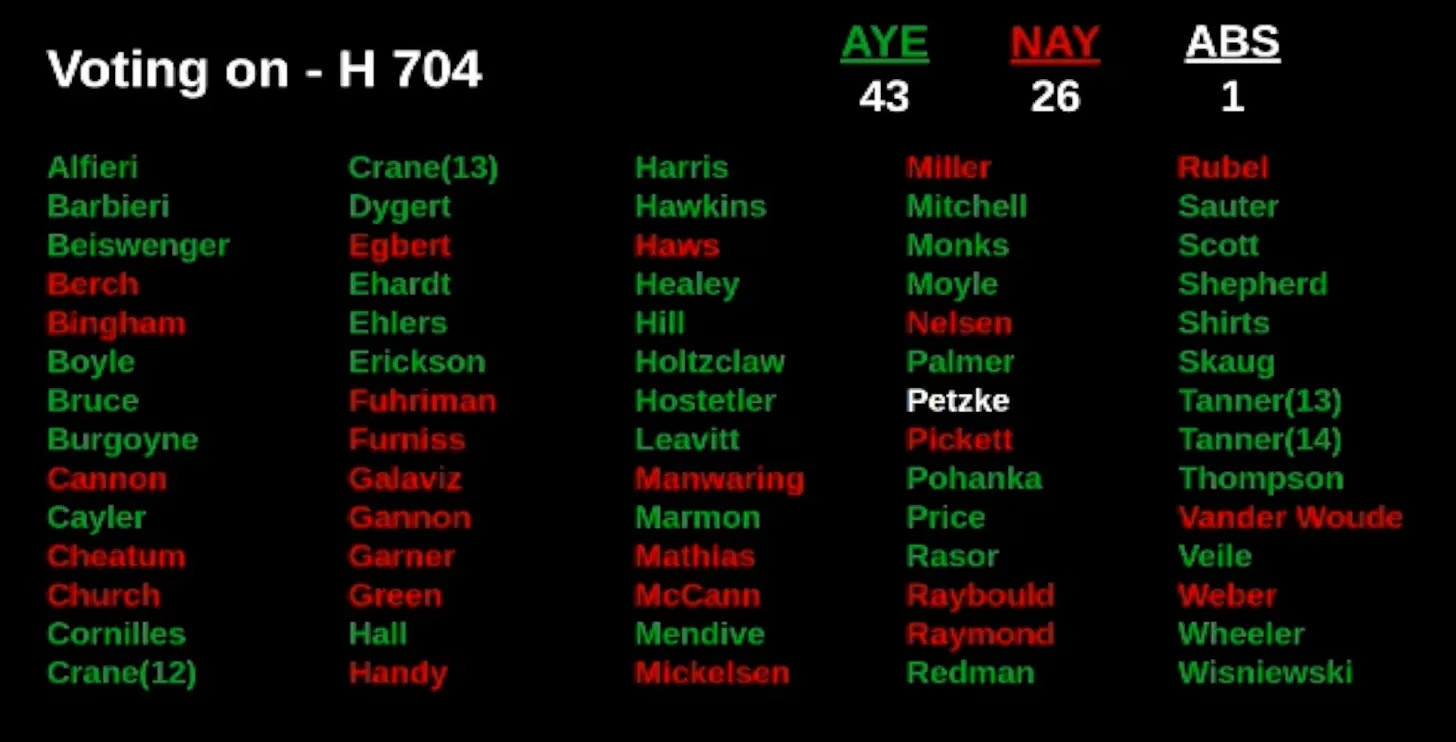
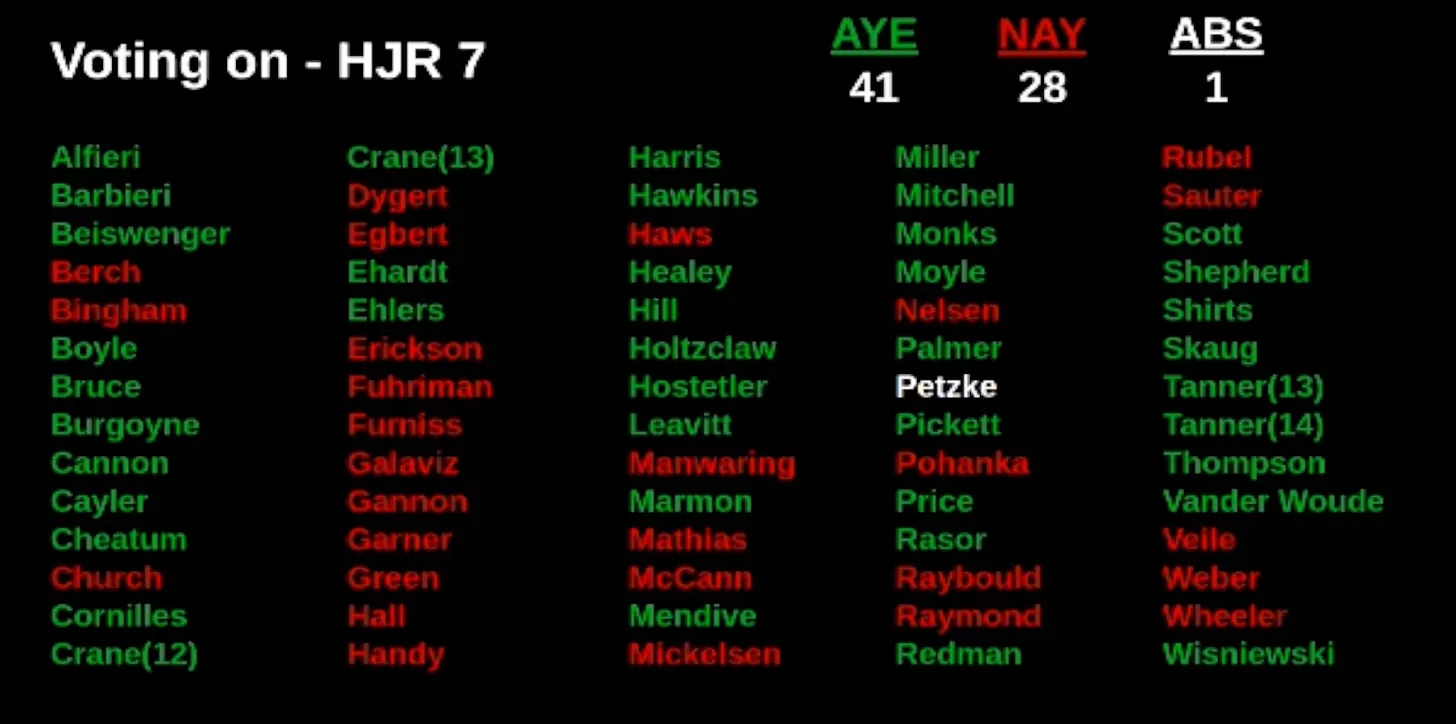
For the purposes of this case study, I chose the votes on House Bill 704, requiring E-Verify for Idaho businesses, and House Joint Resolution 7, repealing the Blaine Amendment in our state constitution. I said at the time of the HJR7 vote that it looked like a reasonable bellwether of the strength of the conservative coalition.
Here are the roll calls for each vote:
Here is a pie chart showing the number of representatives who voted in favor of both H704 and HJR7, those who split their votes, and those who voted no on both:
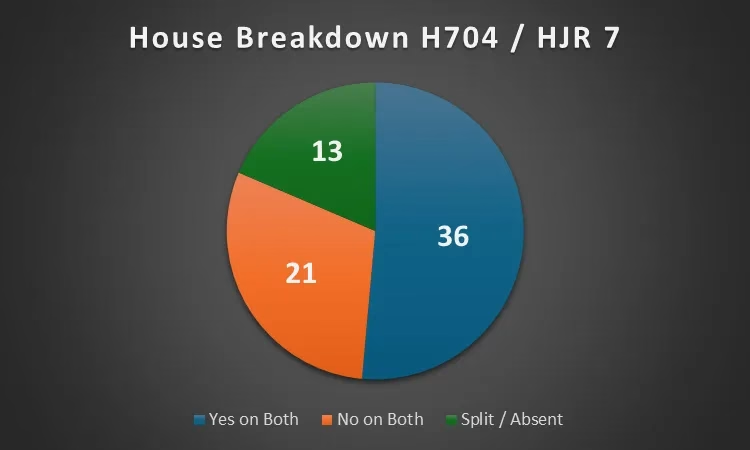
[Editor’s note: Earlier versions of the article swapped the “no” and “split” numbers in the text.]
All nine House Democrats voted no on both issues. That means twelve Republicans joined them, which is informative about their place in the coalition. (Outside it, to be precise.)
The thirteen who split their votes represent legislators who might support our priorities under the right circumstances and are therefore worth maintaining a dialogue with. However, conservatives would be wise not to rely on them for support on any given issue.
The 36 Republicans who voted yes on both represent the barest majority in the House of Representatives. If those 36 stand together, they can win every vote—albeit without a veto-proof majority. Yet we know politics doesn’t work that way. Though these two votes represent what I consider a cross-section of conservative issues, there are many other issues on which these 36 might end up disagreeing.
Therein lies the paradox of our republican system of government. To accomplish anything in our Legislature, you must convince 36 representatives, 18 senators, and 1 governor to support your endeavor. Yet even those 55 people still represent a diverse variety of voters, interests, and priorities. Rep. Dale Hawkins’ neighbors in Fernwood have vastly different concerns from voters who support Rep. Stephanie Mickelsen in the Idaho Falls area.
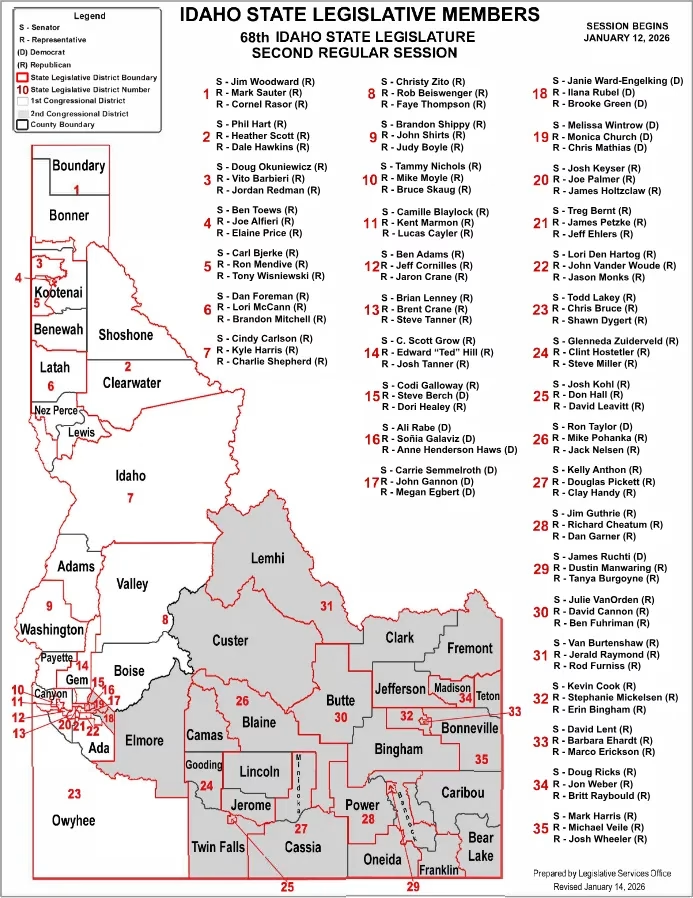
At the most basic level, lawmakers represent their constituents. At another level, they must work together to form majority coalitions to implement policy. Sometimes those two things conflict. Conservative activist from the Treasure Valley like me, for example, might look at the way eastern Idaho legislators vote and decide it’s time for a change and donate money to challengers running against incumbents. However, all the money in the world won’t make a difference if those challengers can’t win over the voters in their own district.
A style or argument that works in District 2 might not work in District 12, probably won’t in District 22, and surely won’t in District 32. Yet representatives from each of those districts, and all the rest in between, have equal standing in the Idaho Legislature. Those of us taking the long view face the difficult task of building a coalition from representatives and senators across 35 very distinct districts. It requires hard work, patience, and the wisdom to know when to compromise and when to hold the line.
Thus far, this legislative session has felt like a step backward from last year’s successes. It is frustrating, but not unexpected. The art of politics requires adapting to constantly shifting sands—holding on to principles while making the adjustments necessary to achieve them. We won’t win every battle, but we must continue working toward our true north: a positive vision of the society we will leave to our heirs.
We can’t do it alone, and we will never have the luxury of a permanent team united on every single issue. We can, however, determine our priorities and work with like-minded people to accomplish them. Can we get the number of representatives who are solidly in our coalition up to 40? 45? Even 50?
Let’s build a winning team for the long haul. Our posterity depends on it.
Feature image made with Microsoft Copilot.
Gem State Chronicle is a reader-supported publication. To receive new posts and support my work, consider becoming a free or paid subscriber.

About Brian Almon
Brian Almon is the Editor of the Gem State Chronicle. He also serves as Chairman of the District 14 Republican Party and is a trustee of the Eagle Public Library Board. He lives with his wife and five children in Eagle.