The 2025 legislative session adjourned believing it had left a $450 million cushion in the Fiscal Year 2026 budget, even after enacting $453 million in ongoing tax cuts. However, revenues came in slower than expected last summer, causing concern among government analysts. Unlike the federal government, Idaho cannot print money or issue treasury notes to allow for deficit spending. Every dollar spent must match a dollar brought in through taxes. If revenues fall short, spending must be cut.
Gov. Brad Little responded to the revenue shortfall with an executive order instructing state agencies (with the exception of K-12 public schools) to hold back 3% of their budgets.
Following the governor’s State of the State and Budget Address on January 12, Rep. Josh Tanner—recently named co-chair of the Joint Finance-Appropriations Committee (JFAC)—issued a press release claiming that the governor had balanced his budget with one-time “gimmicks” that left ongoing structural weaknesses. Along with his fellow co-chair, Sen. Scott Grow, Tanner worked with JFAC to codify the governor’s holdbacks and add another 1% across the board, again exempting K-12 public schools, Medicaid, the Department of Corrections (IDOC), and the Idaho State Police (ISP).
Those cuts became Senate Bill 1331, the 2026 Idaho Rescissions Act. Sen. Grow presented the bill on the Senate floor on Monday.
S1331 passed by the slimmest of margins, 18-17:

S1331 cuts just over $192 million from the FY2026 budget, of which just over $131 million comes from Idaho’s General Fund. Remember that budgets are funded from three primary sources: the General Fund (state tax dollars), the Federal Fund (grants from the federal government, and thus also our tax dollars), and the Dedicated Fund (usage fees and other revenue sources earmarked for specific purposes).
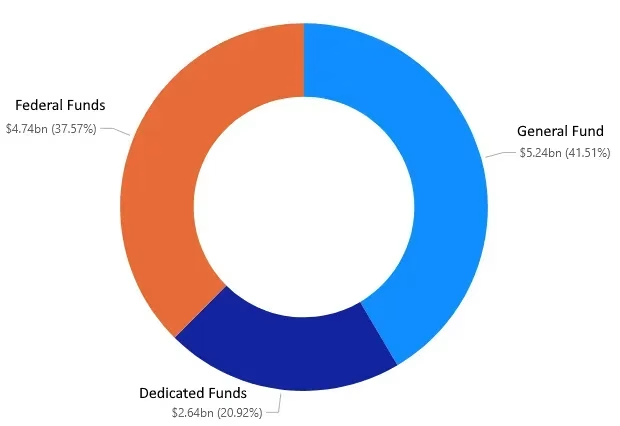
According to the budget dashboard provided by the Legislative Services Office (LSO), 41.5% of the FY2026 budget came from Idaho tax dollars, while 37.5% came from the federal government. The remaining 21% came from dedicated funds.
S1331 addresses FY2026, which runs from July 1, 2025, through June 30, 2026. FY2027 begins this coming July, and that is the budget JFAC and the Legislature are currently crafting. Several weeks ago, JFAC approved ten maintenance budget bills that continue Gov. Little’s 3% holdbacks while adding another 2% across the board, again exempting K-12 public schools, Medicaid, IDOC, and ISP. Those bills should begin reaching the House and Senate floors in the coming days.
While the new base budgets represent the first actual decrease in state spending since the Great Recession, enhancement budget requests could bring total appropriations back up to last year’s level—or even higher. JFAC is currently debating enhancement budgets, which represent agency requests for funding above and beyond what is needed to “keep the lights on.” Enhancement budgets must first pass JFAC and then be approved by both chambers of the Legislature before taking effect.
Sen. Grow and former JFAC co-chair Wendy Horman developed the new budget process to allow for more deliberation on enhancements, and it has borne fruit. More budget bills have been rejected in the House and Senate over the past two years—and sent back to JFAC for revision—than in the previous decade or more.
Let’s walk through one example of how JFAC handles enhancement budgets. On Tuesday morning, the joint committee voted on sixteen items. Here is a selection from the agenda:
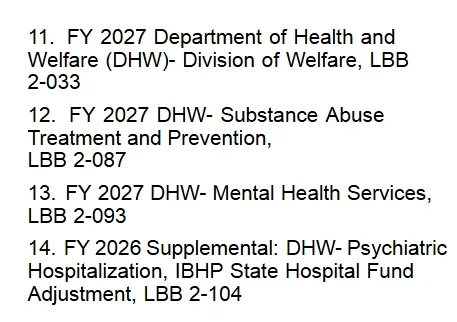
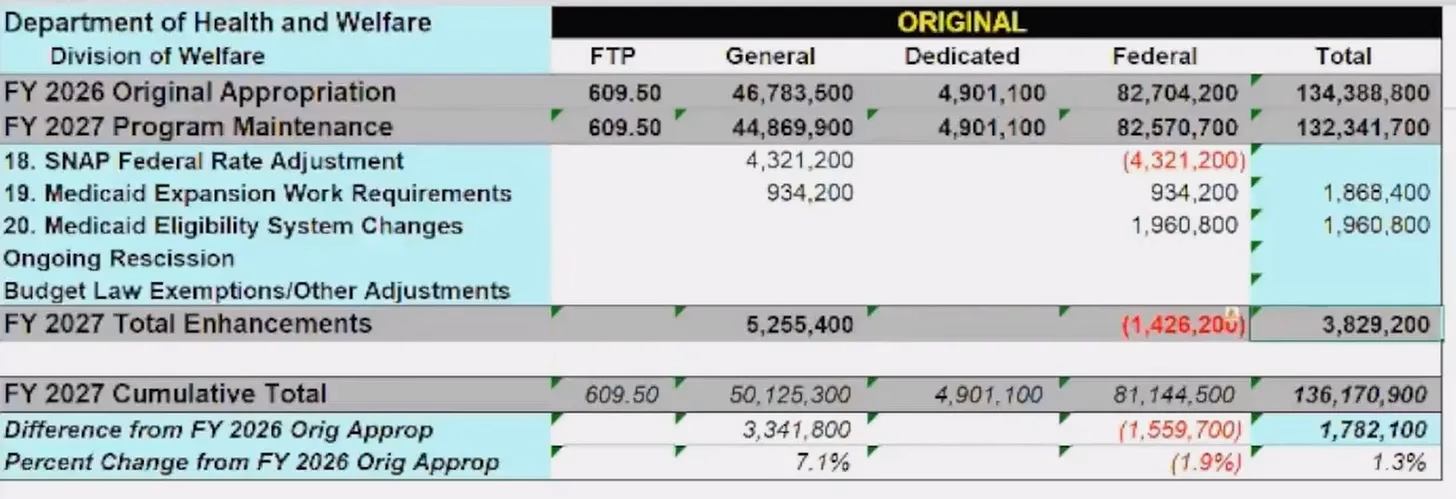
Each of these enhancement requests is detailed in the Legislative Budget Book (LBB). The numbers on the agenda correspond to the table of contents in the left panel. For example, LBB 2-033 covers the enhancement request for the Division of Welfare:
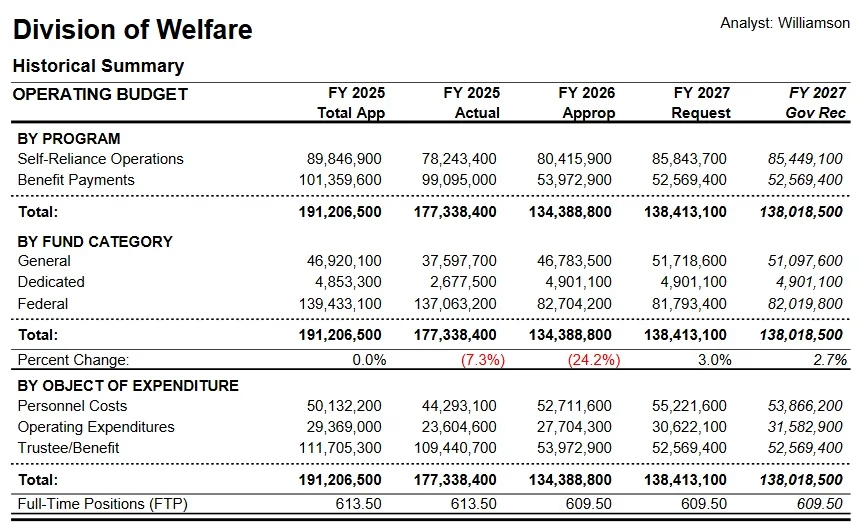
Note the columns: FY2025 total, FY2025 actual, FY2026 appropriation, and FY2027 request. The governor’s recommendation sometimes differs from the agency’s request. Also note the row labeled “percent change.” This particular budget saw a reduction in FY2026 due to decreased federal funds, but both the agency and the governor requested a slight increase for FY2027.
LSO analyst Alex Williamson presented the Division of Welfare enhancement budget to JFAC on Tuesday morning. Take a moment to watch the debate and the vote—it lasted less than ten minutes:
According to the budget book, Williamson explained that changes to welfare programs adopted through the One Big Beautiful Bill (OBBB) last summer altered how Idaho must appropriate funds. For example, the bill changed the federal-state support ratio for SNAP from 50/50 to 25/75, requiring Idaho to move $4,321,200 from federal funds to the General Fund. During debate, Rep. Kyle Harris asked whether the JFAC working group that crafted the budget had considered reducing benefits to offset the shift. Williamson said that issue did not come up.
The other two enhancement requests addressed additional changes stemming from the same federal legislation as well as last year’s House Bill 345, which made sweeping changes to Idaho’s Medicaid system. In response to another question from Rep. Harris, Williamson noted that the increase in federal funds between the agency’s request and the governor’s recommendation for Medicaid eligibility system changes was due to an increase in the federal grant supporting that program.
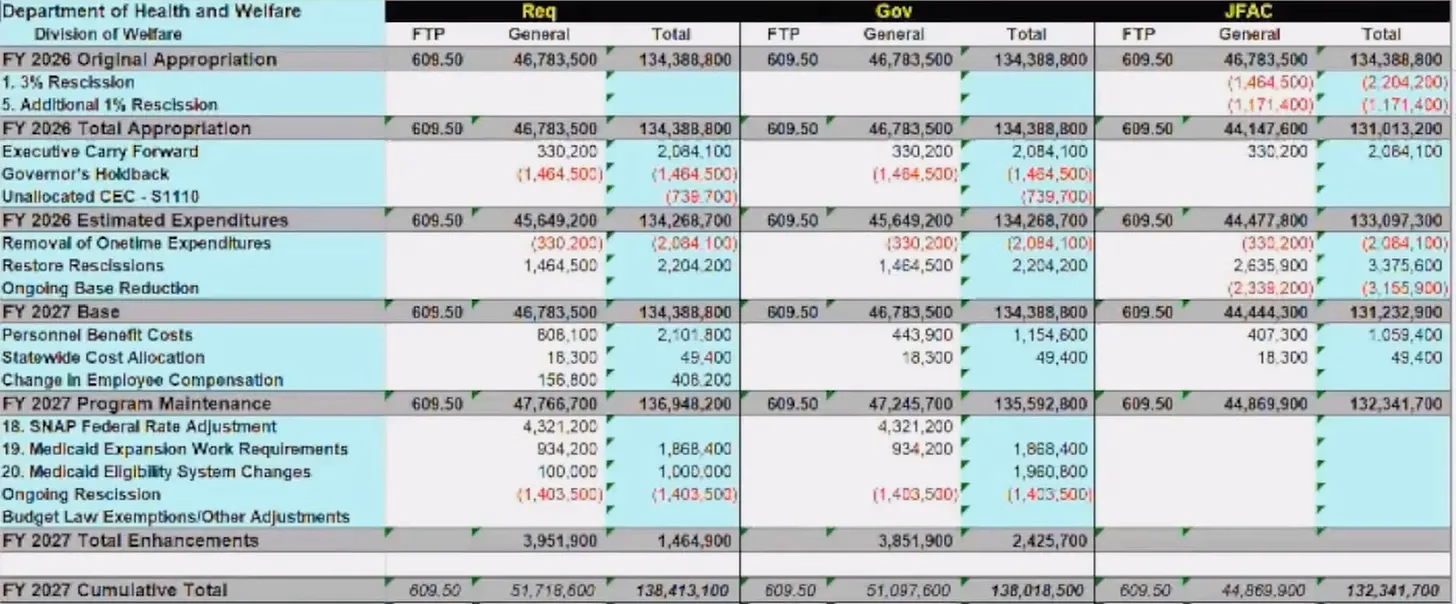
Sen. Kevin Cook moved to adopt the enhancements as recommended by Gov. Little. Sen. Glenneda Zuiderveld noted that the SNAP funding shift illustrated the risks of relying too heavily on federal dollars.
The Senate half of JFAC voted 9–1 in favor of Sen. Cook’s motion, but the House half deadlocked at 5–5. Under the joint committee’s rules, both sides must approve a motion for it to proceed, so the motion failed.
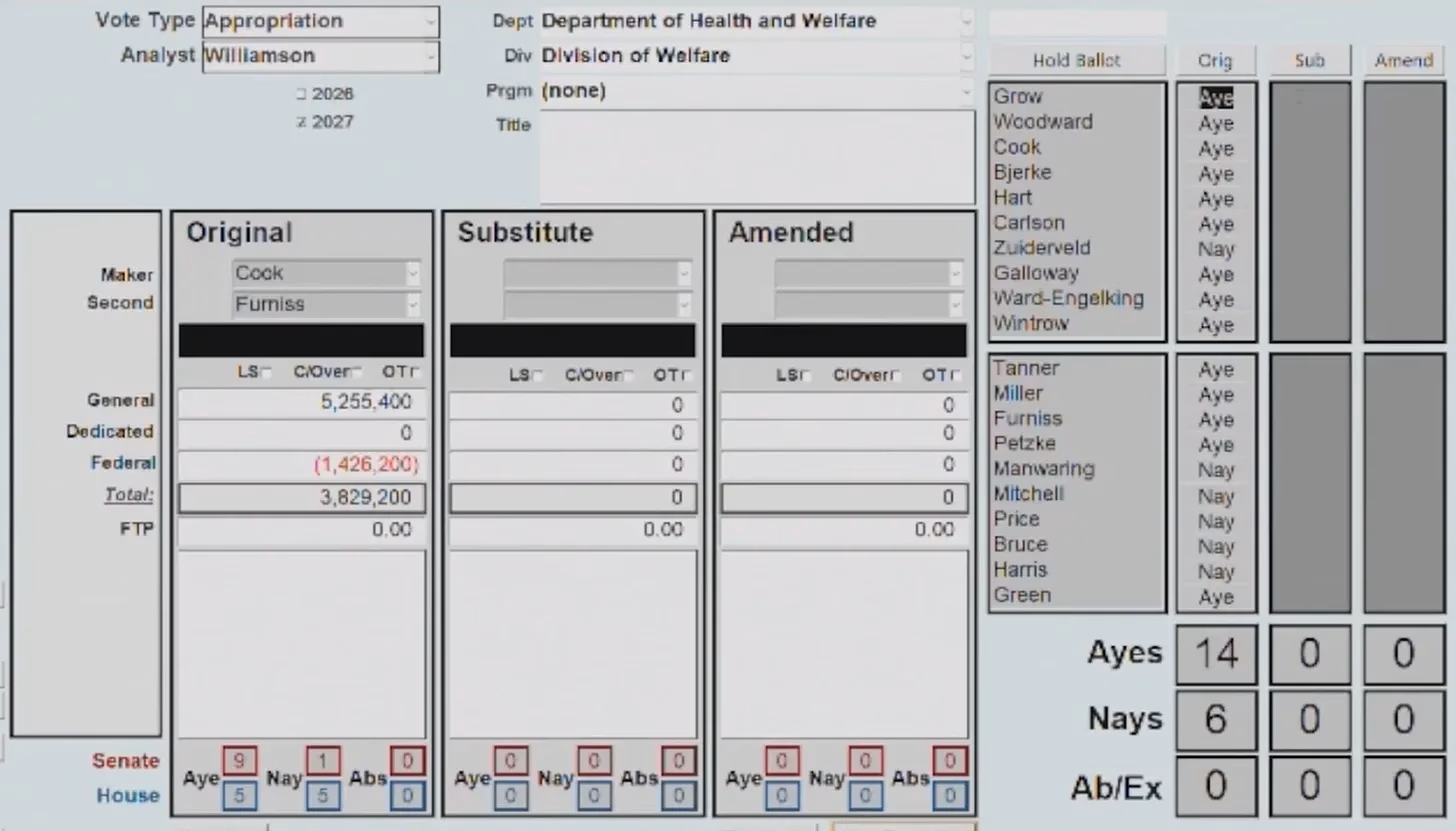
With the motion failing, the enhancement will likely return to the working group for additional refinement in hopes of finding a number acceptable to a majority on both sides of the committee. Even if it eventually passes JFAC, it must still be approved by both the House and Senate before being signed into law by Gov. Little.
This is just one of more than a hundred enhancement requests that must pass through JFAC and then the Legislature as a whole. Each proposal must navigate a gauntlet that includes conservatives who oppose nearly all new spending, conservatives who support some appropriations but not others, moderates who generally favor government spending, and Democrats who rarely oppose any appropriation.
Previous legislatures—including many of the same members currently serving—approved massive budget increases over the past decade, many fueled by inflated federal dollars during the COVID period. That spike significantly increased real per capita spending, which had already been steadily rising throughout the 2010s. Real per capita spending takes both population growth and inflation into account, showing the true cost of government in Idaho over the past decade and a half.
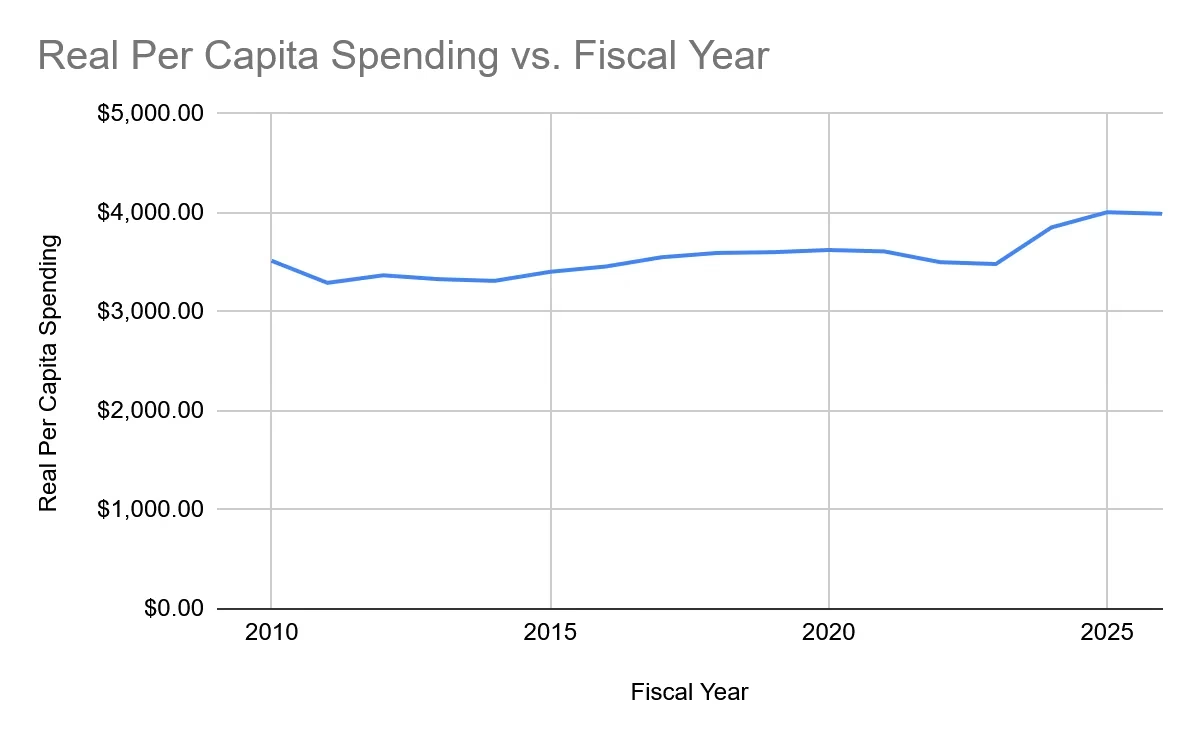
Cutting the state budget back to more sustainable levels requires hard work from JFAC members and a willingness by lawmakers on the House and Senate floors to reject excessive enhancement requests. It is not easy, it is not quick, and it is not exciting—but it is necessary.
Feature image created with Microsoft Copilot.
Gem State Chronicle is a reader-supported publication. To receive new posts and support my work, consider becoming a free or paid subscriber.

About Brian Almon
Brian Almon is the Editor of the Gem State Chronicle. He also serves as Chairman of the District 14 Republican Party and is a trustee of the Eagle Public Library Board. He lives with his wife and five children in Eagle.