In my first article on statistical mapping of Idaho legislative votes, I said in an afterword: “…you might be able to do [mapping] as the session progresses. However, the budget votes don’t start until the bills pop out of JFAC, later in the session, and those votes are the largest variation among legislators.” I should have had more confidence in the idea of voting blocs. Turns out that statement was too pessimistic, and here’s the proof:
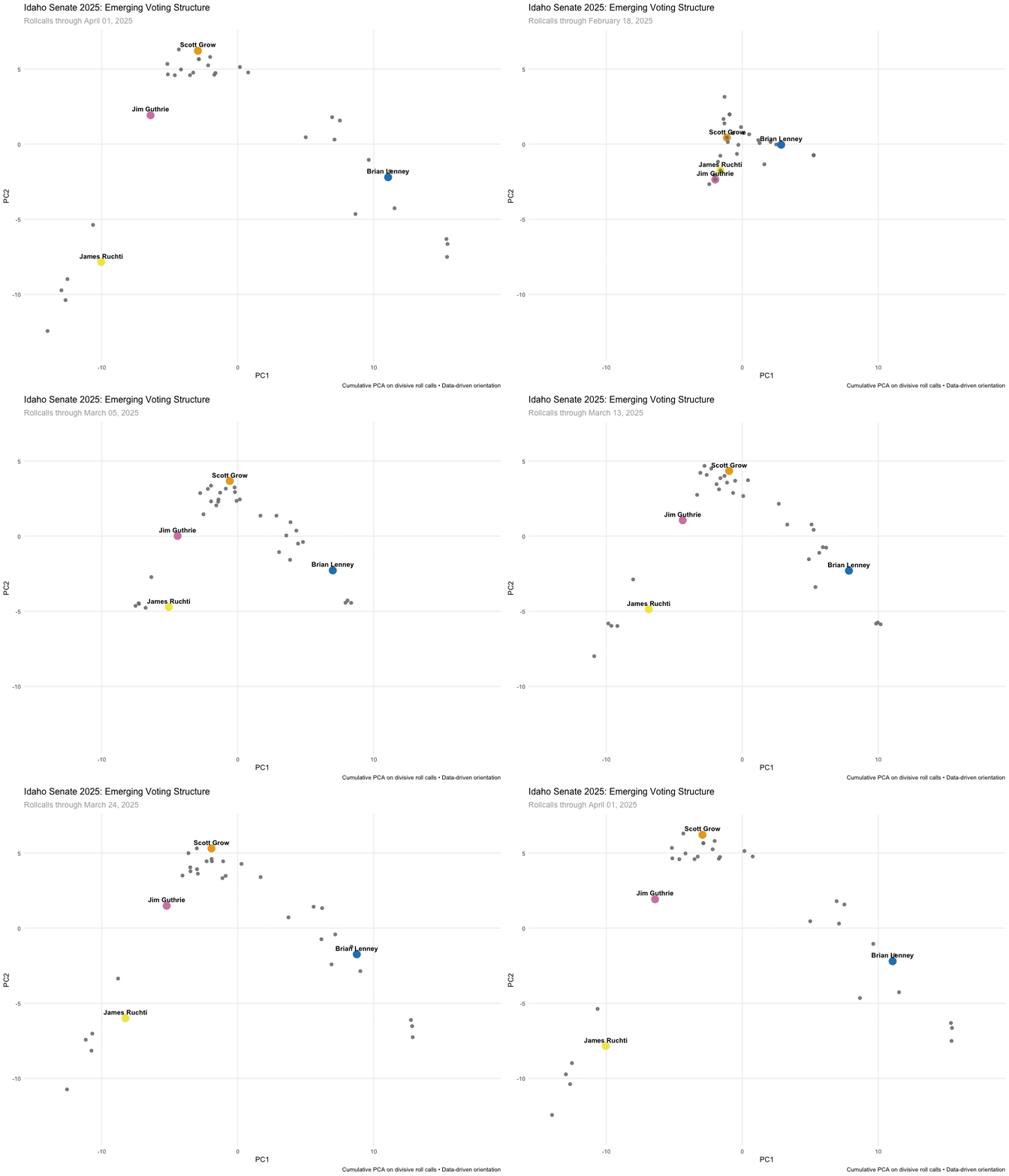
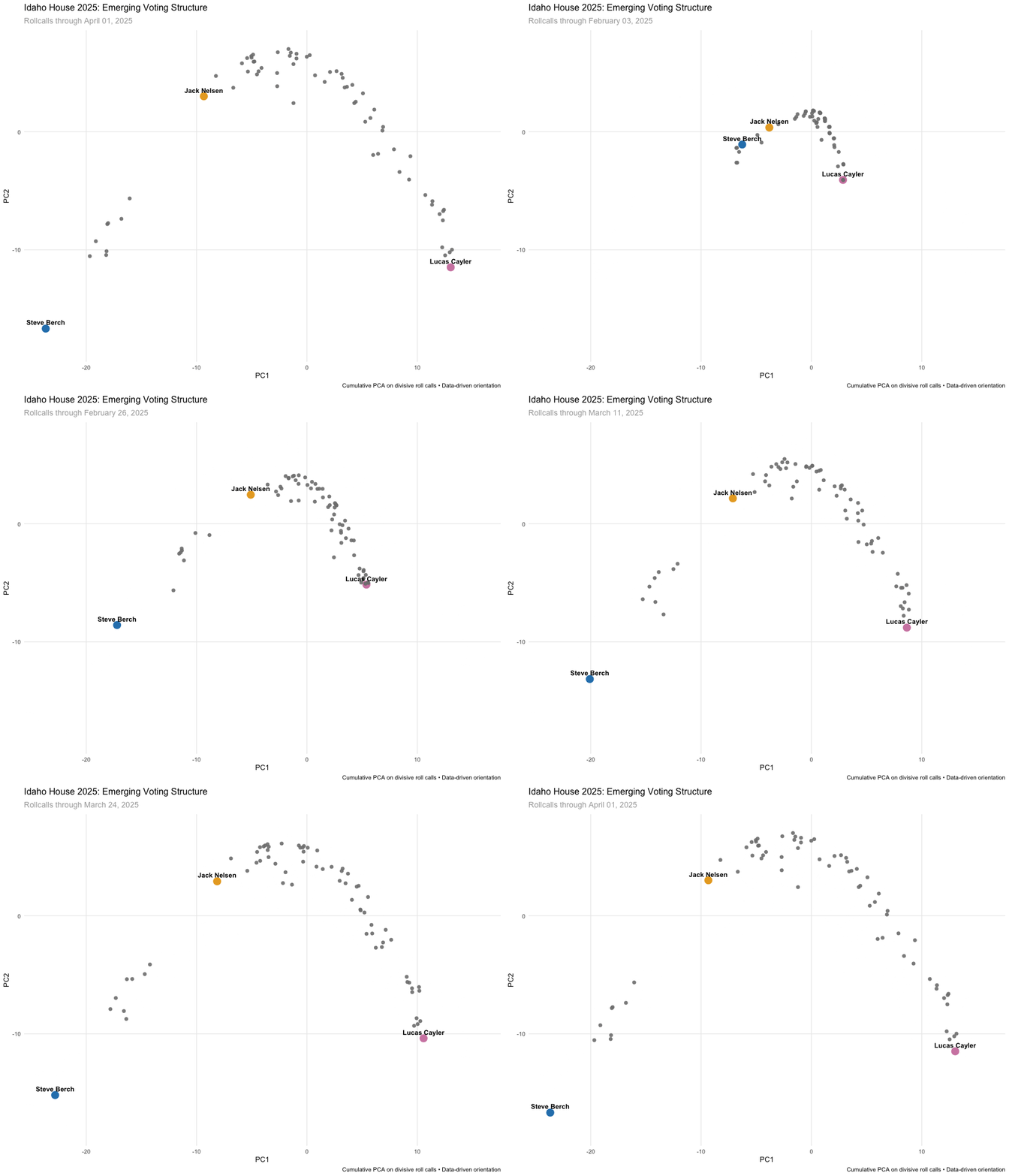
That’s what happens when I take the 2025 Senate floor votes, sort them in chronological order, and then add them to my regular mapping procedure one block of ten at a time. I’ve put in a few names for orientation. It seems the voting bloc structure emerges very early in the session, and while it becomes more distinct and changes in detail as the session continues, it is remarkably stable. The animation is a demonstration that mapping during the session is very possible. For the record, here’s the same thing for the 2025 House session:
I’ll be using this technique to map the 2026 Idaho legislature in both houses once there are enough floor votes to run the analysis, and updating through the session. A few notes on changes from what I’ve described previously:
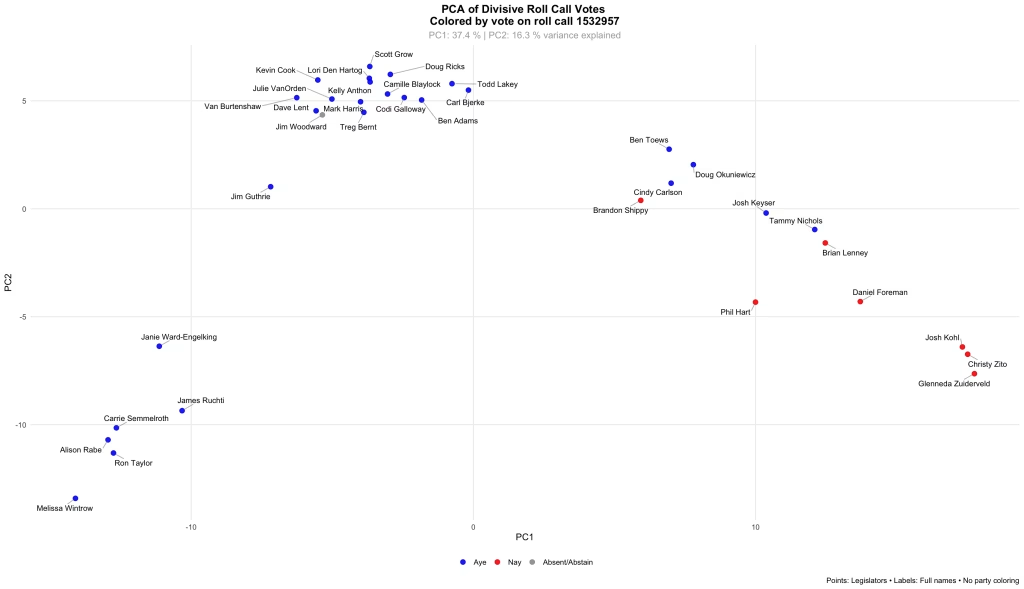
The animations above, and maps going forward, are based on data drawn directly from Legiscan. This gives me a look at all full floor votes, rather than just those bearing on bills rated by IFF. Legiscan does a full drop of updated bill status on Sundays, which will be my default time to take a look. I’ll also be able to check on key votes at more frequent intervals, and push updates (probably through my X account, @TimOren54). I’ve cooked a few new visualization tools for that purpose. For instance, here’s how the 2025 Senate voted on S1206, the child care enhancement bill of recent controversy:
And here’s which House legislators have taken contributions from the Idaho Dairy PAC for the 2026 cycle:
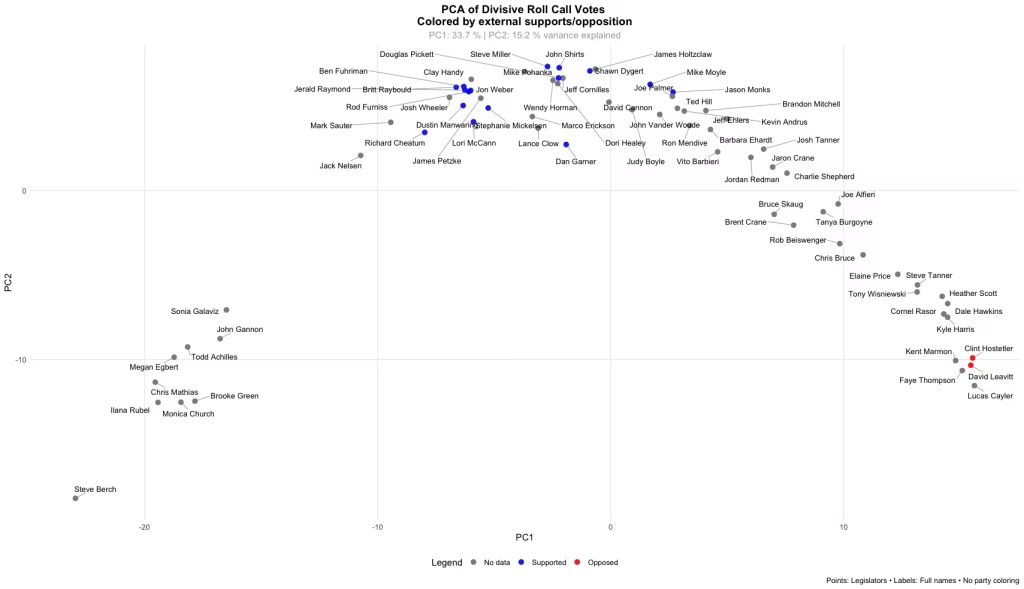
(Blue is a supporting contribution, red is a contribution to a challenger.) This capability will let me highlight things like endorsements and key floor and committee votes as the session progresses. Thanks to my able coding buddy Grok for a kick start, and Legiscan for supporting data. Let the games begin!
Afterword: Idaho’s Legislature Is Really Interesting!
New Hampshire house member Travis Corcoran (@travis4nh, a good follow) is an old friend from our blogging days, so I attempted a similar map for the NH legislature. You’d think with 400(!) members in the NH House, there’d be some interesting patterns to be found. But it’s nothing but a partisan slug fest. The red/blue split explains over 75% of the variance in voting, and the next factor drops down to under 2%. With both a R/D split and considerable – diversity, let us say – on the R side of the aisle, the Idaho legislature is a complex and interesting subject.

About Tim Oren
Tim Oren retired to Idaho after a 30 year career in Silicon Valley. Here he gardens, home-brews, teaches kids to shoot, and has applied his well-aged statistics degree to subjects such as educational funding and results, Idaho legislative race targeting, and now legislators' voting patterns. He is a contributor to the Idaho Freedom Foundation and a number of Idaho candidates.