In 1967, the Idaho Legislature created Idaho Code § 67-432, codifying the Joint Finance-Appropriations Committee (JFAC). The House Appropriations Committee and Senate Finance Committee had been meeting together informally for many years, but this law created the structure for the modern version of JFAC.
The chairs of the House Appropriations and Senate Finance Committee share leadership of JFAC, taking turns to preside over meetings. JFAC typically meets at 8:00am Mountain Time, with meetings often lasting three hours or more. JFAC fulfills the Legislature’s constitutional duty of passing a balanced budget by advancing budget bills to the House and Senate floors.
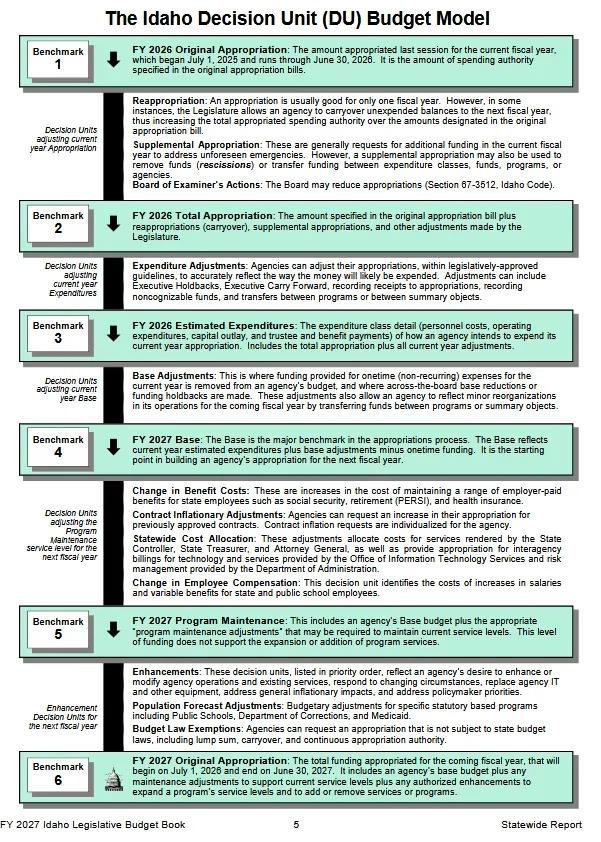
Unlike regular committees, JFAC does not take public testimony. Instead, members hear presentations from agency heads, legislative staff, and occasionally economic experts. This is the third year that JFAC is operating under the new budget procedure established by co-chair Sen. Scott Grow and former co-chair Wendy Horman, in which base “maintenance” budgets are passed first, and then additional “enhancements” are passed over the rest of the session.
This procedure, and everything else JFAC does, is explained in the Legislative Budget Book. This publication provides the framework for JFAC’s work during the session. The maintenance/enhancement budget process is laid out in detail on page five of the budget book:
During this morning’s JFAC meeting, Legislative Services Office (LSO) staffers Brooke Dupree, Jared Tatro, and Elizabeth Bowen explained all of this, both for the benefit of new members and as a review for returning veterans. I found it very informative!
Questions arose about legislative intent language in budget bills. Bowen, the legislative legal counsel in LSO, explained that Idaho code allows the Legislature to include “conditions, restrictions, or limitations” on appropriated funds. This has led to some tension in the past, as JFAC is not necessarily meant to enact policy, but it has used intent language to guide state agencies in how members want to see appropriations handled.
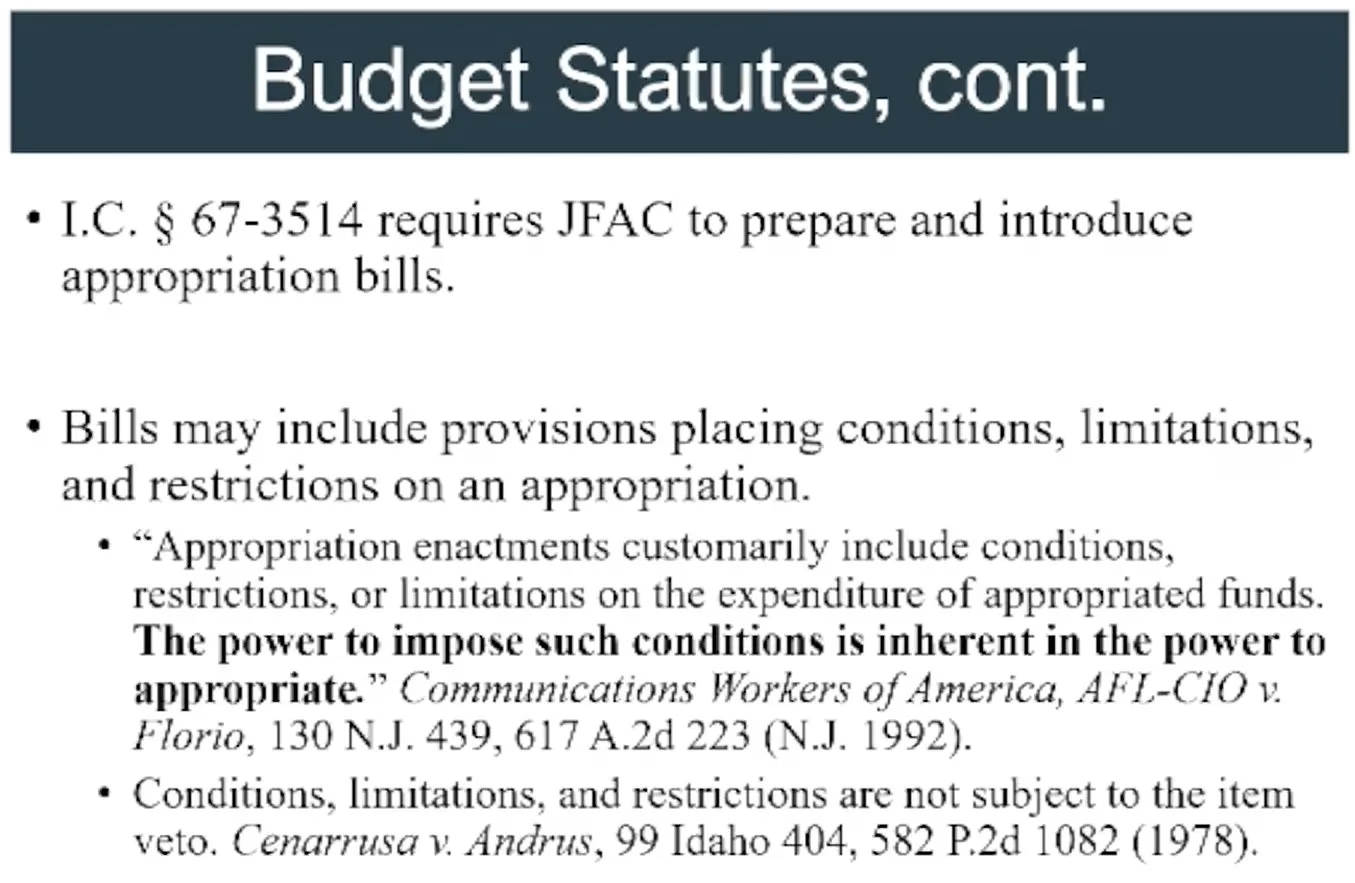
Bowen pointed out that the governor does not have the authority to veto intent language without vetoing the appropriation itself. Co-chair Sen. Scott Grow asked what can be done if agencies do not follow that intent language. Bowen replied that the best solution is for the Legislature to follow up via policy, as courts would rather not see lawmakers suing executive agencies.
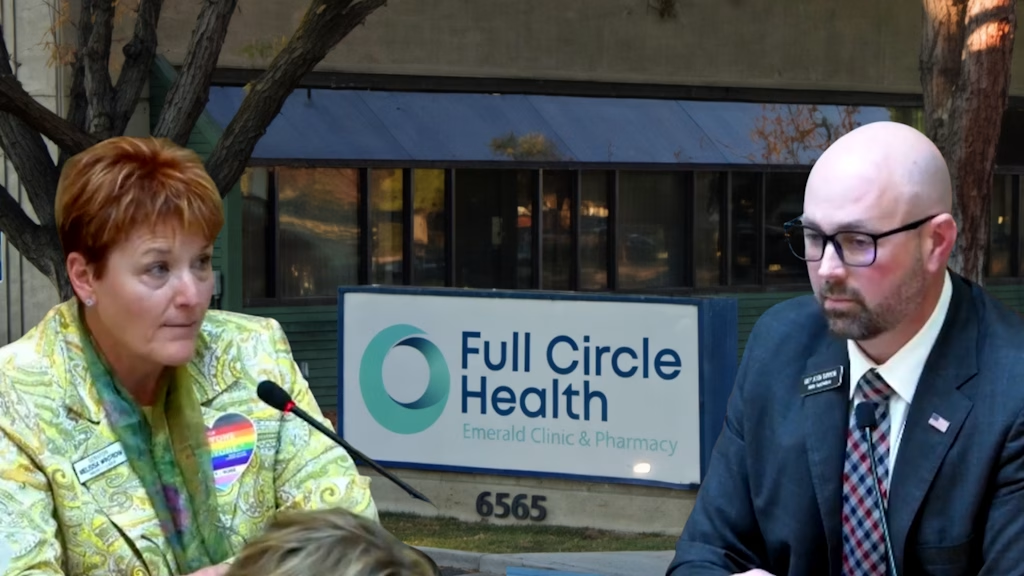
Sen. Melissa Wintrow asked an even more pointed question: what happens if JFAC’s intent language conflicts with policies passed via other committees? Bowen replied that it doesn’t matter what path a bill follows before becoming law, so long as it is enacted by the Legislature. Courts have held in the past that the Legislature is responsible for its own rules.
Bowen also explained that JFAC has subpoena power, which seemed to please Sen. Grow. He lamented that in the past he’s had to beg agencies for timely information. Bowen suggested that even the threat of subpoena might encourage them to be more forthcoming.
Jared Tatro presented JFAC’s system of performance-based budgeting that was implemented last year. These were enacted by the Legislature in 2024 as Idaho Code § 67-1904. This means that when agencies request budget enhancements, they must also lay out clear and identifiable performance metrics to judge how well those new appropriations are behind used.
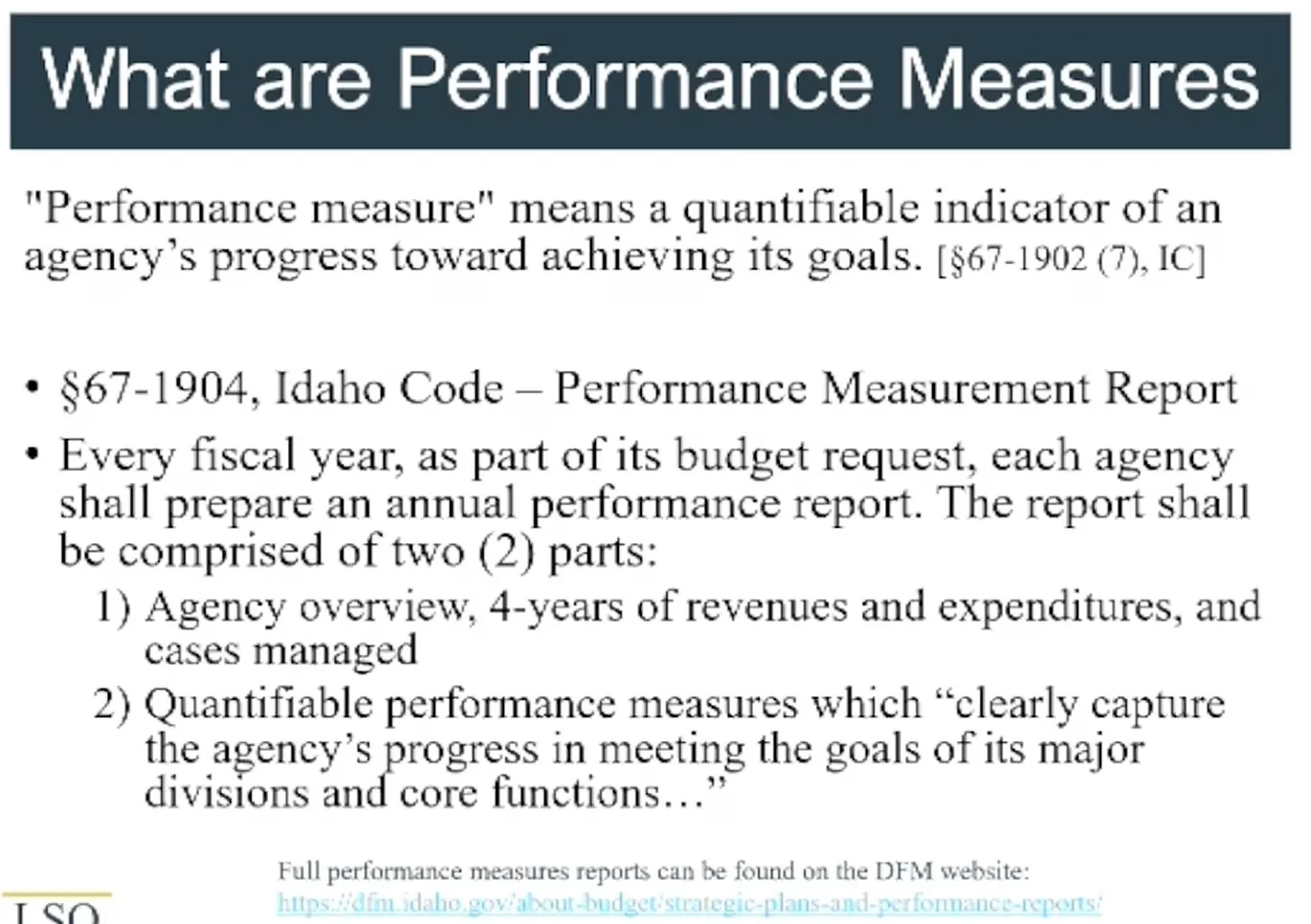
Tatro said that these measures must by meaningful, clear and concise, valid and reliable, and practical. He suggested that counting website visitors is not meaningful, but counting those who submit applications for some program would be.
Co-chair Grow suggested that this might be an ideal year to add a little bit of teeth to the performance measures, since JFAC will not be spending as much time evaluating enhancement budgets as in the past. This is due to the projected revenue shortfall, which means the practice of asking for ever more money—requests that JFAC members closely evaluate—will not be occurring as much this year.
The current shortfall is not because Idahoans are undertaxed, but because the Legislature appropriated more money than perhaps it should have. JFAC uses a revenue projection number to determine how much is available to spend, which means that is the last big piece of information the committee needs to get started. A special committee takes input from legislative staff and subject matter experts and then submits a number to JFAC, which adopts it as the target going forward. This projection determines how much money is available for spending.
Last year, JFAC debated revenue projections into March, before finally settling on $6.4 billion. That provided room for more than $450 million in ongoing tax cuts. Some conservatives and Democrats questioned the number, fearing it was too optimistic. Conservatives worried it would allow for overspending, while Democrats worried it would force the governor to curtail spending.
That’s exactly what happened last year, when tax revenues started coming in under the projected number. While Democrats and print news media sounded the alarm, both Sen. Grow and House Speaker Mike Moyle said things would be fine. Gov. Brad Little ordered 3% cuts across the board, except in K-12 public schools, and presented a budget recommendation earlier this week that adopts additional cuts as well as some creative accounting.
One perspective is that setting a high revenue projection and then cutting $450 million in taxes did exactly what conservatives have been trying to do for years: starve the beast.
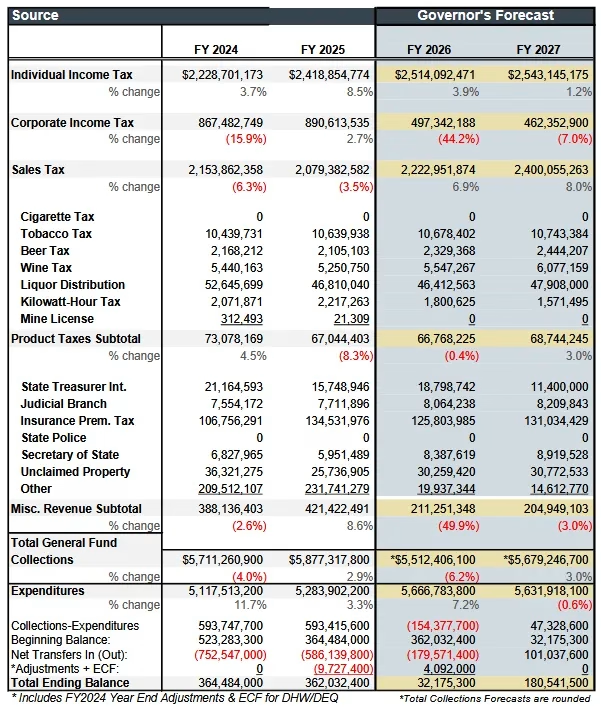
On page 9 of the Budget Book, the governor recommended a revenue projection $5.512 billion for the remainder of FY2026, and $5.679 billion for FY2027.
Earlier this afternoon, the Economic Outlook and Revenue Assessment Committee met for the second time in as many days, and voted for projections of $5.665 billion for FY2026 and $5.816 billion for FY2027, both higher than the governor’s recommendations.
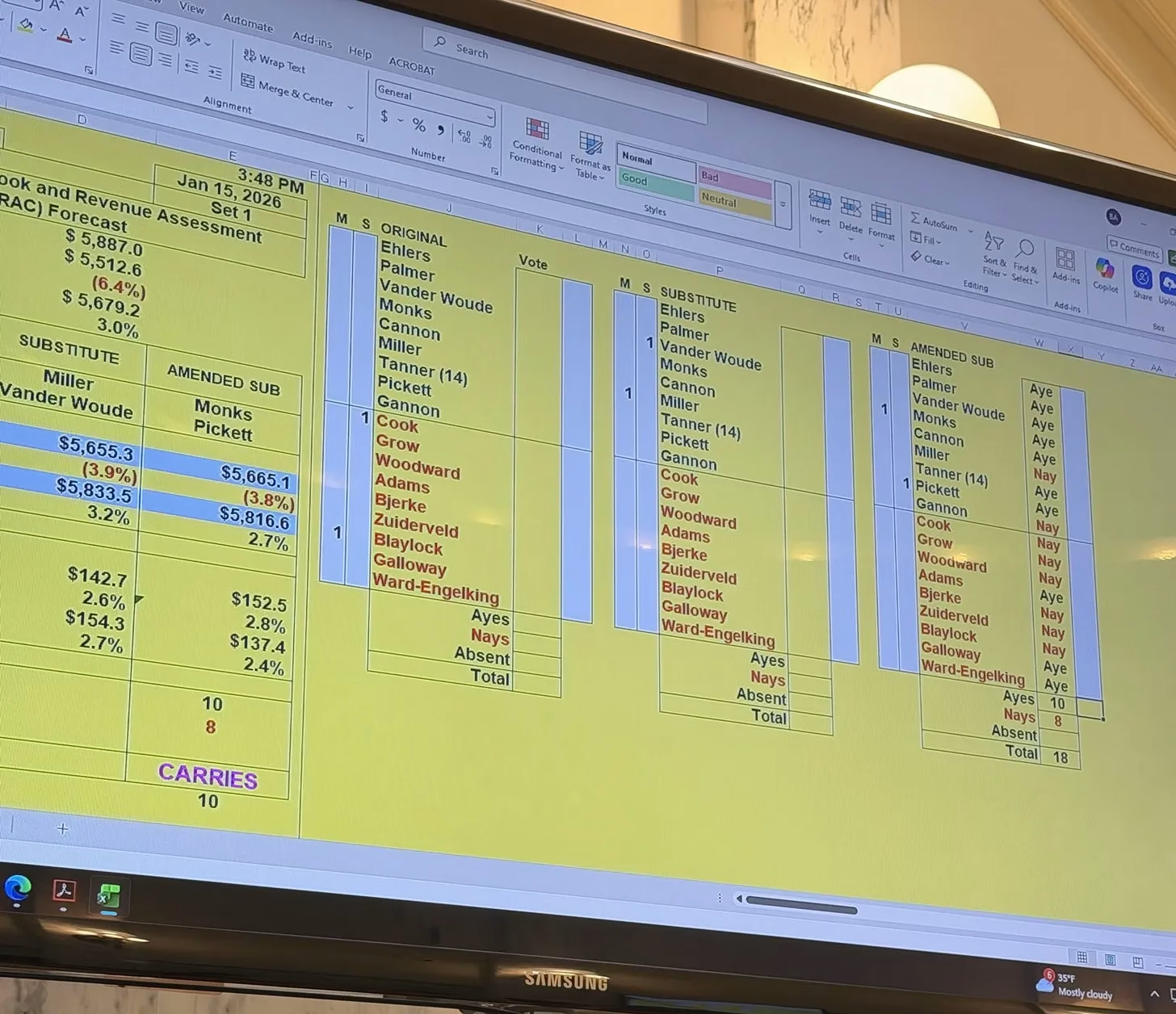
It was a close vote—House members of the joint committee voted 7-2 in favor, while the Senate side voted 3-6 against. The total was a razor-thin 10-8 margin. Within JFAC, budget bills require a majority of both halves of the joint committee to advance, but in this committee, a simple majority of all members seemed to suffice.
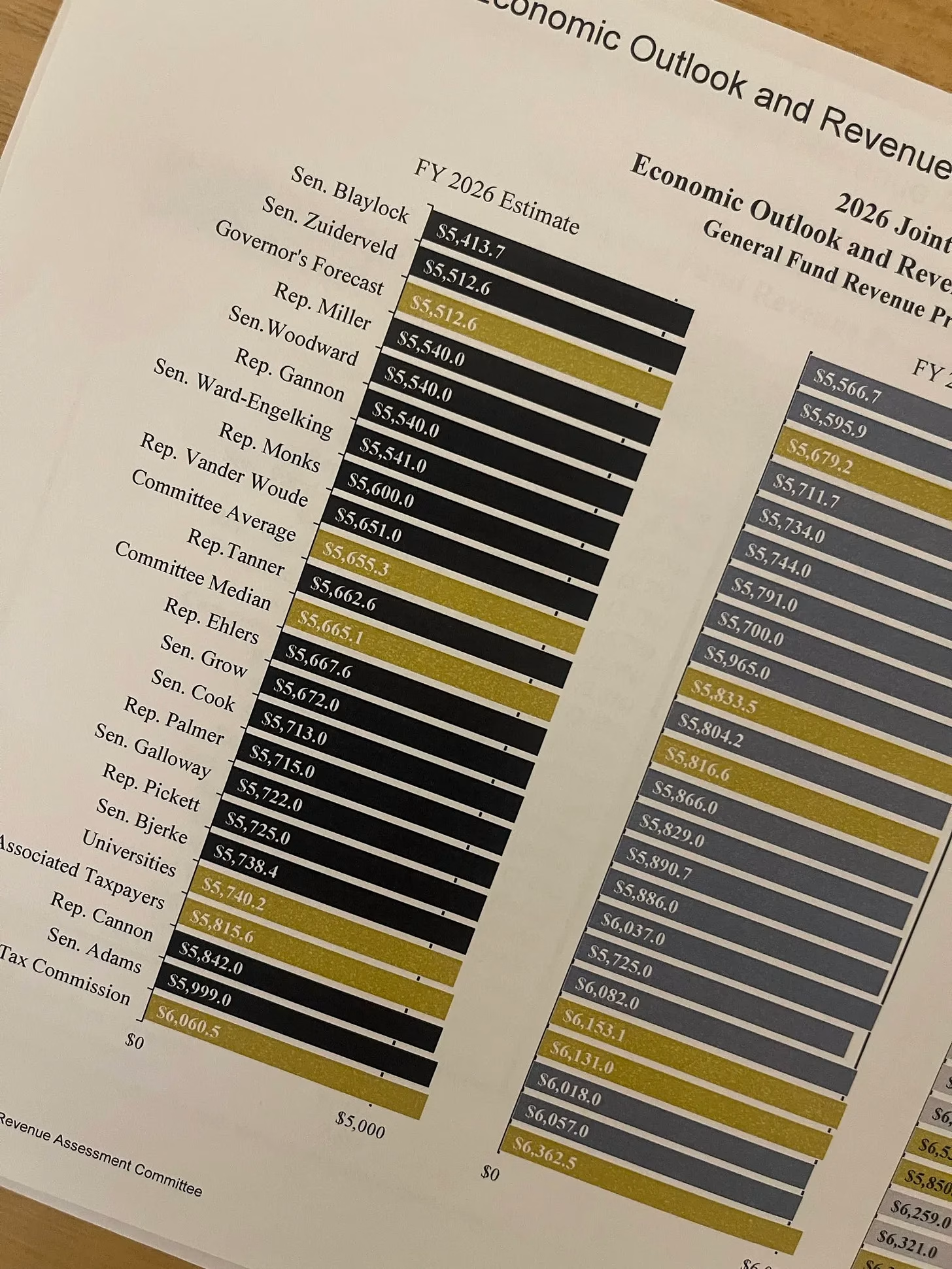
Over on X, Sen. Camille Blaylock shared a picture of her worksheet showing numbers for each member of the committee, as well as various subject matter experts. The numbers adopted by the committee were the median numbers—halfway between the highest and lowest estimates. Blaylock pointed out that her projection was the lowest on the committee for the second year in a row.
Committee co-chairs Rep. Jeff Ehlers and Sen. Kevin Cook will present the projections to JFAC tomorrow morning, which will vote on whether or not to accept them. Only time will tell if the numbers are correct. If the economy does even better than anticipated, then the state will take in a surplus of tax revenues, and will be tempted to spend more, or perhaps give it back to the people as tax refunds. On the other hand, if the economy does worse, then we will face another situation like last year, and this time, the Legislature might have to return for a special session to pick up the pieces.
Once JFAC has the revenue numbers, then it will have a target for how much to spend. It’s even possible that the Legislature will consider additional tax cuts this year, though last year’s achievements will be hard to beat. I’ll continue following the budgeting process closely and will do my best to keep you informed about how your government is spending your money.
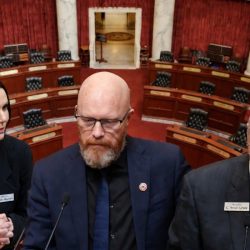
Feature image by Idaho Reports.
Gem State Chronicle is a reader-supported publication. To receive new posts and support my work, consider becoming a free or paid subscriber.

About Brian Almon
Brian Almon is the Editor of the Gem State Chronicle. He also serves as Chairman of the District 14 Republican Party and is a trustee of the Eagle Public Library Board. He lives with his wife and five children in Eagle.