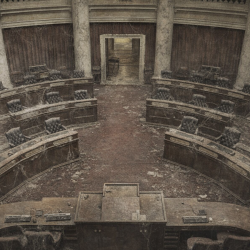
The Legislature’s DOGE Task Force met today to discuss issues including the Board of Tax Appeals, Medicaid, and the Idaho Commission on Hispanic Affairs. By the end of the meeting, the task force adopted several recommendations, including that the Legislature repeal Medicaid Expansion.
I spoke with Co-chair Rep. Jeff Ehlers on the Gem State Report earlier this month:
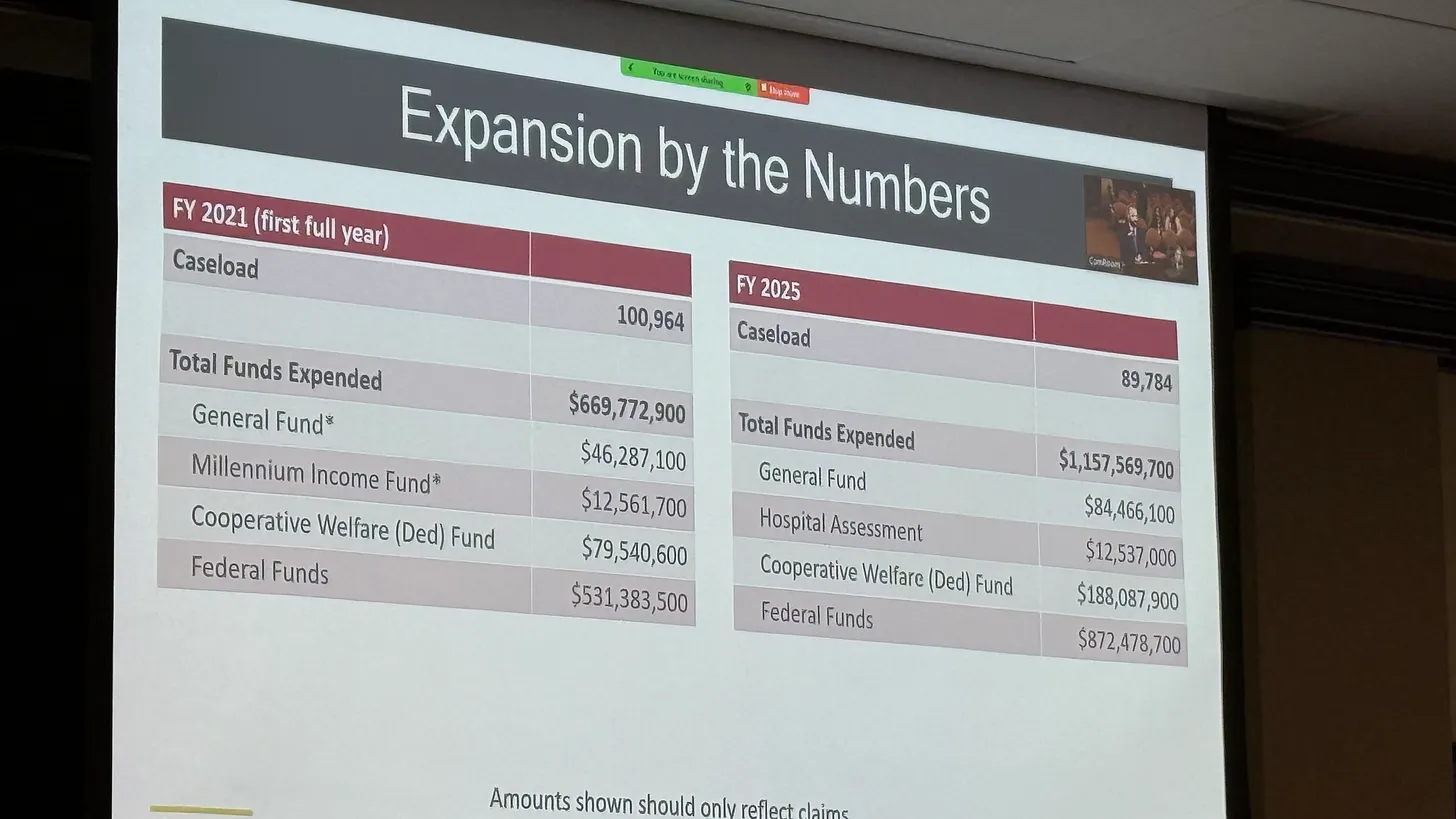
The meeting opened with a presentation from Sasha O’Connell, administrator for the Division of Medicaid and deputy director at the Department of Health and Welfare (DHW). She walked the committee through Medicaid spending trends and workforce participation among those enrolled through Expansion.
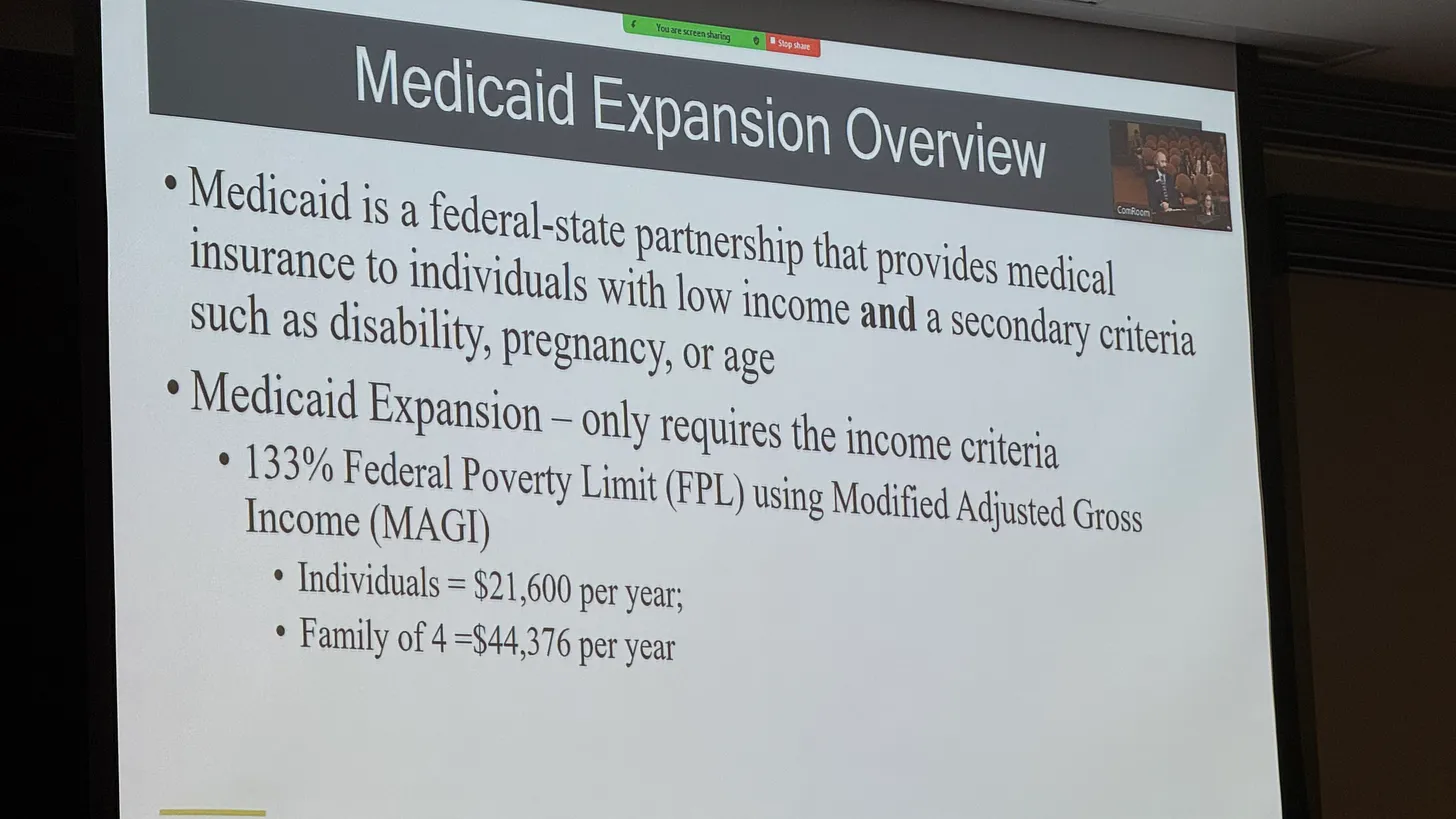
O’Connell emphasized that most unanticipated growth in Medicaid spending has come from the traditional Medicaid population, not from Medicaid Expansion.
To comply with Gov. Brad Little’s order to hold back 3% of agency budgets due to ongoing revenue shortfalls, DHW has cut Medicaid provider reimbursement rates by 4%. O’Connell explained that federal law tightly restricts what states can and cannot cut, both in terms of benefits and provider rates, for states that participate in Medicaid.
Rep. Josh Tanner argued that provider reimbursement rates are one of the few remaining tools available to reduce Medicaid spending, but warned that further cuts would directly harm people who rely on the program. He suggested that repealing Medicaid Expansion would produce the most significant cost savings.
Legislative Services Office (LSO) analyst Jared Tatro provided historical context on Medicaid Expansion, reviewing Proposition 2 from the 2018 ballot. Tatro noted that cost estimates were significantly underestimated nationwide, and that the onset of COVID-19 during implementation further distorted projections due to new federal requirements.
The task force next heard from Alex LaBeau, president of the Idaho Association of Commerce and Industry (IACI), regarding the structure of the Idaho Tax Commission and the Board of Tax Appeals.
LaBeau outlined concerns about conflicts of interest and inefficiencies in the current tax appeals process, presenting a proposal to streamline it. Rep. Tanner asked why the Board of Tax Appeals could not simply be eliminated, given that many disputes end up in district court anyway. LaBeau explained that the board is established in Article 7, Section 12 of the Idaho Constitution.
The task force voted to recommend replacing the current system with a more efficient, fair, and taxpayer-friendly process, acknowledging that legislation—and possibly a constitutional amendment—would be required.
Annette Tipton, director of the Idaho Commission on Hispanic Affairs, then presented on the commission’s mission and operations. Members of the committee had previously indicated that the commission could be “low-hanging fruit” for elimination. Tipton described the commission as a bridge between state government and Idaho’s growing Hispanic community, noting increased educational achievement and tax contributions.
She emphasized that during her seven months as director, she streamlined operations and cut costs, arguing that the commission delivers significant value with a small appropriation.
Rep. Tanner questioned whether the state should fund a commission focused on a single ethnicity rather than serving all citizens, characterizing it as a form of government-backed DEI that drives division. Tipton responded that the commission predates modern DEI frameworks and was created by the Legislature in 1987 to address specific needs at the time.
Tanner countered that even small budgets represent taxpayer dollars and asked why the commission could not be privately funded. Tipton acknowledged that private funding was possible, but said the commission’s effectiveness depends on its official connection to state government.
Sen. Camille Blaylock praised Tipton’s work ethic and attention to detail but suggested the private sector might be capable of covering the costs. Rep. Heather Scott, attending remotely, pointed to the Idaho Hispanic Foundation, which has raised more than a million dollars, and asked whether the state was competing with community nonprofits.
Co-chair Sen. Todd Lakey expressed appreciation for the commission’s engagement in Canyon County but noted that must of it occurs without government assistance.
Two of the four members of the public who testified today supported continuing the commission. Caldwell Police Chief Rex Ingram argued that it plays a role in supporting rule of law and community trust. Ivan Castillo, chairman of the commission’s board, said the commission helps Idaho as a whole and stressed the importance of having direct access to the governor.
Samuel Lair, legislative director at the Idaho Freedom Foundation, testified in favor of repealing Medicaid Expansion. He said the entire Western world is facing a reckoning due to unsustainable welfare programs, and that Idaho should be proactive in solving the problem before it blows up in our faces. He specifically warned that the 90/10 FMAP—under which the federal government covers 90% of benefit payments—could change as Congress confronts its own fiscal crisis.
In the end, the task force adopted several major motions:
- A recommendation to replace the current Board of Tax Appeals structure with a more efficient and taxpayer-friendly system.
- A recommendation to remove taxpayer support from the Commission on Hispanic Affairs and transition it to private funding.
- A recommendation to repeal Medicaid Expansion and refer the issue to germane legislative committees for hearings.
The DOGE Task Force itself does not have lawmaking authority. However, because it was created by legislative leadership, it stands to reason that leadership will seriously consider its recommendations.
There was an exchange during debate on repealing Medicaid Expansion that encapsulated the entire DOGE project. Rep. Dustin Manwaring said he was not comfortable fully repealing the program and suggested recommending that the Legislature explore cutting costs instead. Rep. Tanner countered that costs had already been cut as much as possible, making repeal the logical next step.
Rep. Scott agreed. She pointed to Common Core as an example of a program that should have been ended years ago, but instead has been endlessly tweaked as lawmakers try to save it rather than abandon it. She added that the point of the DOGE Task Force was to make real, significant changes to government—not to cut $50,000 here or eliminate a few lines of code there.
I joined Matt Edwards on Idaho Signal to break down the meeting after it adjourned. My takeaway is that while the task force may not have accomplished as much or as quickly as many hoped, it has nevertheless set something important in motion.
State government is enormously complex, with tendrils reaching into nearly every level of society. Untangling it will not be as simple as passing a single bill. It will require sustained work and attention from lawmakers, bureaucrats, and members of the public alike. It would be disappointing if the Legislature failed to act on the recommendations made today. Legislators now have an opportunity to pick up what the task force laid down and carry the mission of reform forward.
Repealing Medicaid Expansion remains a steep climb, especially when every committee hearing will be packed with those who stand to lose their handouts. Even so, it needs to be done.
I appreciate the work of the members of the DOGE Task Force. Now it’s time to finish the job.
Gem State Chronicle is a reader-supported publication. To receive new posts and support my work, consider becoming a free or paid subscriber.

About Brian Almon
Brian Almon is the Editor of the Gem State Chronicle. He also serves as Chairman of the District 14 Republican Party and is a trustee of the Eagle Public Library Board. He lives with his wife and five children in Eagle.